
 Iraq
IraqThe Black Obelisk of Shalmaneser III is a black limestone Neo-Assyrian sculpture with many scenes in bas-relief and inscriptions [1]. It comes from Nimrud (ancient Kalhu), in northern Iraq, and commemorates the deeds of King Shalmaneser III (reigned 858–824 BC) [1]. Tribute offerings are shown being brought from identifiable regions and peoples [1]. It was erected as a public monument in 825 BC at a time of civil war, in the central square of Nimrud [1]. It was discovered by archaeologist Sir Austen Henry Layard in 1846 and is now in the British Museum [1]. On the top and the bottom of the reliefs there is a long cuneiform inscription recording the annals of Shalmaneser III [1]. It lists the military campaigns which the king and his commander-in-chief headed every year, until the thirty-first year of reign [1].
Text: Wikipedia – 'Black Obelisk of Shalmaneser III' (revision of 2026-05-17), CC BY-SA 4.0 · sentences selected and shortened by an AI system · source →Black Obelisk of Shalmaneser III
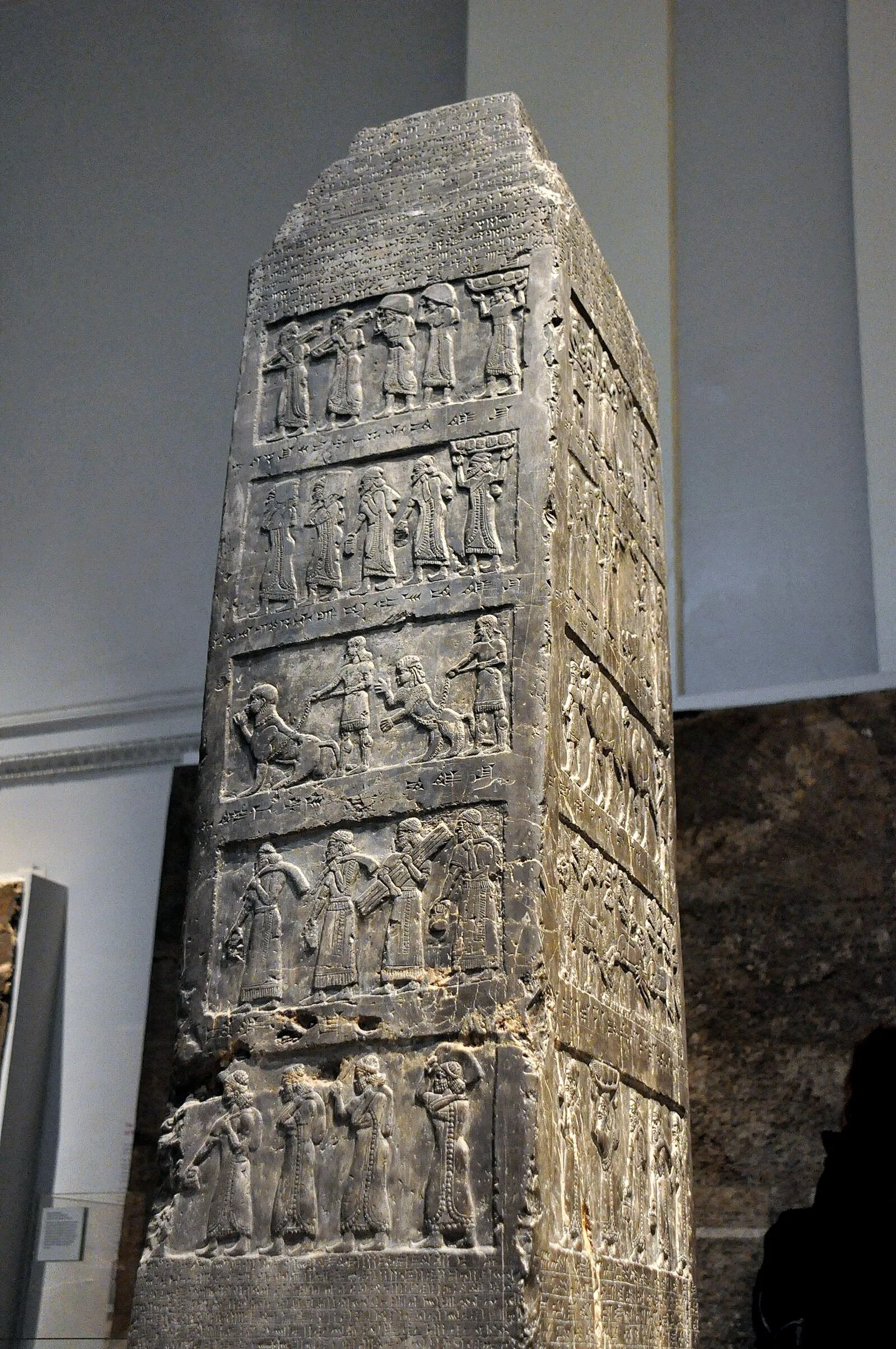
Also known as: Black Obelisk, Črni obelisk, Czarny obelisk Salmanasara III, Den svarta obelisken, Den svarte obelisk, III. Sulmánu-asarídu Fekete obeliszkje, Kara Dikilitaş, Obélique noir, Obelisc negre, Obelisco Negro, Obelisco negro de Salmanasar III, Obelisco negro de Salmanasar III,
| Type | Monument |
|---|---|
| Period | 1500 - 500 BC |
| Country | Iraq |
| Coordinates | 36.0983° N, 43.3290° E |