
 Iraq
IraqTāq Kasrā (also known as Taq-i Kisra or Arch of Ctesiphon) is the ruins of a Sasanian-era Persian monument dating to c. the 3rd to 6th centuries AD[1]. Located near modern Salman Pak, Iraq, it formed the grand facade of the main palace in the ancient capital of Ctesiphon[2]. The structure is the only visible remainder of the once-magnificent city and represents a landmark in architectural history[3]. Its enormous brick archway features the world's second-largest single-span unreinforced vault, surpassed only by Iran's Gavmishan Bridge[1].
Taq Kasra
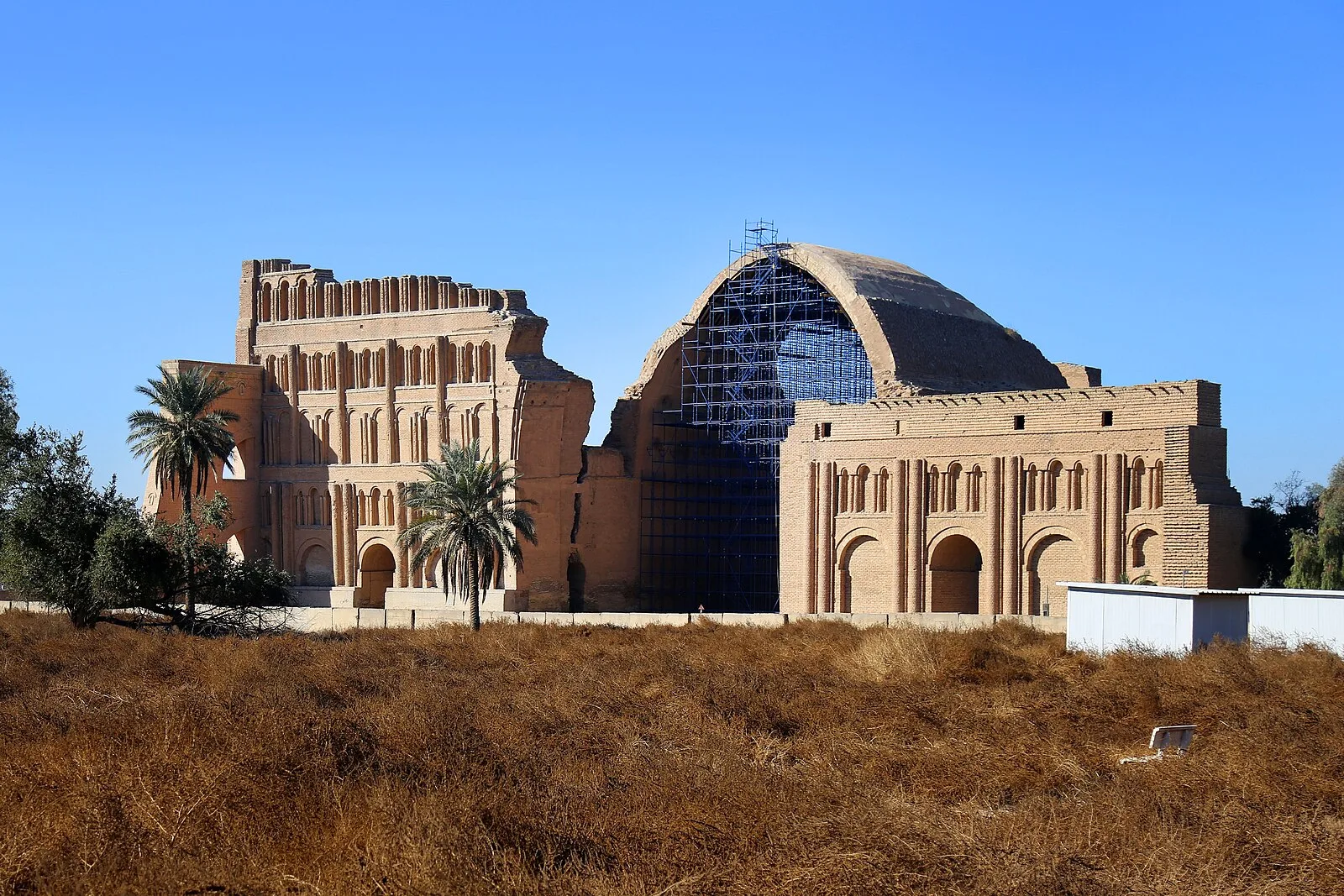
Also known as: Arc de Ctesifont, Arch of Ctesiphon, Arco de Ctesifonte, Ctesiphonporten, Iwan al-Mada'in, tak-ı kısra, Tak Kasra, Tak Kisra, Taq-e Kasra, Taq-e Kisra, Taq-i Kisra, Taq-i-Kisra
| Type | Monument |
|---|---|
| Period | 500 - 1000 AD |
| Country | Iraq |
| Coordinates | 33.0936° N, 44.5808° E |