
 Iraq
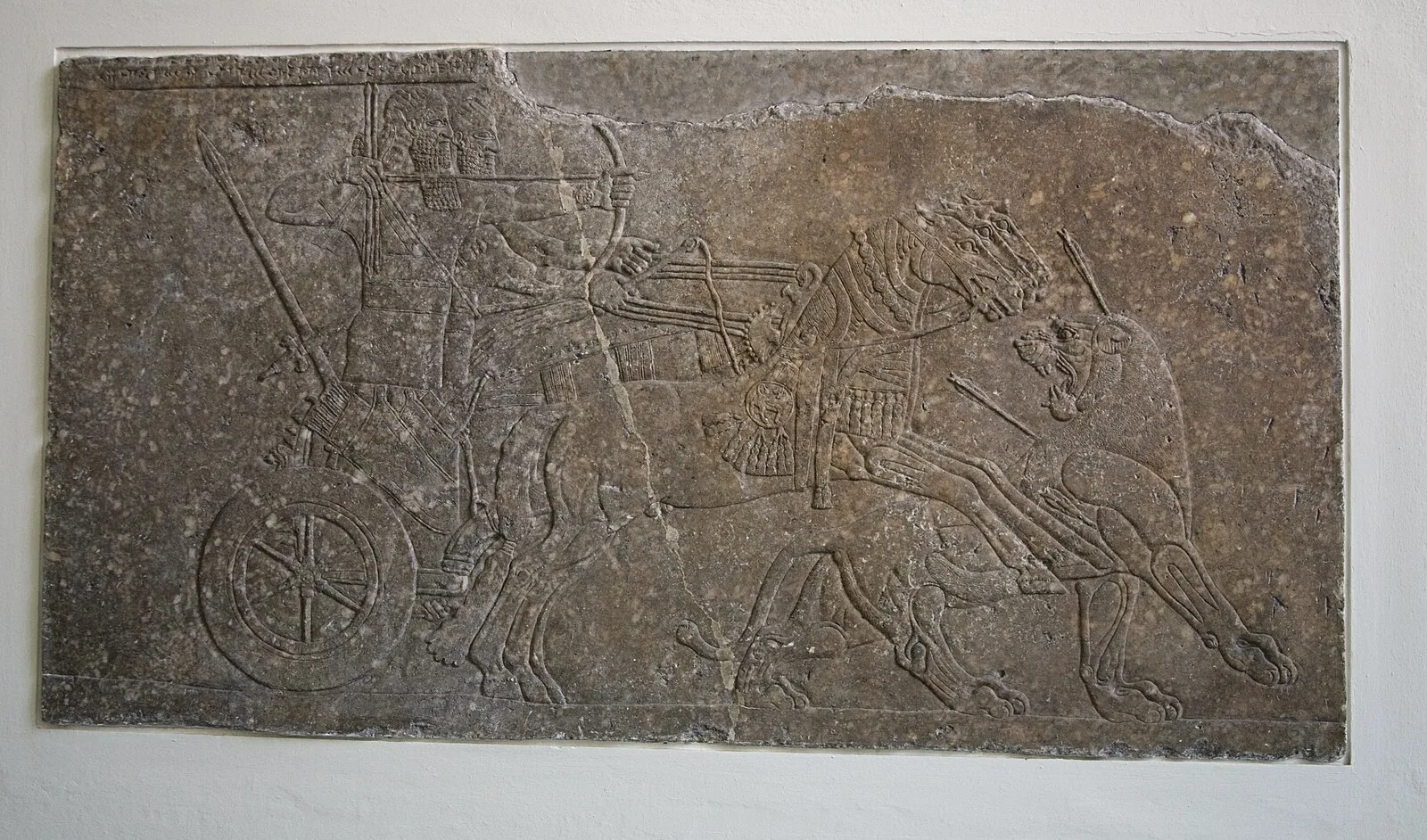
IraqNimrud is an ancient Assyrian city (original Assyrian name Kalḫu, biblical name Calah) located in Iraq, 30 kilometres south of the city of Mosul, and 5 kilometres south of the village of Selamiyah, in the Nineveh Plains in Upper Mesopotamia [1]. It was a major Assyrian city between approximately 1350 BC and 610 BC [1]. The city is located in a strategic position 10 kilometres north of where the river Tigris meets its tributary the Great Zab [1]. By 800 BCE, the city of Nimrud had expanded to a population of approximately 75,000 [1]. Archaeological excavations at the site began in 1845, and were conducted at intervals between then and 1879, and then from 1949 onwards [1]. Calah served as the imperial capital from 879 to 706 BCE, when Sargon II shifted the seat of government to his newly founded city, Dur-Sharrukin [1]. Excavations have revealed royal tombs belonging to the queens of Ashurnasirpal II, Tiglath-Pileser III, Shalmaneser V, Sargon II, and others [1]. Nimrud has been one of the main sources of Assyrian sculpture, including the famous palace reliefs [1].
Text: Wikipedia – 'Nimrud' (revision of 2026-07-18), CC BY-SA 4.0 · sentences selected and shortened by an AI system · source →Nimrud
Also known as: 님로드, 님루드, Āthār Nimrūd, Calach, Calah, Chale, Kalach, Kalah, Kalakh, Kalcha, Kalchoe, Kalchu
| Type | City/town/settlement |
|---|---|
| Period | 1500 - 500 BC |
| Country | Iraq |
| Coordinates | 36.0982° N, 43.3290° E |