
 Iraq
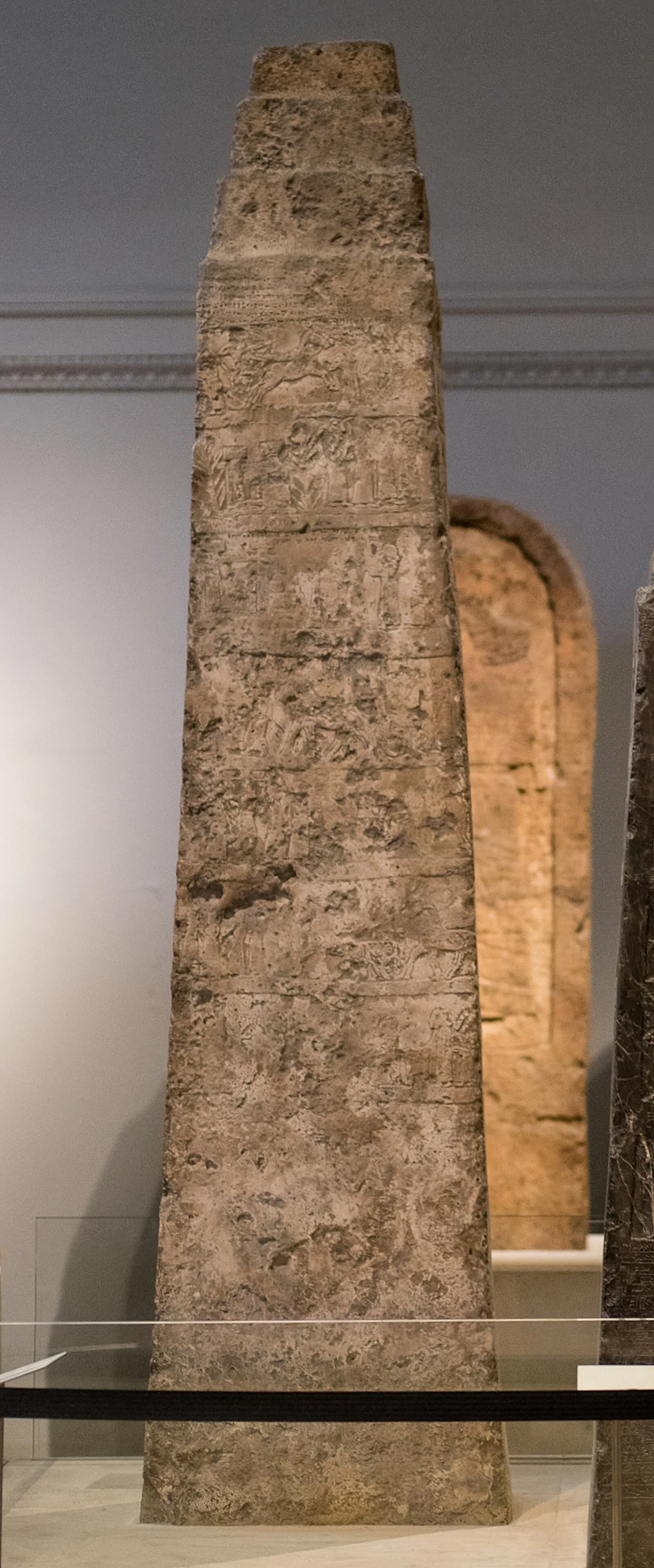
IraqThe White Obelisk is a large stone monolith found at the ancient Assyrian settlement of Nineveh [1]. Excavated by the British Assyrian archaeologist Hormuzd Rassam in 1853, it is one of only two intact obelisks to survive from the Assyrian empire, the other being the Black Obelisk of Shalmaneser III [1]. The White Obelisk dates to the beginning of the Neo-Assyrian Empire and has been variously ascribed to the reigns of Ashurnasirpal I (c. 1040 BC), Tiglath-Pileser II (c. 950 BC) or Ashurnasirpal II (c. 870 BC) [1]. The White Obelisk is a very large four-sided pillar made from white limestone with engraved decoration in relief on all sides of the obelisk, with an inscription at the top [1]. The carvings show campaigns and recreational activities of an Assyrian king that has been identified as either Ashurnasirpal I, Tiglath-Pileser II or Ashurnasirpal II [1]. On each of the four sides of the obelisk are eight rows of panels with relief representations [1].
Text: Wikipedia – 'White Obelisk' (revision of 2026-05-22), CC BY-SA 4.0 · sentences selected and shortened by an AI system · source →White Obelisk
Also known as: Biały obelisk, Den hvite obelisk, Fehér obeliszk, Obelisc Blanc, Obelisco bianco, Obelisco bianco di Ninive, obelisco blaco de Asurnasirpal I, Obelisco Blanco, Obelisco Branco, Obelisco Branco de Assurnasirpal I, Weißer Obelisk, White Obelisk of Ashurnasirpal I
| Type | Monument |
|---|---|
| Period | 1500 - 500 BC |
| Country | Iraq |
| Coordinates | 36.3596° N, 43.1528° E |