
 Guatemala
La Corona is the name given by archaeologists to an ancient Maya court residence in Guatemala's Petén department that was discovered in 1996, and later identified as the long-sought "Site Q", the source of a long series of unprovenanced limestone reliefs of exceptional artistic quality [1]. The site's Classical name appears to have been Sak-Nikte' ('White-Flower') [1]. During the 1960s, looted Maya reliefs from a then-unknown city surfaced on the international art market [1]. In 2005 Marcello A. Canuto, then a Yale professor, found a panel in situ at La Corona that mentioned two Site Q rulers [1]. In April 2012, La Corona Archaeological Project discovered a row of 12 staircase risers with many different relief scenes; another 10 sculpted risers were found looted from their original context but then discarded for being too eroded to be worth selling on the illicit antiquities market [1]. In 679 AD, a daughter of Calakmul's powerful Yuknoom Ch'een was given in marriage to a La Corona king [1]. In 721 AD, a daughter of the Calakmul king (Yuknoom Took' K'awiil) was married off to a king of La Corona [1].
Text: Wikipedia – 'La Corona' (revision of 2026-07-18), CC BY-SA 4.0 · sentences selected and shortened by an AI system · source →La Corona
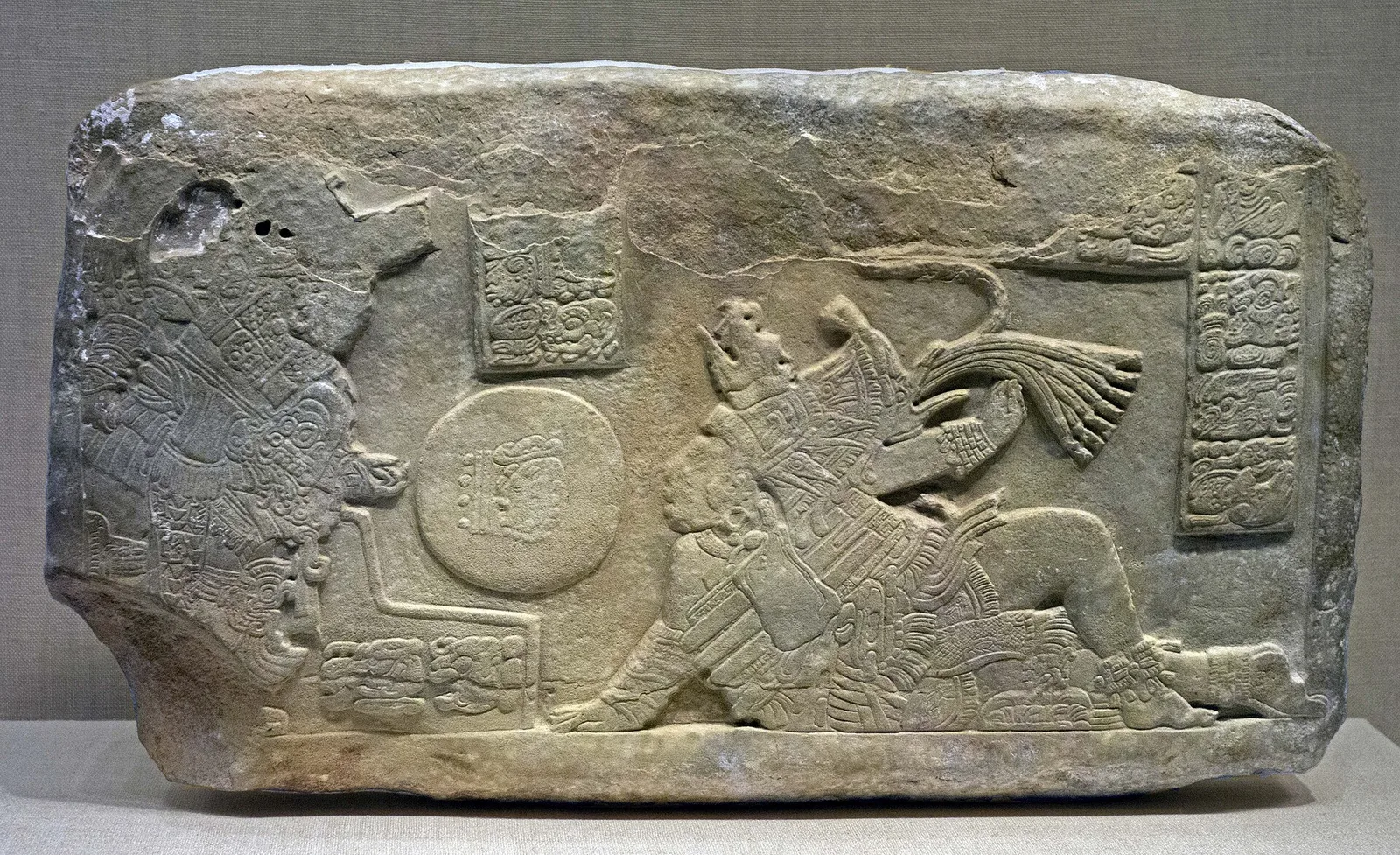
Also known as: La Corona (Guatemala), La Corona (sitio arqueológico), Ла-Корона, לה קורונה, ラ・コロナ, 拉科罗纳, 拉科羅納
| Type | City |
|---|---|
| Period | 1 - 500 AD |
| Country | Guatemala |
| Coordinates | 17.5242° N, 90.3714° W |