
 Guatemala
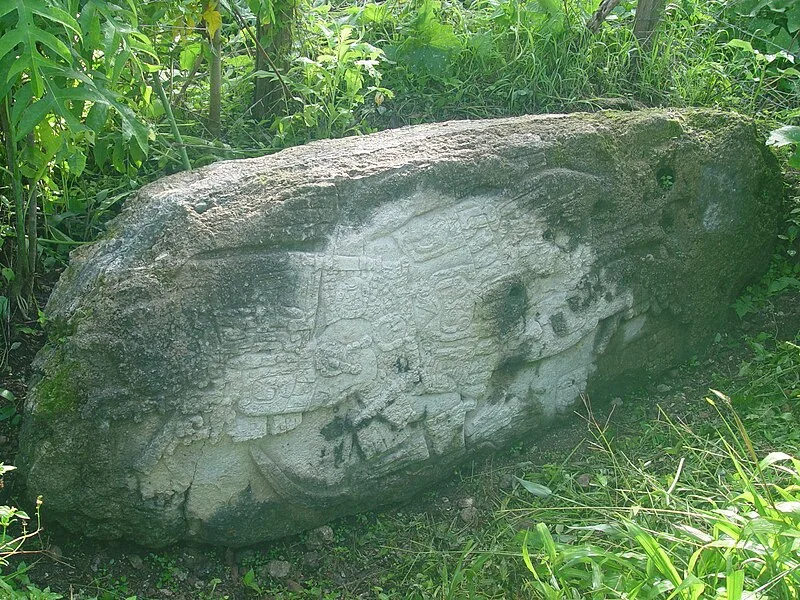
Zapote Bobal is the modern name for a pre-Columbian Maya archaeological site located south of the San Pedro Martir river in the Petén department of Guatemala [1]. The name Zapote Bobal was coined by archaeologist Ian Graham, who discovered the site in the 1970s [1]. Built atop a leveled natural hill 1 kilometer long and 700 meters wide, the center of the site is characterized by a royal palace, several temple-pyramids, and elite residences [1]. Immediately outside this center are several mound groups, including one characterized by a pyramid 35 meters in height [1]. Although the general scale of construction at Zapote Bobal is quite large and would normally be characteristic of a long-lived ancient Maya center, it is clear that the city center was occupied for a brief period of time [1]. The royal dynasty at Zapote Bobal seems to have flourished for only 200 years, disintegrating by A.D. 800 [1]. For the majority of the Late Classic (AD 600-900), Zapote Bobal was the center of a kingdom that included the sites of Pajaral and (probably) La Joyanca [1].
Text: Wikipedia – 'Zapote Bobal' (revision of 2026-04-18), CC BY-SA 4.0 · sentences selected and shortened by an AI system · source →Zapote Bobal
Also known as: Сапоте-Бобаль
| Type | City |
|---|---|
| Period | 500 - 1000 AD |
| Country | Guatemala |
| Coordinates | 17.3068° N, 90.3064° W |