
 Greece
Franchthi Cave is a major archaeological site overlooking Kiladha Bay in the Argolic Gulf, southeastern Greece [1]. The site documents the full transition from Paleolithic hunter-gatherers to Neolithic farmers, with domesticated plants and animals appearing around 7,000 BC [1] [2]. Finds include stone tools, pottery, and Mesolithic child burials now displayed in the Nafplion Archaeological Museum [3].
Franchthi Cave
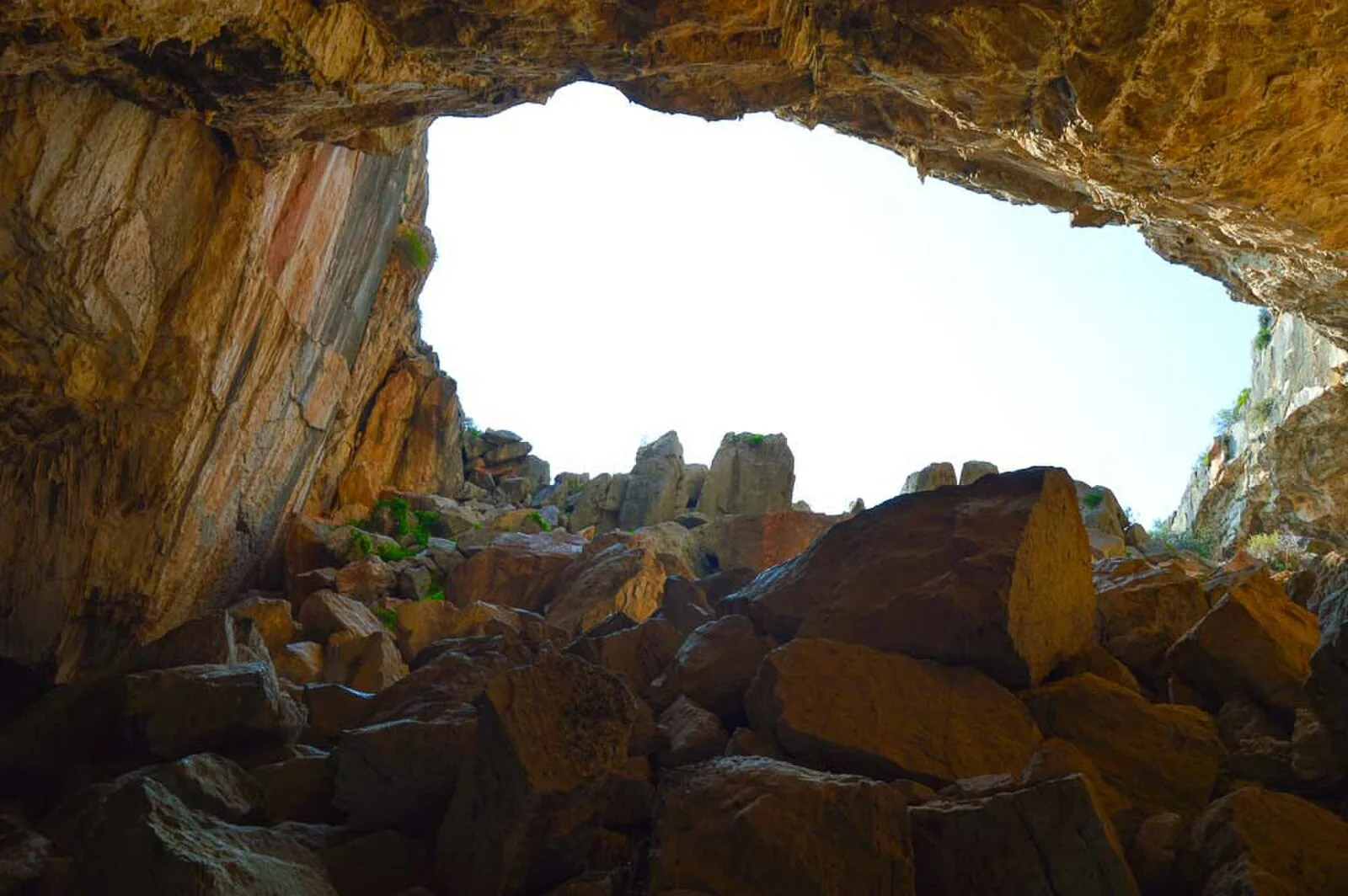
Also known as: Caverna Franchthi, cova Frankhthi, Cueva Franchthi, Frachthi, Franchthi, Franchthi-barlang, Franchthihulen, Franchthi Mağarası, Franchthin luola, Franchti, Franhti gʻori, Franhti mağarası
| Type | Cave Structures |
|---|---|
| Period | < 4500 BC |
| Country | Greece |
| Coordinates | 37.4235° N, 23.1323° E |