
 Greece
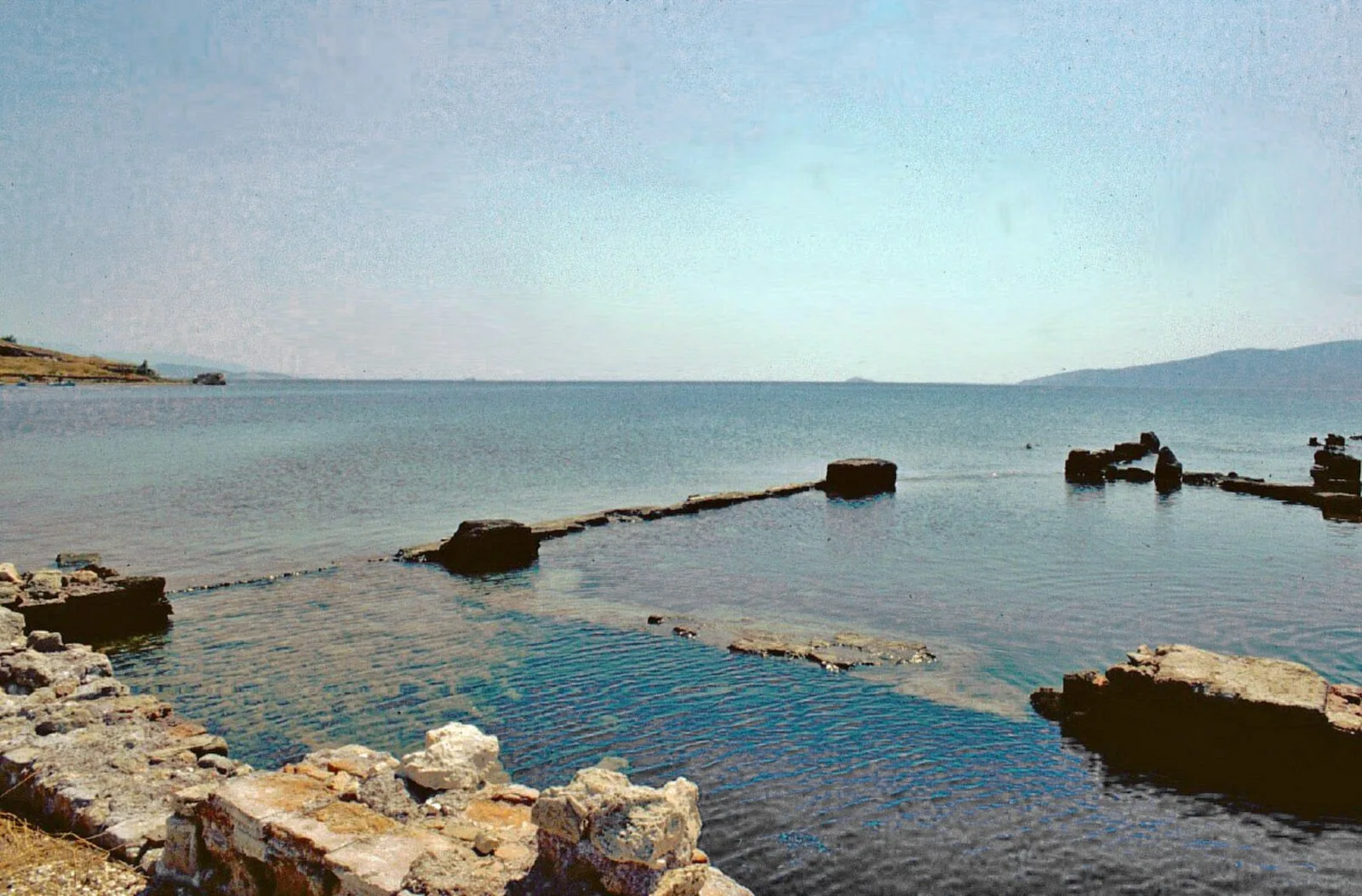
Kechries is situated near a broad bay at the western end of the Saronic Gulf, called Kechries Bay [1]. In ancient times, Kenchreai was one of the two ports of the inland city-state of Corinth [1]. Kenchreai flourished during the Roman Empire, when the settlement was focused around the crescent-shaped harbour enclosed by massive concrete breakwaters and protected by sea-walls [1]. Ancient literature and inscriptions from the site attest to the presence of cults of Aphrodite, Isis, Asklepios, Poseidon, Dionysos, and Pan [1]. The ancient harbor was partly excavated in 1962-1969 by a team sponsored by the Athens-based American School of Classical Studies under the general direction of Robert Scranton [1]. Excavations have uncovered several buildings that attest to the commercial vitality of the port throughout the Roman Empire and into the 7th century, when maritime activity and local habitation apparently diminished [1].
Text: Wikipedia – 'Kechries' (revision of 2026-09-20), CC BY-SA 4.0 · sentences selected and shortened by an AI system · source →Kechries
Also known as: Cenchreae, Cenchrées, Cencre, Cencrea, Cencreas, Cencree, Cèncrees, Cencreia, Kekhriés, Kenchreä, Kenchreai, Kenchries
| Type | City/town/settlement |
|---|---|
| Period | 1500 - 500 BC |
| Country | Greece |
| Coordinates | 37.8852° N, 22.9874° E |