
 Greece
A prehistoric settlement near the Argolic Gulf in the Peloponnese, inhabited for approximately 5,000 years from the Neolithic to the Mycenaean period (6th-1st millennium BC) [1] [2]. House of Tiles (c. 2500-2300 BC), a monumental Early Helladic II corridor house measuring 12 x 25 m with stone foundations, mud-brick walls, and one of the earliest fired-clay tile roofs in Greece [1] [2] [3]. Excavated by John Caskey of the American School of Classical Studies in the 1950s, it yielded over 150 clay sealings from some 60 seals, suggesting early administrative functions [2] [3]. After its destruction by fire, a tumulus 19 m in diameter was raised over the ruins [1] [2].
Lerna
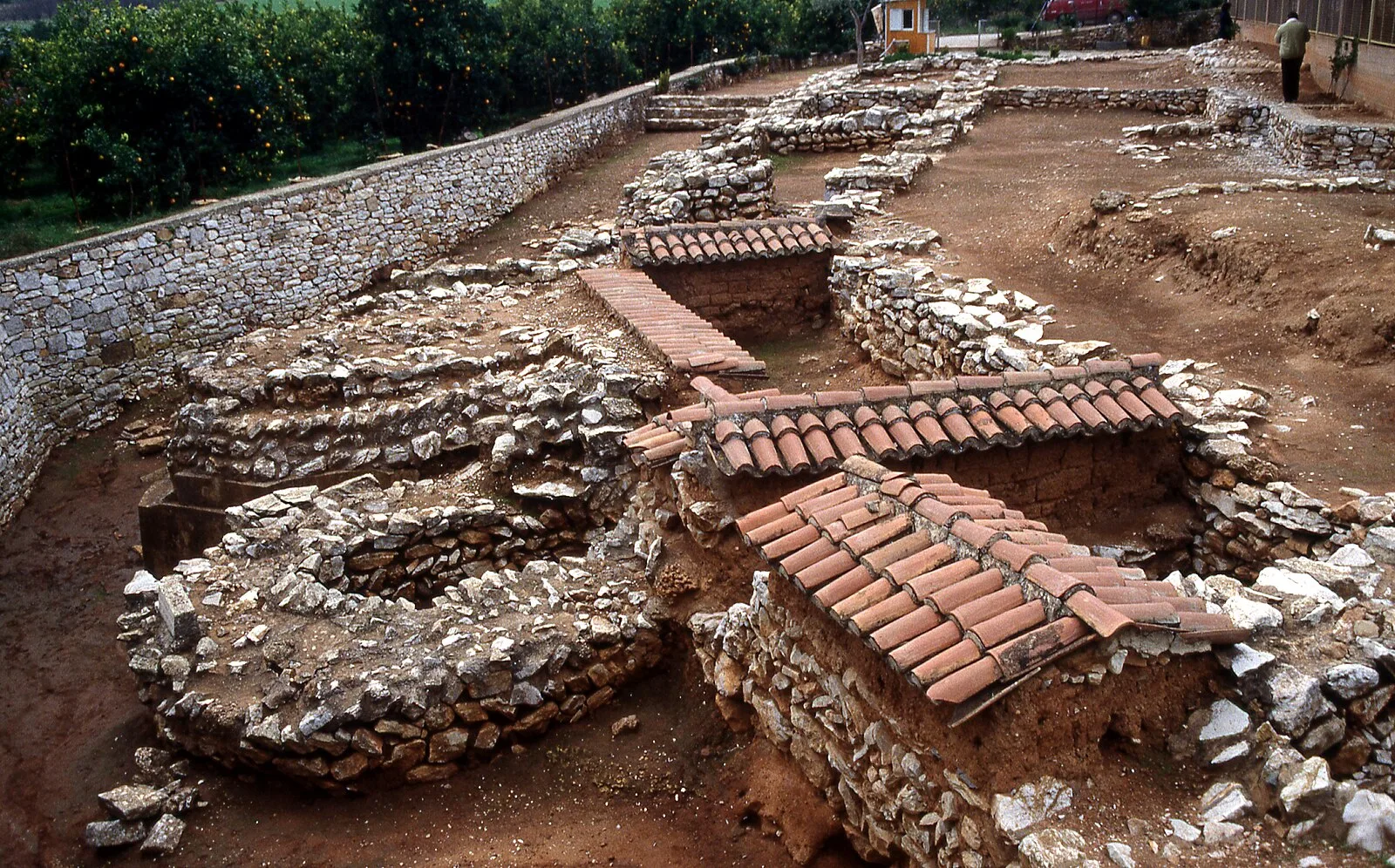
Also known as: Lerna järv, Lerne, Lerni, Lerno (Grekujo), Λέρνα, Λέρνη, Лерна, レルナ, 勒拿湖
| Type | City/town/settlement |
|---|---|
| Period | < 4500 BC |
| Country | Greece |
| Coordinates | 37.5502° N, 22.7168° E |