
 Greece
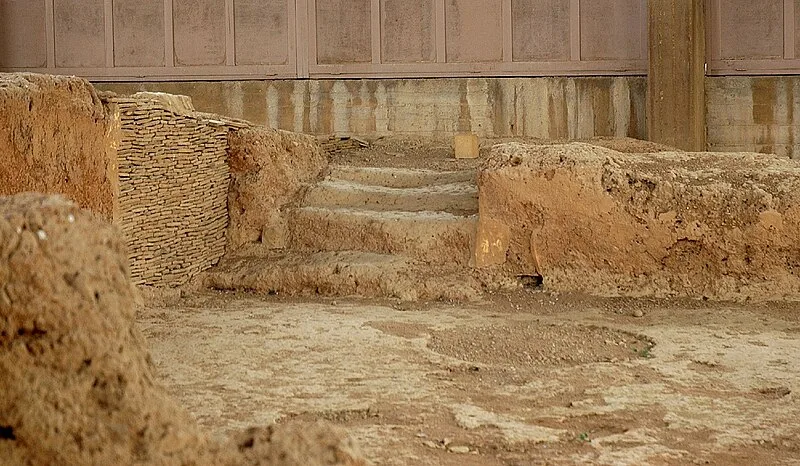
The House of the Tiles is a monumental Early Bronze Age building (two stories, approximately 12 x 25 m) located at the archaeological site of Lerna in southern Greece [1]. It is notable for several architectural features that were advanced for its time during the Helladic period, notably its roof covered by baked tiles, which gave the building its name [1]. The building belongs to the "corridor house" type [1]. The site was excavated during the early 1950s by the American School of Classical Studies under the direction of John Caskey of the University of Cincinnati [1]. The house had a stairway leading to a second story and was protected by a tiled roof; it also contained storage areas [1]. Debris found at the site contained thousands of terracotta tiles having fallen from the roof [1]. Although such roofs were also found in the Early Helladic site of Akovitika and later in the Mycenaean towns of Gla and Midea, they only became common in Greek architecture in the 7th century BC [1]. Carbon-14 dating indicates that the House of the Tiles was finally destroyed by fire in the 22nd century BC [1].
Text: Wikipedia – 'House of the Tiles' (revision of 2026-07-21), CC BY-SA 4.0 · sentences selected and shortened by an AI system · source →House of the Tiles
Also known as: Casa de las Tejas, Casa de les Teules, Domo de la tegoloj, Haus der Ziegel, Οικία Κεράμων, Οικία των Κεράμων, Дом с черепицей, 瓦屋根の館
| Type | Residence/villa/farmhouse |
|---|---|
| Period | 3000 - 1500 BC |
| Country | Greece |
| Coordinates | 37.5513° N, 22.7183° E |