
 France
The Cave of Aurignac is an archaeological site in the commune of Aurignac, Haute-Garonne department in southwestern France [1]. The eponymous location represents the type site of the Aurignacian, the earliest known culture attributed to modern humans in western Eurasia [1]. In recognition of its significance for various scientific fields and the 19th-century pioneering work of Édouard Lartet the Cave of Aurignac was officially declared a national Historic Monument of France by order of May 26, 1921 [1]. The Aurignac limestone grotto is located in the Aurignac commune, approximately 1.5 km northwest of the town centre, on the southern side of the Rodes rivulet valley [1]. Pioneer paleontologist Édouard Lartet led the first excavation from 1860 to 1863 and recovered advanced tools, such as finely cut flints, struck from prepared core and variously worked bones and reindeer antlers, a great number of fossilized human bone and ceramic fragments, although the latter had confirmedly been buried during the Chalcolithic (around 6,000 to 4,000 years BP) [1].
Text: Wikipedia – 'Cave of Aurignac' (revision of 2026-07-19), CC BY-SA 4.0 · sentences selected and shortened by an AI system · source →Cave of Aurignac
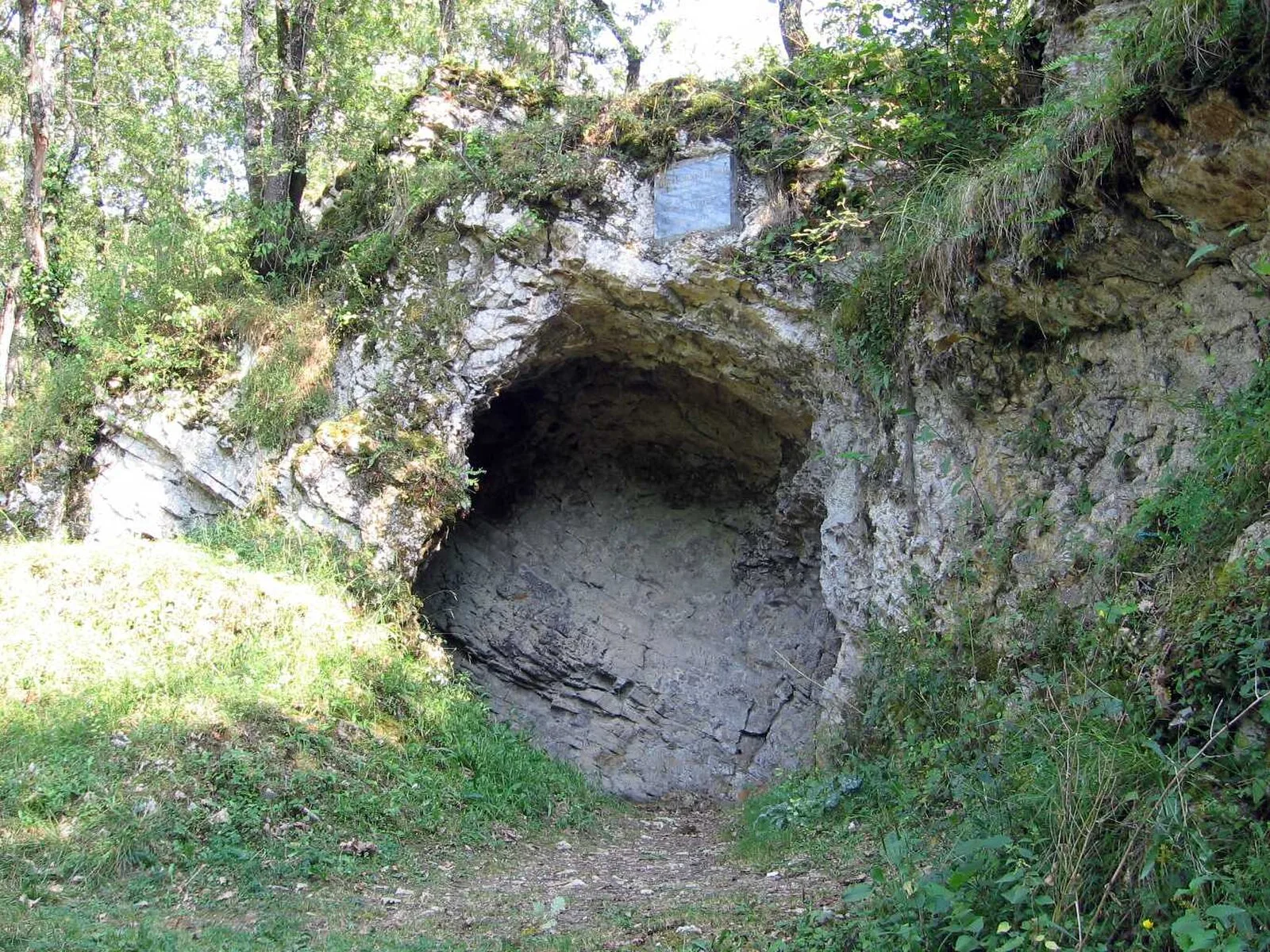
Also known as: cueva de Aurignac, Grotta di Aurignac, grotte d'Aurignac, Tuta d'Aurinhac, מערת אוריניאק
| Type | Cave Structures |
|---|---|
| Period | < 4500 BC |
| Country | France |
| Coordinates | 43.2226° N, 0.8653° E |