

Around 34‑30 kyr ago the Aurignacian waned and the Gravettian emerged, introducing Mad‑type bone points and smaller bladelets. Genetic continuity in Goyet and Costeni 14 (Kostenki) shows a West Eurasian source feeding the new culture, while Iberian and Balkan Aurignacians persisted longer.
Cave of Aurignacian culture introduced blade tool technology
 Franceunverified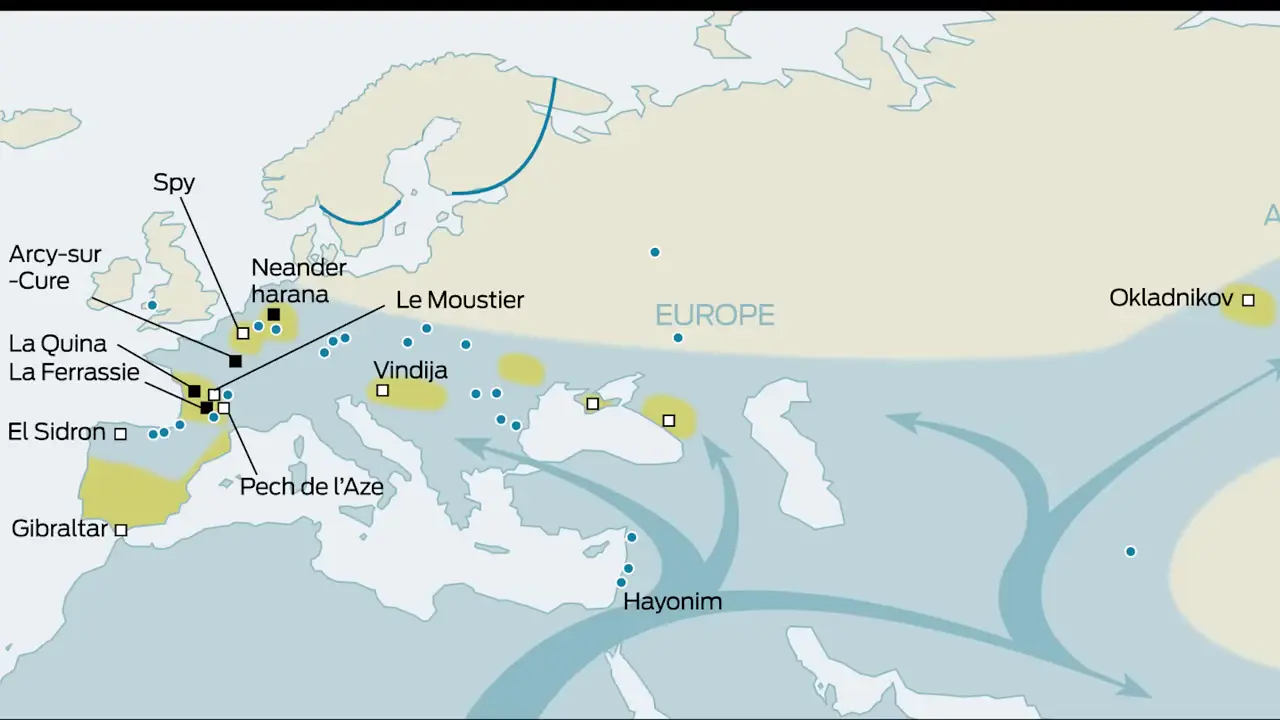
Key facts
- Cave of Aurignacian culture emerged 42,000 to 38,000 years ago in Europe
- Named after the site of Cave of Aurignac in France
- Stone and bone tools dramatically different from Neanderthal Mousterian tools
- Cave of Aurignacian knappers produced long blade and bladelet tools from prepared cores
- They made slender blades used as knives or inserted as projectile points in spears
- Bone and ivory points had distinctive split bases for mounting on wooden shafts
- The culture spread across the Iberian Peninsula into Central Europe
- Sites appeared along the Danube River in central Europe at caves like Geißenklösterle, Vogelherd, and Willendorf
Site mentioned
Sources
nature.com
Linked in video description
journals.openedition.org
Linked in video description
pmc.ncbi.nlm.nih.gov
Linked in video description
dspace.library.uvic.ca
Linked in video description
link.springer.com
Linked in video description
nature.com
Linked in video description
pmc.ncbi.nlm.nih.gov
Linked in video description
Was this story useful?
Keep exploring
Every site on this page sits on the globe, and the people who research them are on the Discord.
3D Globe · Sites by country · Story Archive · Research Library · Weekly Journal · Search
AI-generated text · images from the original sources · always verify with the sources.