
 France
The Caves of Gargas in the Pyrenees region of France are known for their cave art from the Upper Paleolithic period - about 27,000 years old [1]. The caves are located near the town of Aventignan in the Hautes-Pyrénées department in south-western France [1]. The paintings have numerous negative hand stencils made by the stencil technique [1]. Many figurative engravings are also present in other parts of the caves, depicting horses, bison, aurochs, ibex and mammoth [1]. Carbon-14 dating of a bone stuck in a crack in a wall decorated with hand stencils revealed close to 27,000 years BP, indicating that the cave was frequented in the Gravettian period [1]. The two chambers of the caves began to be scientifically explored and documented at the end of the 19th century by Émile Cartailhac and Abbé Henri Breuil, but it was Felix Regnault who discovered the hand-print images in 1906 [1].
Text: Wikipedia – 'Caves of Gargas' (revision of 2026-06-29), CC BY-SA 4.0 · sentences selected and shortened by an AI system · source →Caves of Gargas
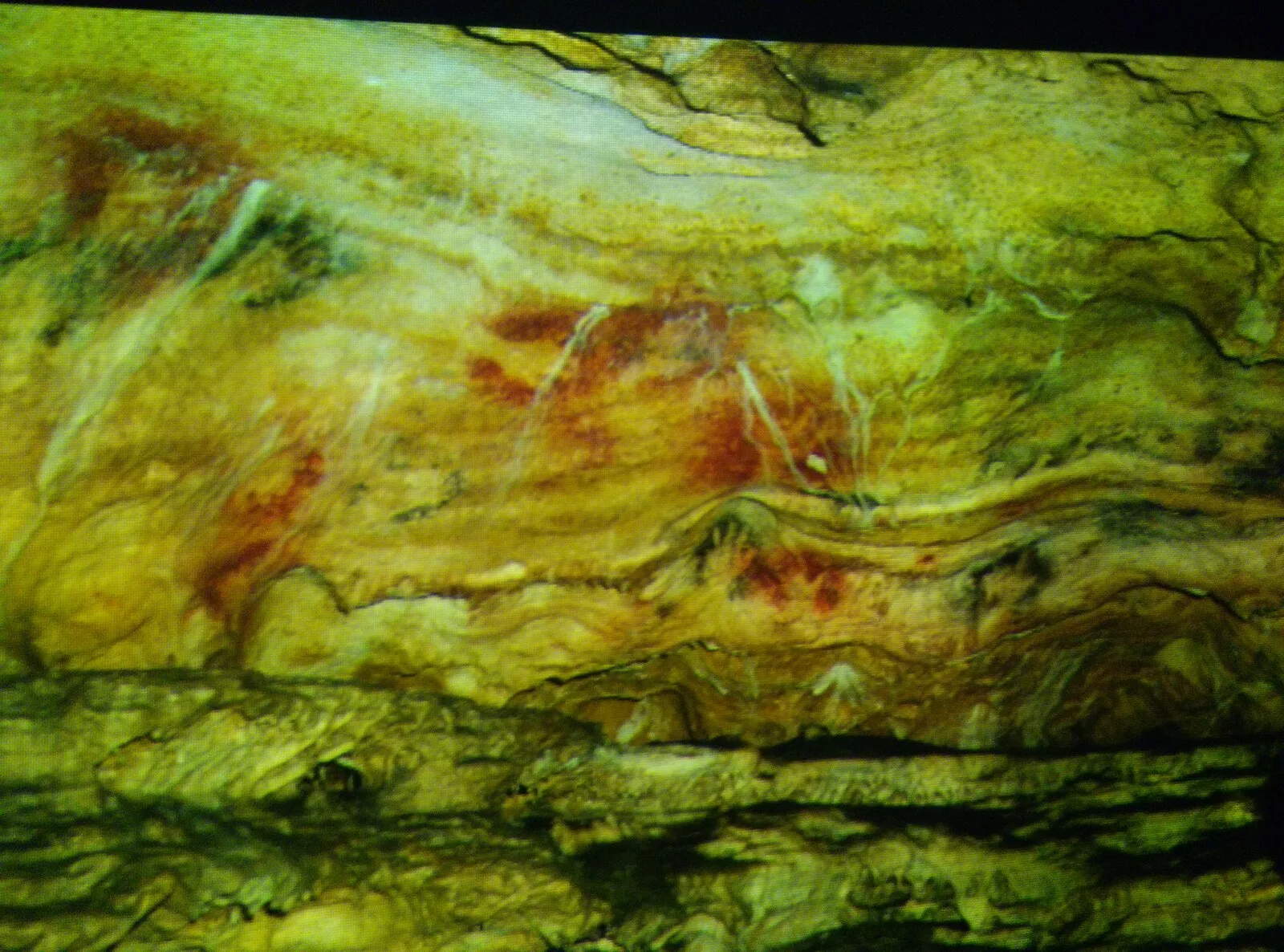
Also known as: cave of Gargas, Caverna de Gargas, Cova de Gargas, Coves de Gargas, Espeluga de Gargàs, Espelugas de Gargàs, Gargas, Gargasgrotten, Gargas (jaskinia), Gargasko haitzuloak, Gargas Mağaraları, grotte de Gargas
| Type | Cave Structures |
|---|---|
| Period | < 4500 BC |
| Country | France |
| Coordinates | 43.0554° N, 0.5362° E |