
 France
Laugerie-Basse is an important Upper Paleolithic archaeological site within the territory of the French commune Les Eyzies-de-Tayac-Sireuil in Dordogne [1]. It is known for several works of art from the Magdalenian [1]. The prehistoric site consists of two abris: the main abri and 50 meters upstream the Abri of Marseilles [1]. In 1863 Édouard Lartet and Henry Christy began for the first time with excavations on the main abri [1]. The stratigraphy in the main abri comprises archaeological material mainly from Magdalenian III and Magdalenian IV [1]. Apart from stone artefacts and other tools, all in all approximately 600 art objects from the Magdalenian were recovered in Laugerie-Basse [1]. In Laugerie-Basse Paul Hurault, 8th Marquis de Vibraye discovered in 1864 the "Immodest Venus" which gave its name to the genre of Paleolithic Venus figurines [1]. The main abri was inhabited in the middle and upper Magdalenian as well as in the Azilian, which roughly corresponds to the time segment from 14,000 until 10,000 years BP [1].
Text: Wikipedia – 'Laugerie-Basse' (revision of 2026-09-25), CC BY-SA 4.0 · sentences selected and shortened by an AI system · source →Laugerie-Basse
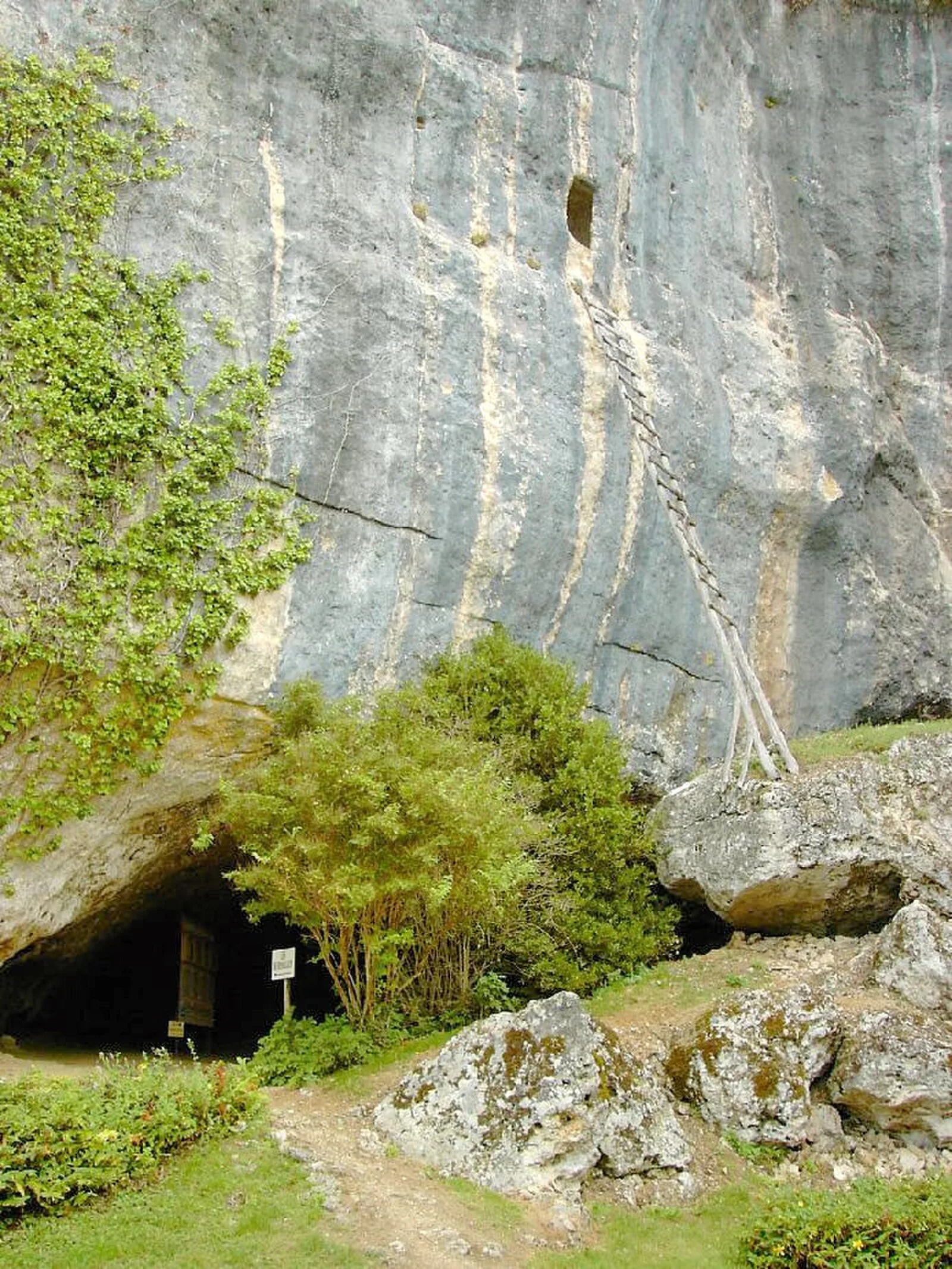
Also known as: Gisement de Laugerie Basse, grotte de Laugerie-Basse, Laugerie Basse, L'Aujariá Bassa, לוז'רי באס
| Type | Cave |
|---|---|
| Period | < 4500 BC |
| Country | France |
| Coordinates | 44.9497° N, 0.9983° E |