
 France
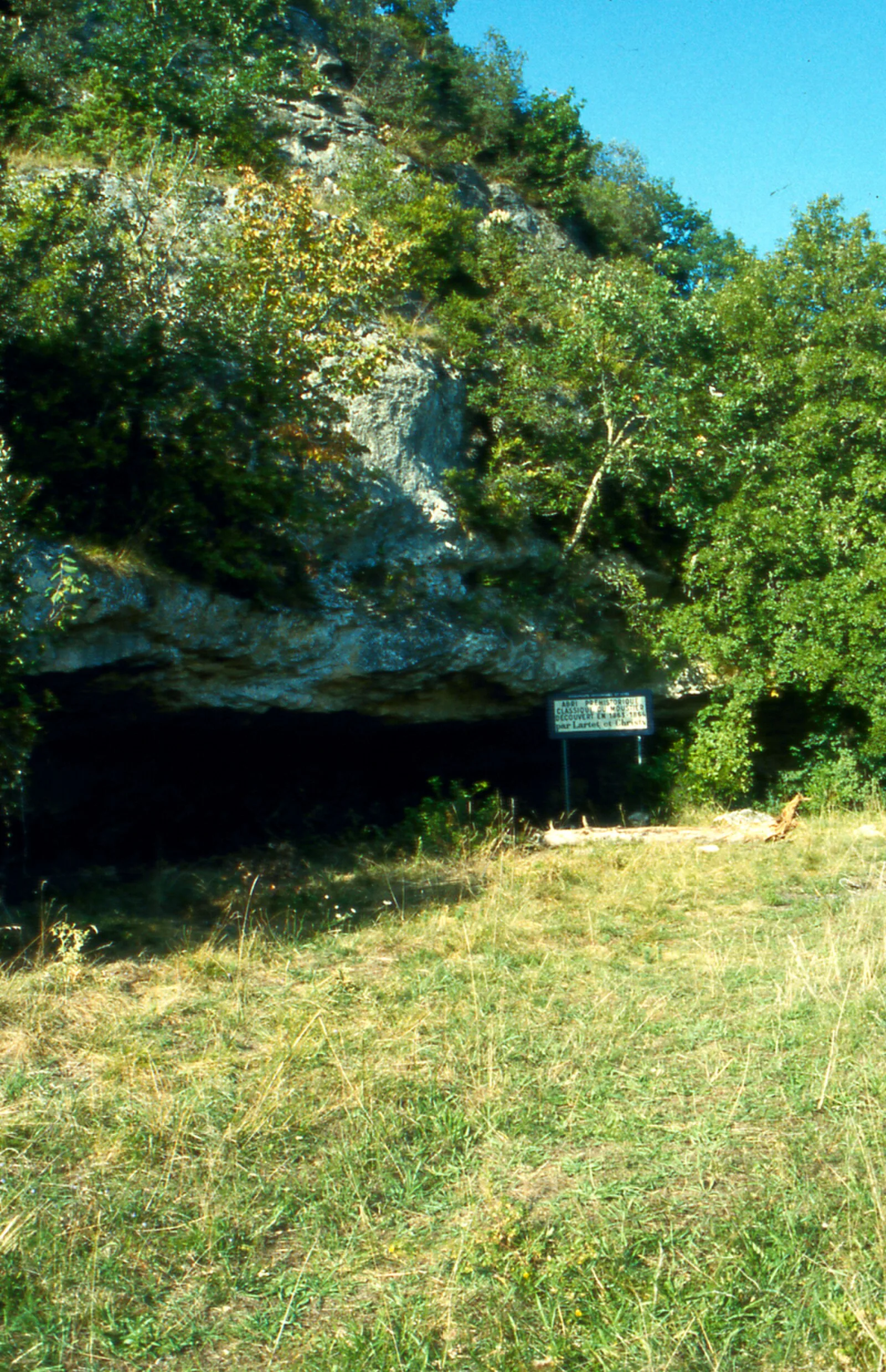
Le Moustier is an archaeological site comprising two rock shelters in Peyzac-le-Moustier, Dordogne, France [1] [2]. It is renowned for the discovery of a Homo neanderthalensis skeleton in 1908 [1] [2]. The Mousterian tool culture derives its name from this site [1] [3]. The location was first excavated in 1863 by English archaeologist Henry Christy and French paleontologist Édouard Lartet [1] [2] [4] [5]. In 1979, Le Moustier was inscribed on the UNESCO World Heritage List as part of the Prehistoric Sites and Decorated Caves of the Vézère Valley [1].
Le Moustier
Also known as: Lo Mostièr, לֶה מוּסטִיֶיה, ル・ムスティエ, 勒穆斯捷岩棚, 莫斯特洞
| Type | Cave Structures |
|---|---|
| Period | 500 BC - 1 AD |
| Country | France |
| Coordinates | 44.9941° N, 1.0600° E |