
 England
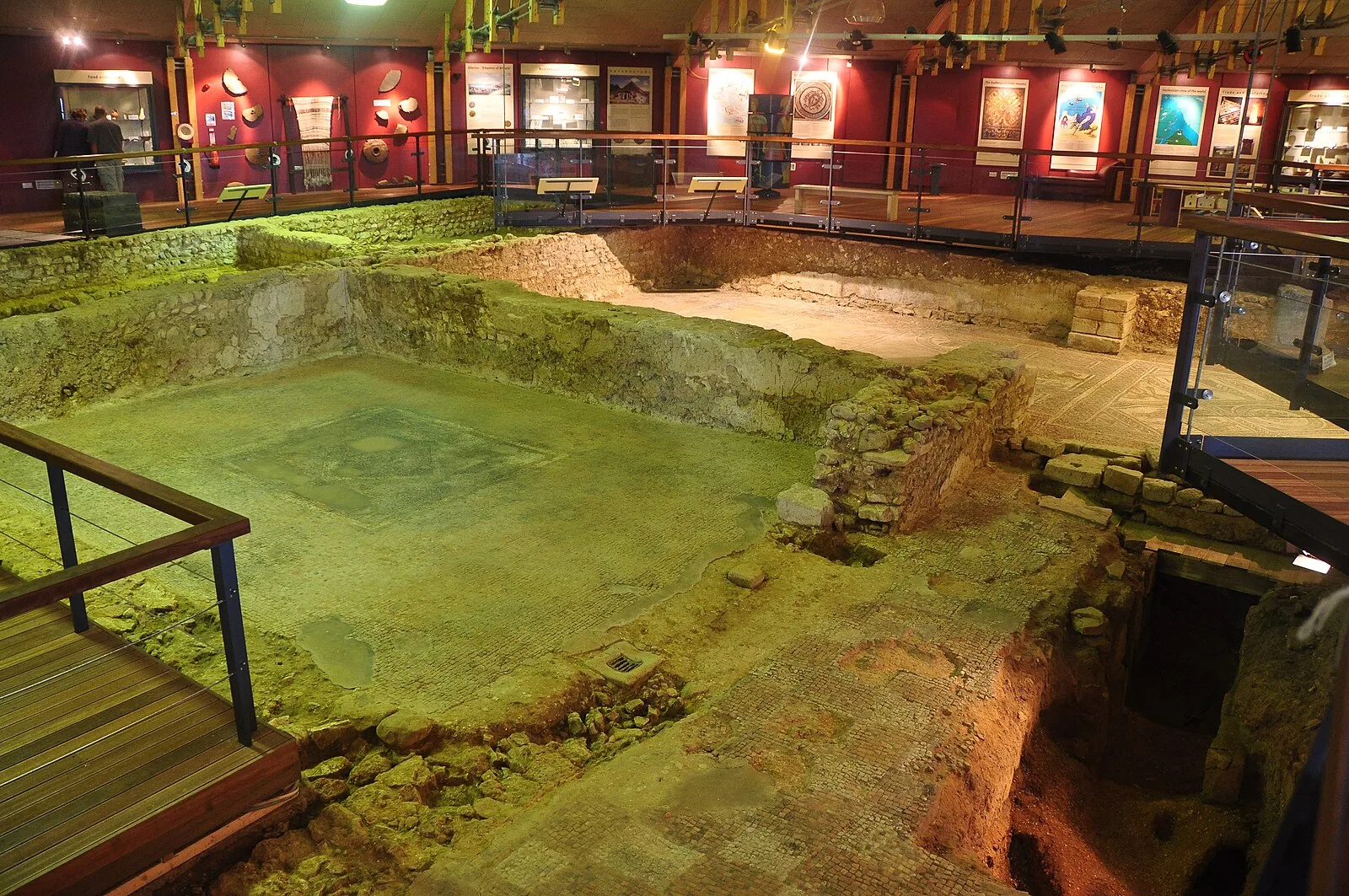
Brading Roman Villa was a Roman courtyard villa which has been excavated and put on public display in Brading on the Isle of Wight [1]. In 1879, a farmer called Mr Munns struck a buried mosaic floor while making holes on his land for a sheep pen [1]. The first simple villa dates from the mid-1st century but, over the next hundred years, it developed into a large and impressive stone-built villa around three sides of a central courtyard [1]. Its luxurious rooms contained many fine Roman mosaics [1]. Despite a disastrous fire in the 3rd century AD, the villa was still used for farming purposes for another 100 years [1]. Artefacts found within the house point to a high standard of living; Samian pottery, jewellery and games have all been found [1]. There are mosaics in five of the rooms in the main villa house, which display a variety of subjects indicating the owners' wealth and education [1]. On the north side of the main villa house are the remains of a farmhouse, probably lived in by workers, which has the remains of a hypocaust and a well [1].
Text: Wikipedia – 'Brading Roman Villa' (revision of 2026-03-01), CC BY-SA 4.0 · sentences selected and shortened by an AI system · source →Brading Roman Villa
Also known as: villa romaine de Brading, Villa rustica (Brading), Villa rustica of Brading
| Type | Residence/villa/farmhouse |
|---|---|
| Period | 1 - 500 AD |
| Country | England |
| Coordinates | 50.6729° N, 1.1544° W |