
 England
The name Arbeia comes from the Notitia Dignitatum, the only ancient source to feature the name [1]. The name entered widespread use as the probable name for the South Shields fort in 1953 [1]. The fort was built in 129 AD as a small cohort fort, a few years later than most of the Hadrian's Wall forts, on the Lawe Top overlooking the mouth of the River Tyne and four miles beyond the eastern end of Hadrian’s wall [1]. Its garrison was reduced during the occupation of Scotland in the reign of Antoninus Pius [1]. Early in Marcus Aurelius' reign it was reoccupied and from 198 it was considerably altered in plan and usage [1]. A dividing wall between the northern and southern halves of the fort allowed the north part to store supplies from sea-going ships, whilst the southern part remained a garrison [1]. The final garrison was the Numerus Barcariorum Tigrisiensium who were transferred from Lancaster Roman Fort and originally barge-men from the River Tigris in the Middle-East recorded in the Notitia Dignitatum [1].
Text: Wikipedia – 'Arbeia' (revision of 2026-08-07), CC BY-SA 4.0 · sentences selected and shortened by an AI system · source →Arbeia
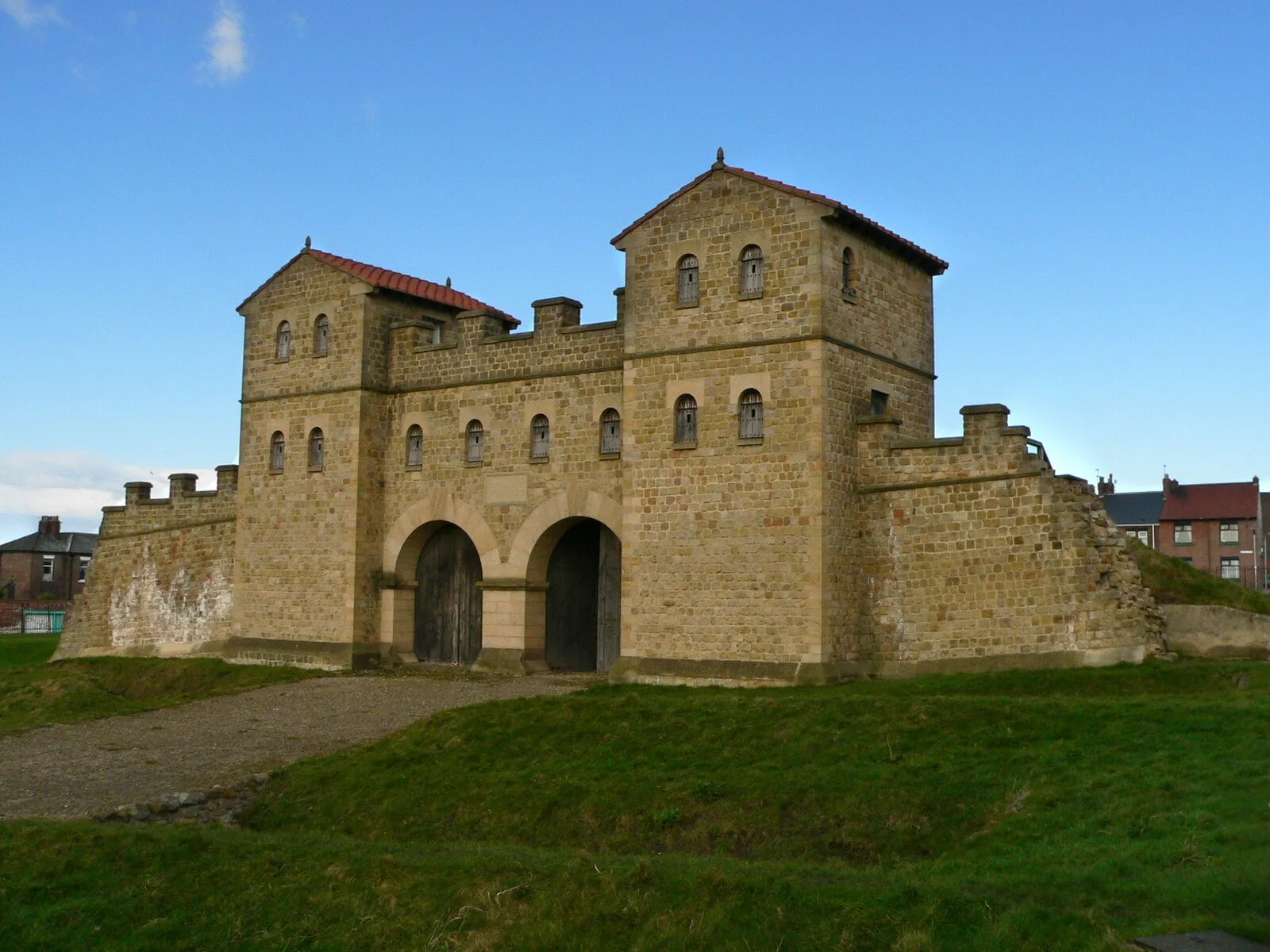
Also known as: Arbeiako erromatar gotorlekua, Arbeiako erromatar kanpalekua, Arbeia Roman fort, Arbeia Roman Fort and Museum, Arbeia (South Shields), Castra Arbeia, castra de Arbeia, castrum de Arbeia, castrum de South Shields, Kastell Arbeia, Roman fort, South Shields, South Shields Roman fort
| Type | Fortress/citadel |
|---|---|
| Period | 1 - 500 AD |
| Country | England |
| Coordinates | 55.0041° N, 1.4300° W |