
 Croatia
Palagruža is a small Croatian archipelago in the middle of the Adriatic Sea [1]. Authentic archaeological finds from the Neolithic period have been discovered on Palagruža, including a small number of early Neolithic Impressed Ware pottery dated to the 6th–4th millennia BC, as well as a larger quantity of Ljubljana-Adriatic culture and Cetina culture artifacts [1]. Artifacts indicating human presence on Palagruža from the 2nd millennium BC are rarer, but there are substantial finds from ancient Greek seafarers, including material from the Late Archaic, Classical, Hellenistic, and Early Roman periods [1]. There are also recorded archaeological finds from the Late Roman and early medieval periods [1]. Palagruža consists of one larger island, called Vela or Velika Palagruža, and a smaller one, Mala Palagruža, as well as a dozen nearby rocks and reefs composed of dolomite [1]. The archipelago is 123 km south of Split on the Croatian mainland, 60 km south-west of Lastovo, Croatia, and 53 km north-north-east of the Gargano peninsula in Italy [1].
Text: Wikipedia – 'Palagruža' (revision of 2026-09-21), CC BY-SA 4.0 · sentences selected and shortened by an AI system · source →Palagruža
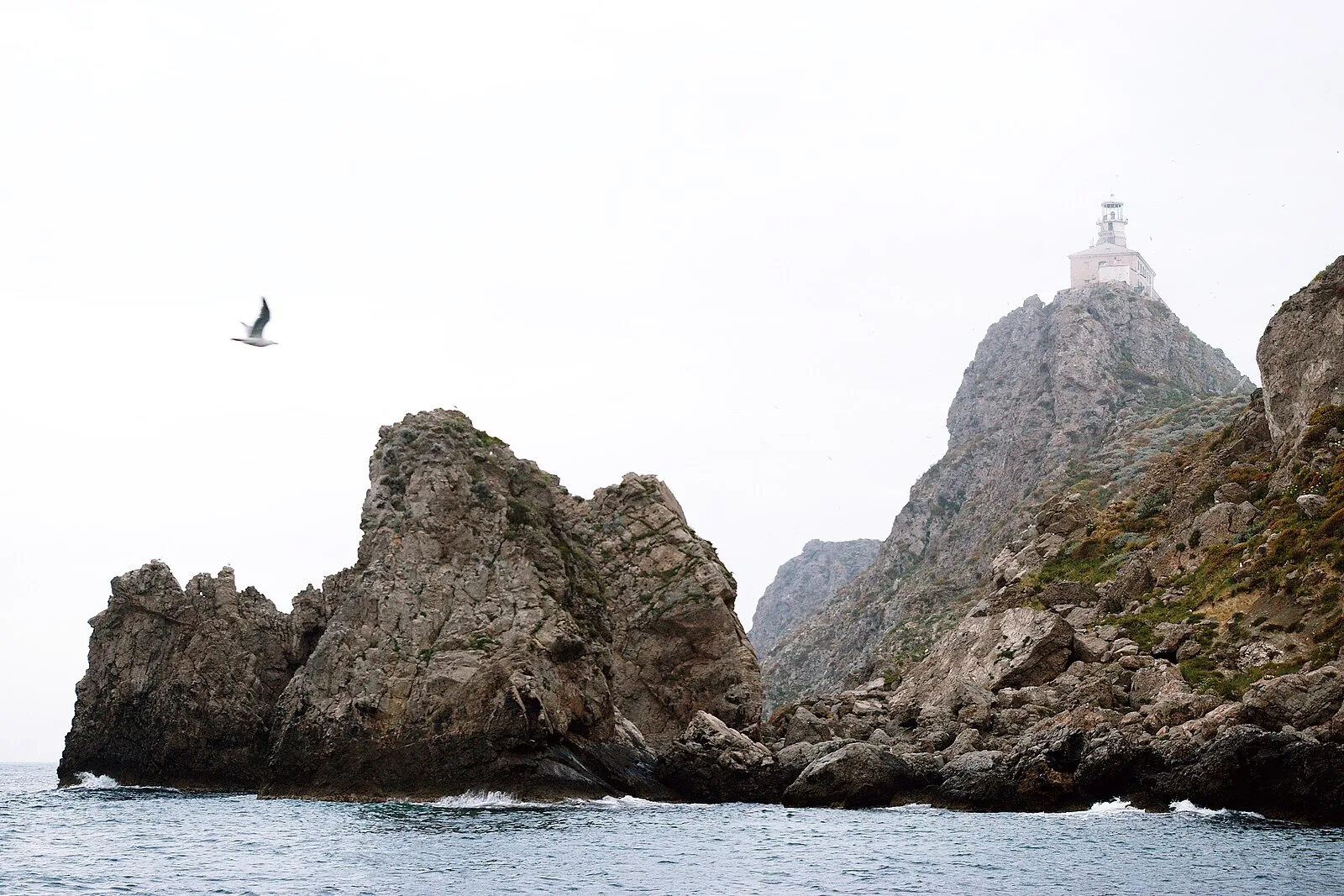
Also known as: 팔라그루자섬, Otoci Palagruža, Palagruški otoki, Palagruško otočje, Palagruža-archipel, Palagruža (Chorvatsko : souostroví), Palagruža (ostrvo), Pelagosa, Παλαγκρούζα, Παλαγκρούζα (αρχιπέλαγος), Палагружа, Пелагоса
| Type | Natural feature |
|---|---|
| Period | < 4500 BC |
| Country | Croatia |
| Coordinates | 42.3930° N, 16.2588° E |