
 Bulgaria
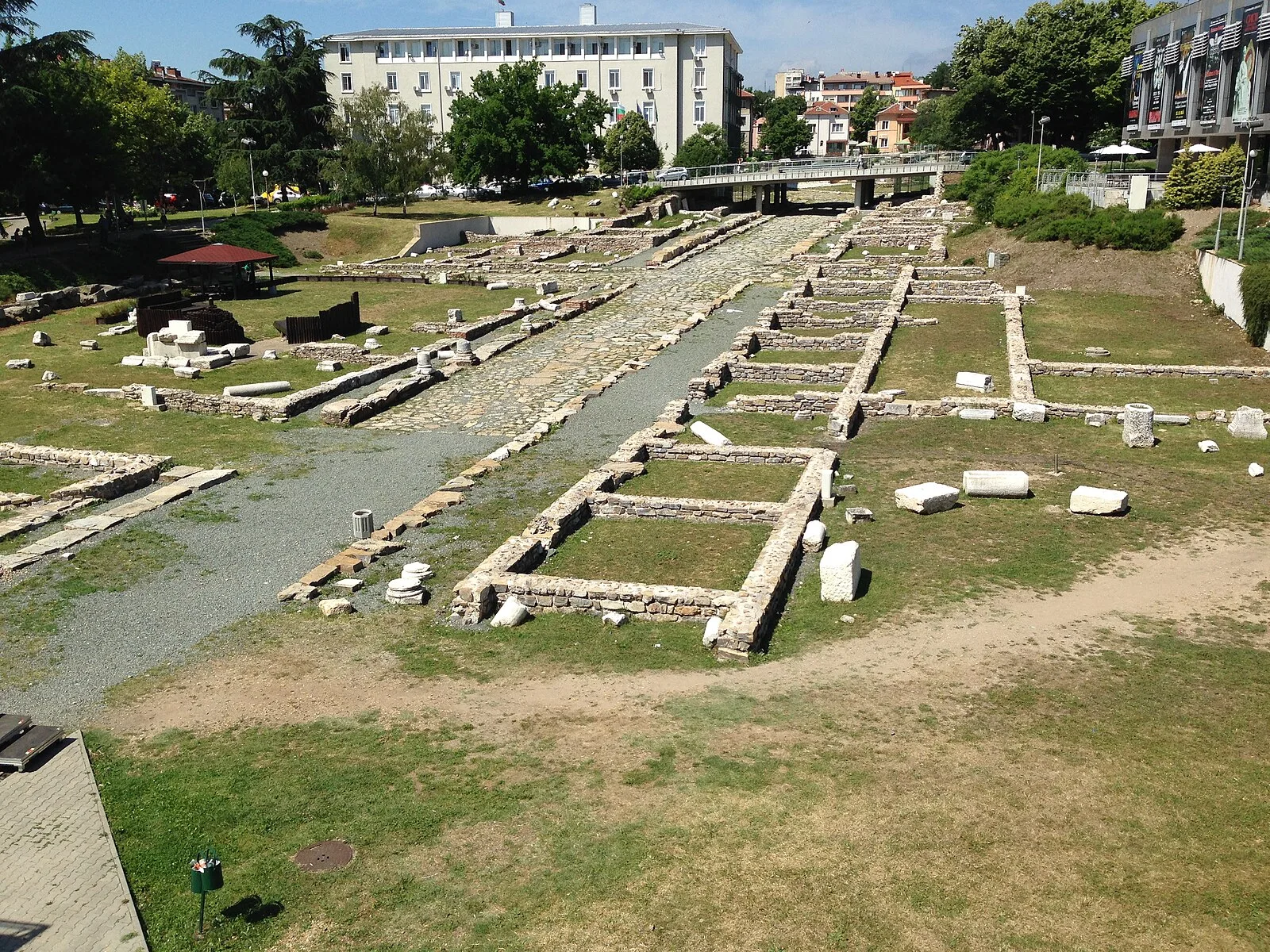
The earliest traces of civilisation in the region of Stara Zagora date back to the end of the 7th millennium B.C. Then, almost simultaneously, four prehistoric settlements emerged on the present territory of Stara Zagora and its surroundings [1]. In 1968, Neolithic dwellings from the mid-6th millennium BC were discovered in the town [1]. Near Stara Zagora, a ritual structure nearly 8,000 years old has also been discovered [1]. Under the Roman Empire, the city was renamed Ulpia Augusta Traiana in honour of emperor Trajan [1]. The city grew to its largest extent under Marcus Aurelius and became the most important city in the Roman province of Thrace [1].
Text: Wikipedia – 'Stara Zagora' (revision of 2026-07-25), CC BY-SA 4.0 · sentences selected and shortened by an AI system · source →Stara Zagora
Also known as: 스타라자고라, 스타라 자고라, Augusta Traiana, Beroe Augusta Traiana, Boruj, Eski Sagra, Eski Zağara, Eski Zagra, Irinopolis, Stara Sagora, Stara Sagora (Steed), Stara Zagor
| Type | City/town/settlement |
|---|---|
| Period | < 4500 BC |
| Country | Bulgaria |
| Coordinates | 42.4257° N, 25.6345° E |