
 Afghanistan
Tepe Sardar, also Tapa Sardar or Tepe-e-Sardar, is an ancient Buddhist monastery in Afghanistan [1]. It is located near Ghazni, and it dominates the Dasht-i Manara plain [1]. The site displays two major artistic phases, an Hellenistic phase during the 3rd to 6th century CE, followed by a Sinicized-Indian phase during the 7th to 9th century [1]. Tapa Sardar is the ruin of a large Buddhist stupa - monastery complex which is located four Kilometers southeast of the city of Ghazni [1]. A votive inscription was found at the site, saying that the sanctuary was known in the past as the Kanika mahārāja vihāra, suggesting a foundation date during the period of the Kushan Empire, in the 2nd-3rd century CE, possibly at the time of Kanishka II or Kanishka III [1]. The sanctuary was first destroyed by a great fire in the 7th century, putting an end to the period of Gandharan art at the site [1]. The sanctuary was rebuilt and expanded in the 7th-8th century CE [1].
Text: Wikipedia – 'Tepe Sardar' (revision of 2026-07-18), CC BY-SA 4.0 · sentences selected and shortened by an AI system · source →Tepe Sardar
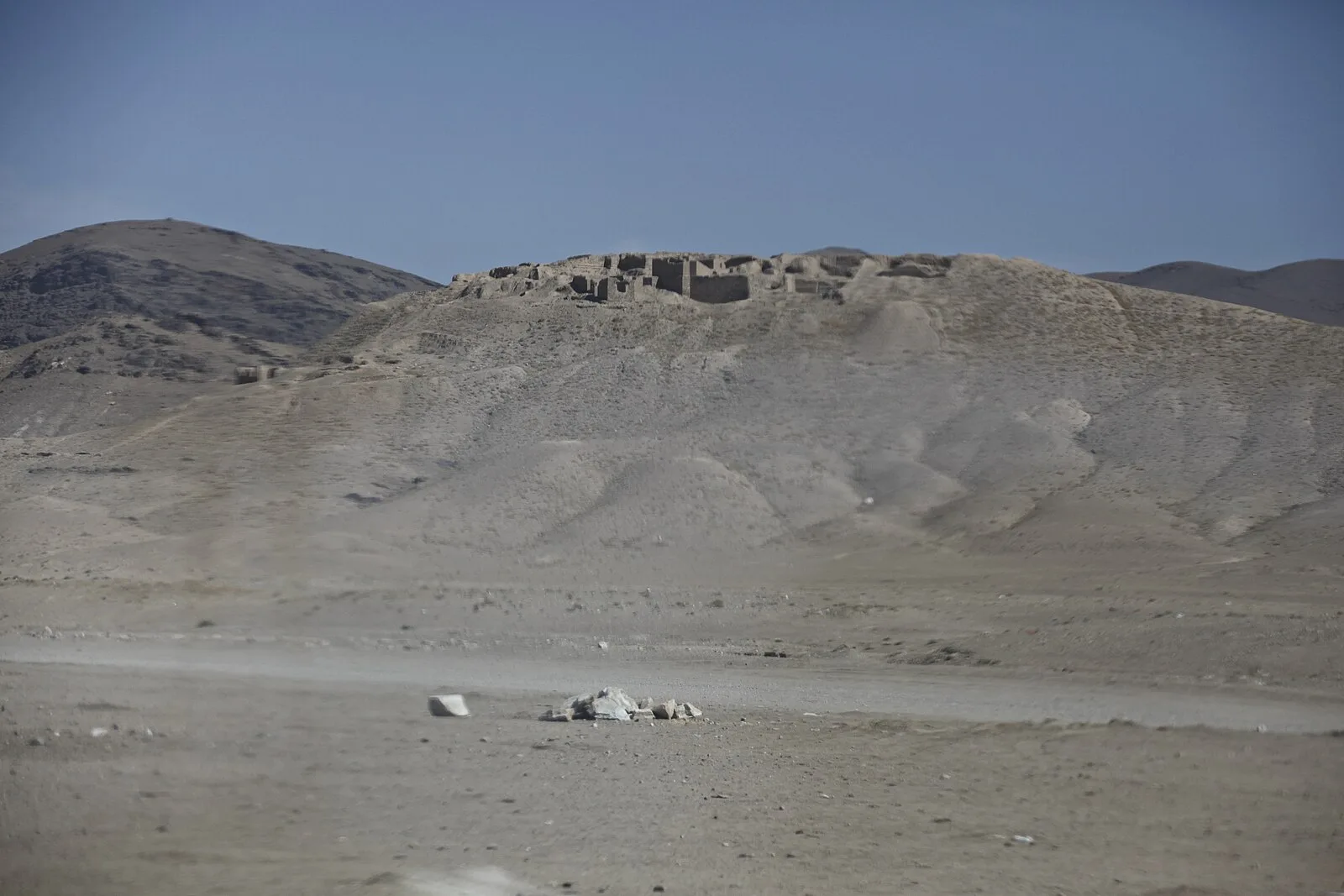
Also known as: Tapa Sardar, تپه سردار, තෙපේ සර්දාර්
| Type | Monastery |
|---|---|
| Period | 1 - 500 AD |
| Country | Afghanistan |
| Coordinates | 33.5587° N, 68.4568° E |