
 Afghanistan
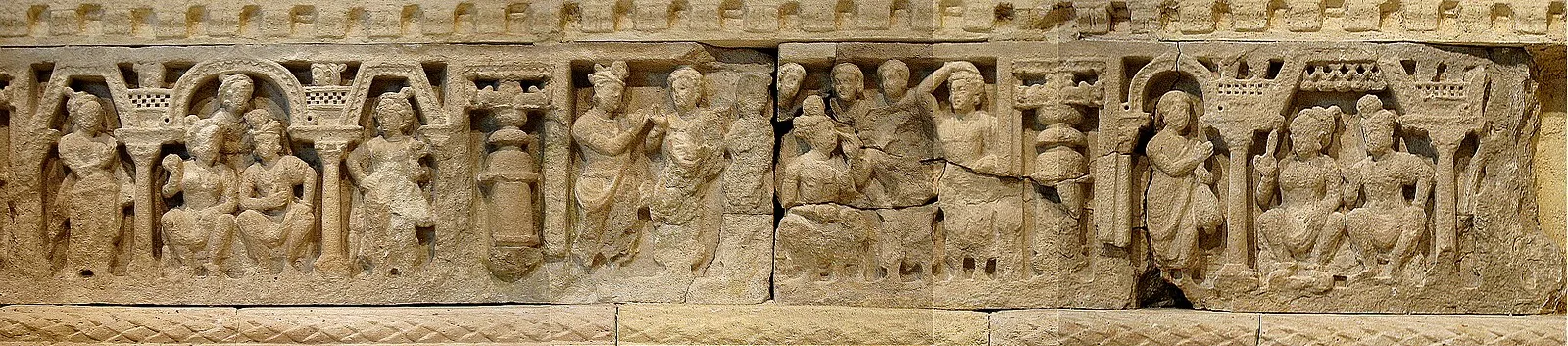
The Chakhil-i-Ghoundi Stupa, also code-named "Stupa C1", is a small limestone stupa from the Chakhil-i-Ghoundi monastery, at the archeological site of Hadda in eastern Afghanistan [1]. Most of the remains of the stupa were gathered in 1928, by the archeological mission of Frenchman Jules Barthoux of the French Archaeological Delegation in Afghanistan [1]. They are today on display at the Musée Guimet in Paris [1]. It is usually dated to the 2nd–3rd century CE [1]. The decoration of the stupa provides an interesting case of Greco-Buddhist art, combining Hellenistic and Indian artistic elements [1]. The stupa base is an elaborate construction, consisting of three tiers organised in a stair, and two sides [1]. The base combines very contrasted scenes and sculptural motifs: Hellenistic scenes at the bottom tier, and Indian Buddhist scenes at the top two tiers [1].
Text: Wikipedia – 'Chakhil-i-Ghoundi Stupa' (revision of 2026-06-18), CC BY-SA 4.0 · sentences selected and shortened by an AI system · source →Chakhil-i-Ghoundi Stupa
Also known as: Stupa de Chakhil-I-Goundi, استوپه شاخیل غوندی, ශඛීල්-ඉ-ඝූන්ඩි ස්තූපය
| Type | Monastery |
|---|---|
| Period | 1 - 500 AD |
| Country | Afghanistan |
| Coordinates | 34.3695° N, 70.4868° E |