
 Afghanistan
Haḍḍa is a Greco-Buddhist archeological site located ten kilometers south of the city of Jalalabad [1]. Some 23,000 Greco-Buddhist sculptures, both clay and plaster, were excavated in Hadda during the 1930s and the 1970s [1]. The findings combine elements of Buddhism and Hellenism in an almost perfect Hellenistic style [1]. Tapa Shotor was a large Sarvastivadin Buddhist monastery [1]. The earliest structures at Tapa Shotor date to the Indo-Scythian king Azes II (35-12 BCE) [1]. A sculptural group excavated at the Hadda site of Tapa-i-Shotor represents Buddha surrounded by perfectly Hellenistic Herakles and Tyche holding a cornucopia [1].
Text: Wikipedia – 'Hadda, Afghanistan' (revision of 2026-08-17), CC BY-SA 4.0 · sentences selected and shortened by an AI system · source →Hadda
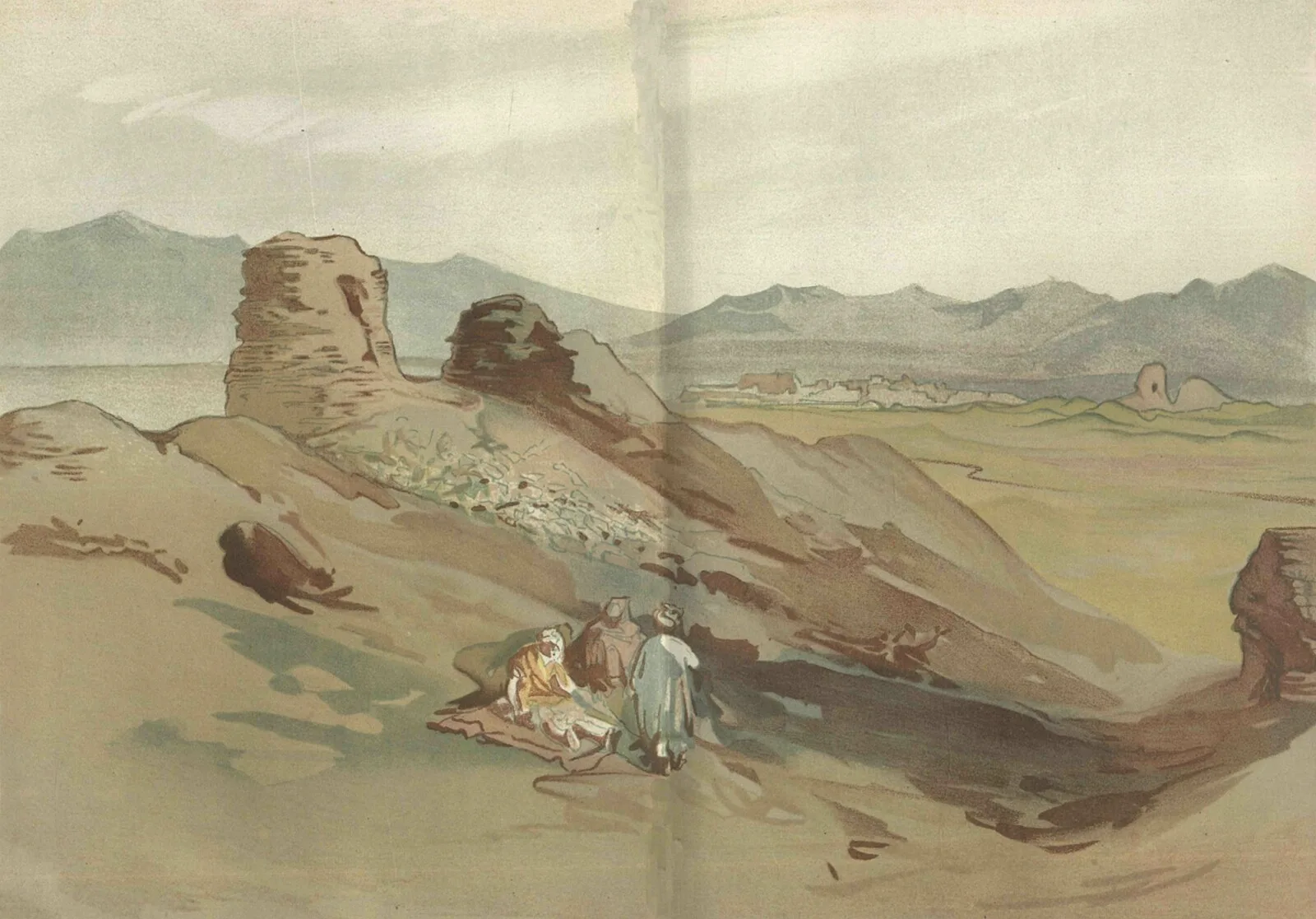
Also known as: Hadda (Afganistan), Hadda (Afganisztán), Hadda (Afghanistan), Hadda, Afghanistan, Hidda, Хадда, האדא, هده, هډه, हड्डा, ஹட்டா, ഹദ്ദ
| Type | Monastery |
|---|---|
| Period | 1 - 500 AD |
| Country | Afghanistan |
| Coordinates | 34.3619° N, 70.4707° E |