
 Croatia
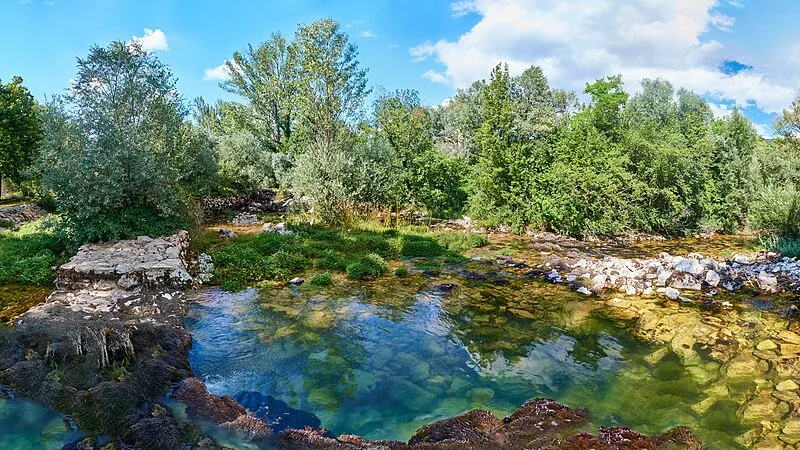
The Cetina culture is an Early Bronze Age culture (c. 2200-1500 BC) named after archaeological sites along the Cetina River in central Dalmatia, Croatia. It is mainly known from its funerary practices: the dead were buried in stone tumuli, placed in a crouched position in stone chests or as cremated remains in clay urns, typically as single burials at the centre of the mound. The Cetina Valley preserves a string of settlements from the early Neolithic through the Iron Age, with some occupying entire river islands up to 1.5 hectares in size. Over 60 swords and 30 Greco-Illyrian helmets from the mid-first millennium BC were recovered from the river near Trilj, suggesting ritual deposition. Cetina culture finds extend to the central Dalmatian islands, Albania, southern Italy, and Greece.
Cetina
| Type | Mound/tumulus |
|---|---|
| Period | 3000 - 1500 BC |
| Country | Croatia |
| Coordinates | 43.4400° N, 16.6864° E |