
 Sweden
The Håga mound (Hågahögen) or King Björn's Mound (Kung Björns hög) is a large Nordic Bronze Age tumulus in the western outskirts of Uppsala, Sweden [1]. It is one of the most magnificent remains from the Nordic Bronze Age [1]. It is Scandinavia's most gold-rich bronze age grave ever found [1]. Hågahögen mound is approximately 7 metres high and 45 metres across [1]. It was constructed circa 1000 B.C. by the shore of a narrow inlet of the sea [1]. The mound was built of turfs that had been laid on top of a cairn [1]. The cairn was built on top of a wooden chamber containing a hollow oak coffin [1]. Within the coffin are the cremated remains of a short man [1].
Text: Wikipedia – 'Håga mound' (revision of 2026-09-14), CC BY-SA 4.0 · sentences selected and shortened by an AI system · source →Håga Mound
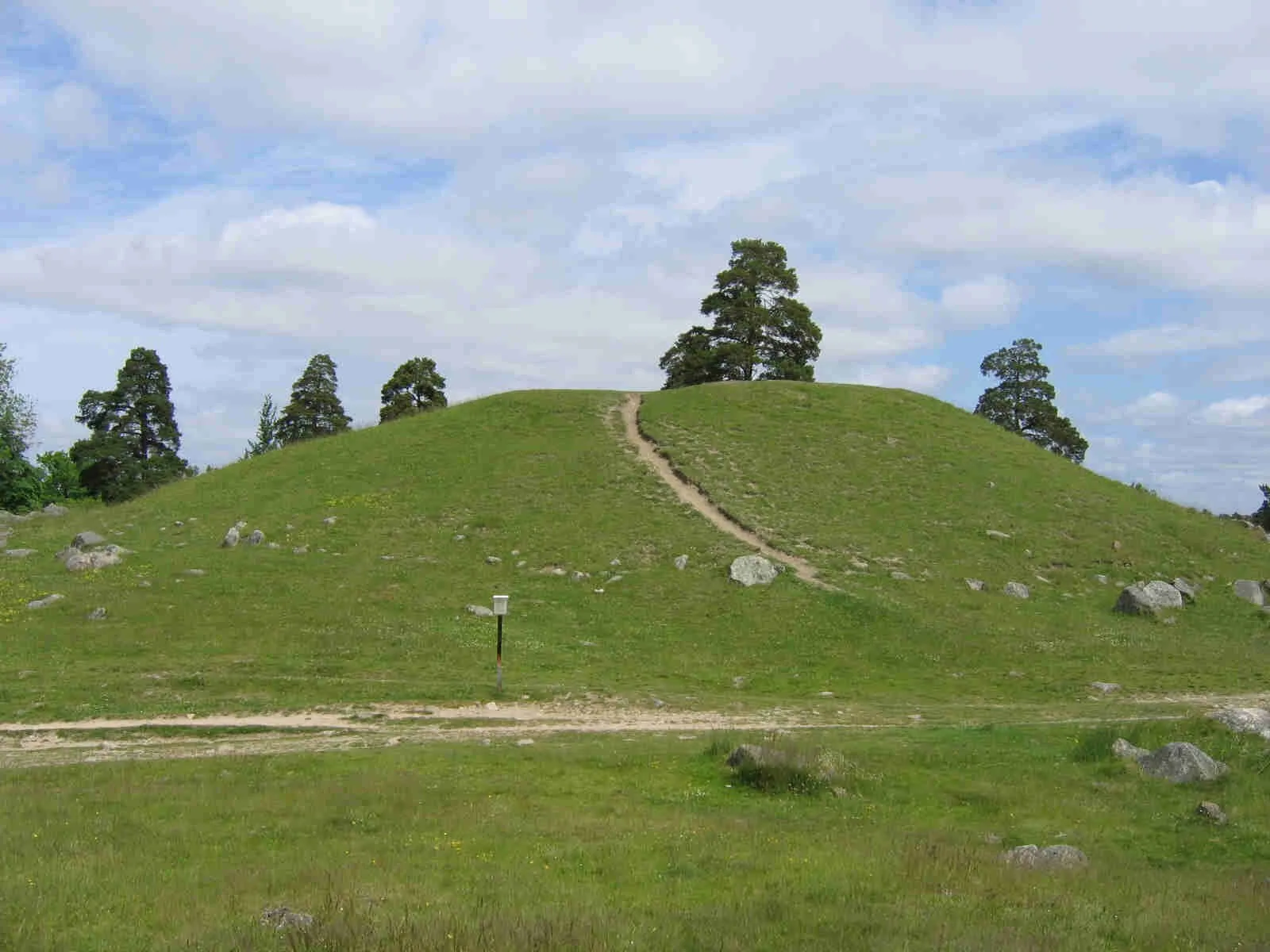
Also known as: Grabhügel von Håga, Hågahaugen, Hagahogen, Haga kurgan, Haut de Björn, Haut du roi Björn, King Björn's Mound, Kung Björns hög, Курган Хога
| Type | Mound/tumulus |
|---|---|
| Period | 1500 - 500 BC |
| Country | Sweden |
| Coordinates | 59.8335° N, 17.5833° E |