
 South Korea
The Bangudae Petroglyphs are pre-historic engravings on flat vertical rock faces on the riverside of the Daegokcheon stream, a branch of the Taehwa River, which runs eastward and joins the East Sea at Ulsan [1]. They are the National Treasure of South Korea No. 285 and were registered on the UNESCO World Heritage List in 2025 [1]. The site presents a vivid and intricate portrayal of whaling [1]. The carvings, featuring animals, human figures, hunting scenes, concentric circles, diamond patterns, and inscriptions, exhibit remarkable realism and energy [1]. The Bangudae rocks are around 8 m wide and around 5 m high [1]. In total, 312 engravings can be seen, of which 200 figures are accounted for as the animals and 23 are unidentified creatures [1]. Animals whose species can be identified include large cetaceans such as the northern right whale, the humpback whale, the right whale, the gray whale, and the sperm whale [1].
Text: Wikipedia – 'Bangudae Petroglyphs' (revision of 2026-09-17), CC BY-SA 4.0 · sentences selected and shortened by an AI system · source →Bangudae Petroglyphs
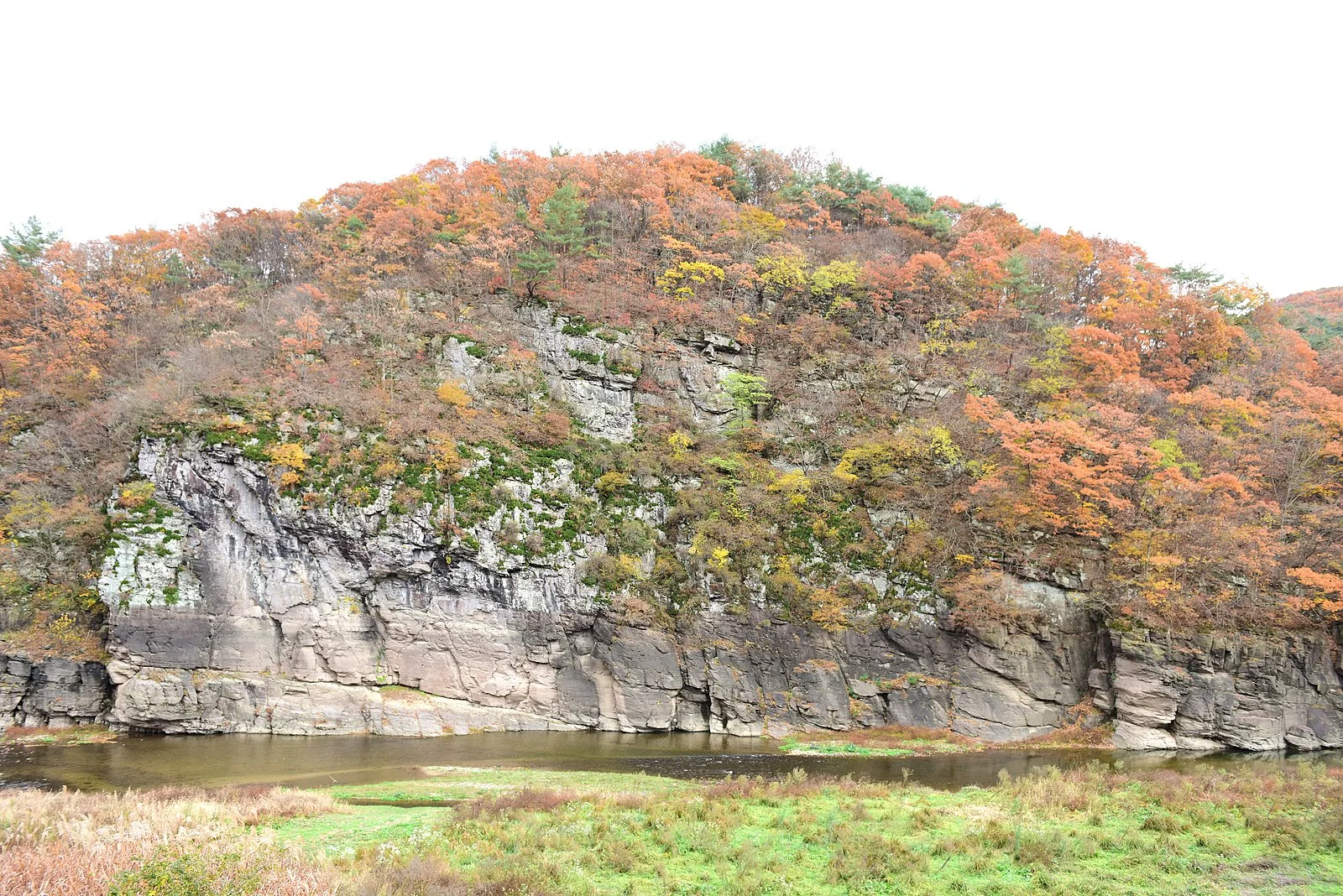
Also known as: 반구대암각화, 반구대 암각화, 울산 반구대 암각화, 울주 대곡리 반구대 암각화, Bangudae-bergkunst, bangudaejski petroglifi, Bangudae Petroglifleri, Bangudė petroglifai, Petroglifiċi ta' Bangudae, petroglifi v Bangudaeju, Petroglifos de Bangudae, Petroglyfy podél toku Bangučeon
| Type | Petroglyphs |
|---|---|
| Period | < 4500 BC |
| Country | South Korea |
| Coordinates | 35.5993° N, 129.1850° E |