
 Portugal
Cividade de Terroso was one of the oldest and largest Castro culture settlements on the northwestern Iberian coast, near present-day Povoa de Varzim, Portugal, with occupation spanning from the 8th century BC to the 3rd century AD. The hilltop acropolis at 153 metres covered 12 hectares and was defended by three concentric rings of walls. Circular granite houses with conical straw roofs were organized into family nuclei around private, flagstone-paved courtyards. The economy relied on agriculture (wheat, barley, broadbeans) and Atlantic maritime trade routes. Uniquely for the Castro culture, funerary enclosures were found within the settlement, where cremation ashes were placed in small stone-lined pits inside houses. The site was destroyed following the Roman conquest in 138 BC. Excavations began in the early 20th century under Rocha Peixoto, with systematic work resuming from 1980.
Cividade de Terroso
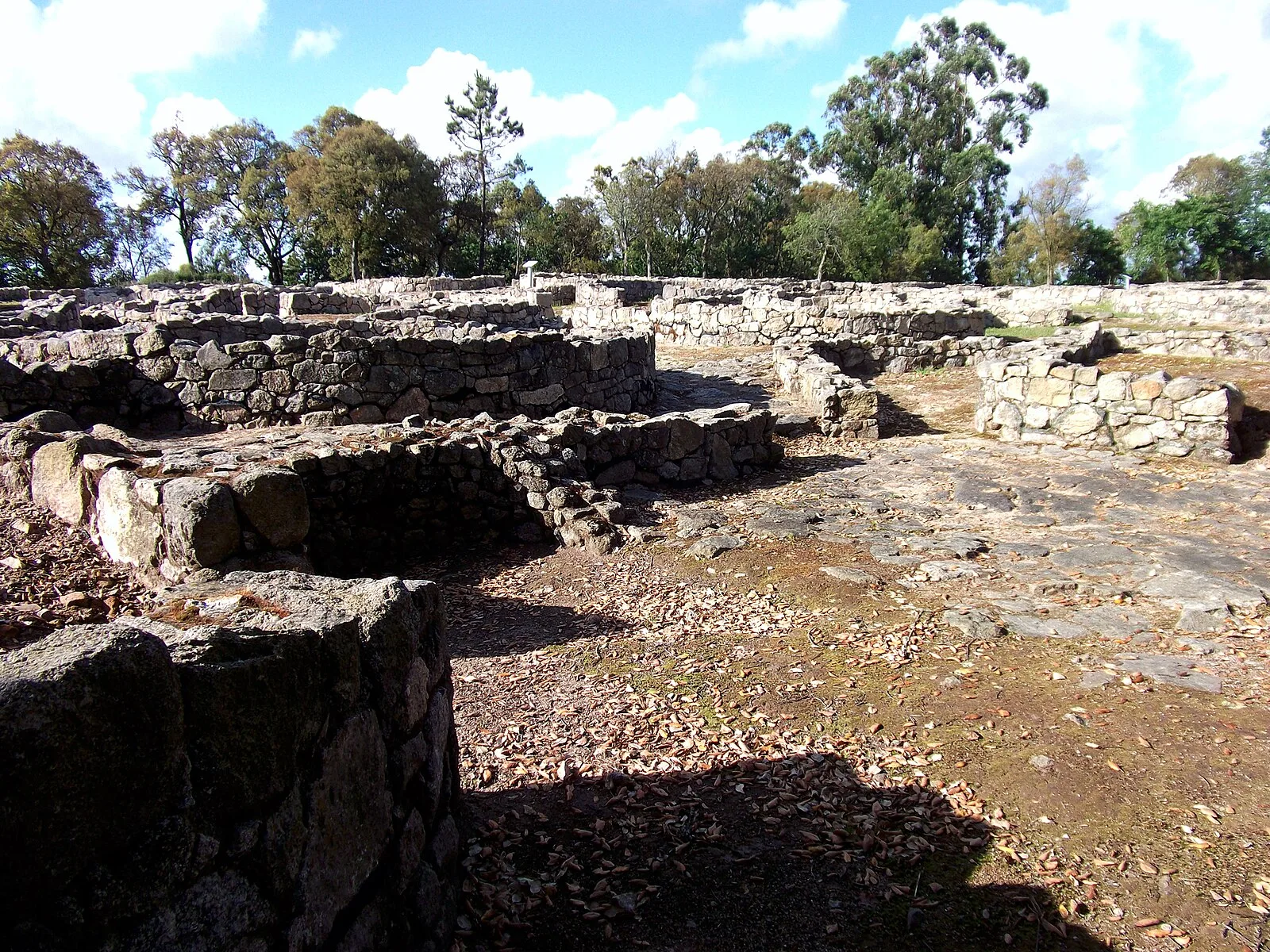
Also known as: Terrosoko kastroa, Городище Террошу
| Type | City/town/settlement |
|---|---|
| Period | 1500 - 500 BC |
| Country | Portugal |
| Coordinates | 41.4127° N, 8.7205° W |