
 Peru
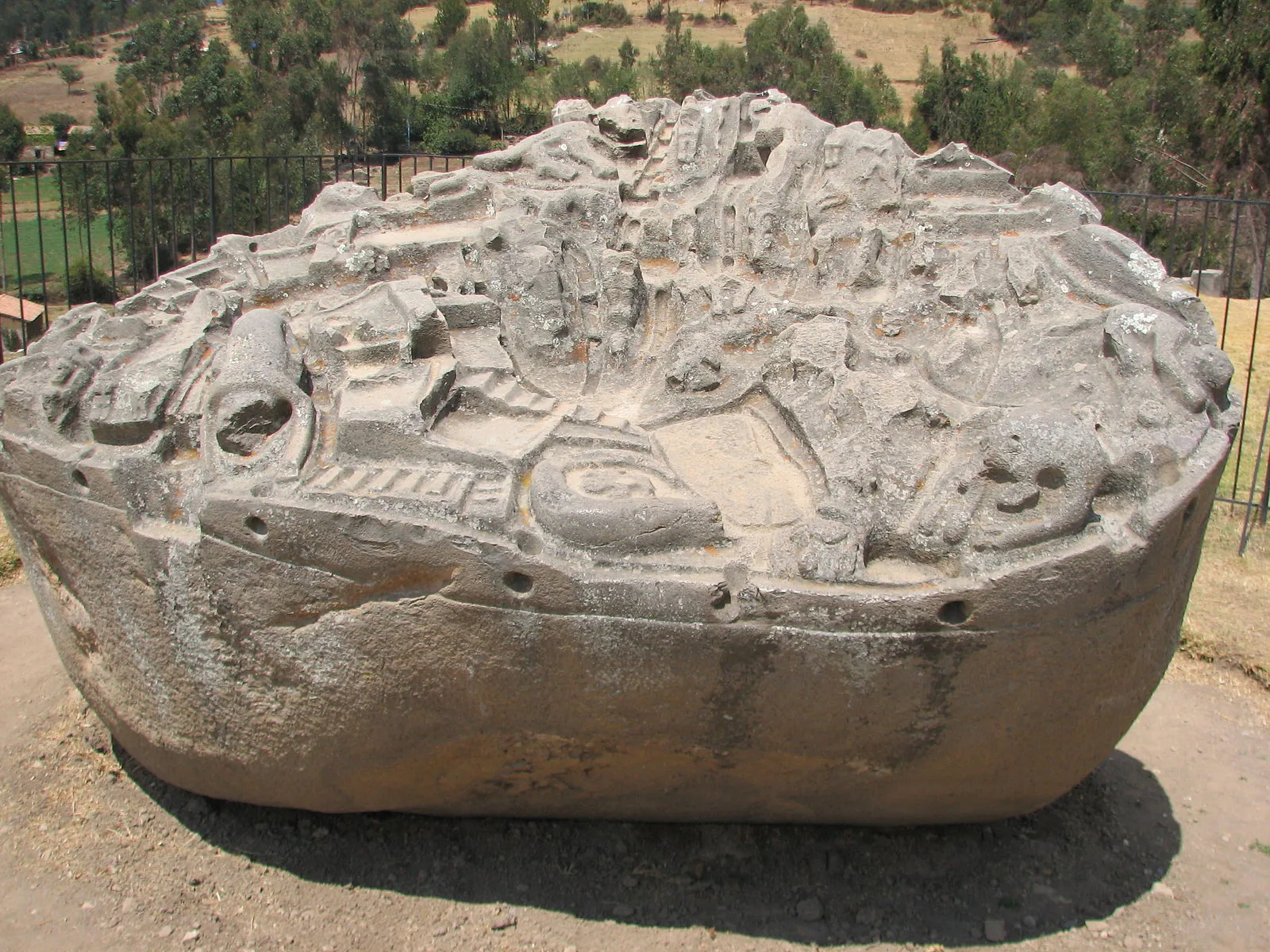
PeruSayhuite is an archaeological site 47 kilometres east of the city Abancay, about 3 hours away from the city of Cusco, in the province Abancay in the region Apurímac in Peru [1]. The site is regarded as a center of religious worship for Inca people, focusing on water [1]. An important feature on the site is the Sayhuite monolith, an enormous rock containing more than 200 geometric and zoomorphic figures, including reptiles, frogs, and felines [1]. Found at the top of a hill named Concacha, the stone was sculpted as a topographical hydraulic model, complete with terraces, ponds, rivers, tunnels, and irrigation channels [1].
Text: Wikipedia – 'Sayhuite' (revision of 2026-07-18), CC BY-SA 4.0 · sentences selected and shortened by an AI system · source →Sayhuite
Also known as: Saivitė, Sajvitė, Sayhuite-Monolith, Saywite, Saywiti rumi, Сайвите, Сајвите, საიუიტე
| Type | Temple complex |
|---|---|
| Period | 1000 - 1500 AD |
| Country | Peru |
| Coordinates | 13.5470° S, 72.8029° W |