
 Peru
PeruLas Haldas or Las Aldas is a large archaeological complex from before and during the initial ceramic period (1800–1000 BCE) of Peru [1]. Las Haldas is located on the Pacific coast approximately 300 kilometres north of Lima and about 20 kilometres south of the Casma river valley [1]. Las Haldas was discovered in 1956 and has since been studied by many archaeologists [1]. The ruins cover about 40 hectares, consisting of a 370-meter long, U-shaped central area with a large mound at one end and four slightly elevated plazas [1]. The ruins at Las Haldas primarily date from the Initial Ceramic Period of 1800 BCE to 1000 BCE [1]. However, the site was occupied in the Late Pre-Ceramic Period from 3000 BCE to 1800 BCE and continued to be occupied in the Early Horizon Period of 1000 BCE to 200 BCE [1]. Most of the monumental construction occurred during two phases, the first beginning about 2000 BCE and lasting 300 to 400 years and the second phase, relatively brief, beginning about 1400 BCE [1].
Text: Wikipedia – 'Las Haldas' (revision of 2026-07-18), CC BY-SA 4.0 · sentences selected and shortened by an AI system · source →Las Haldas
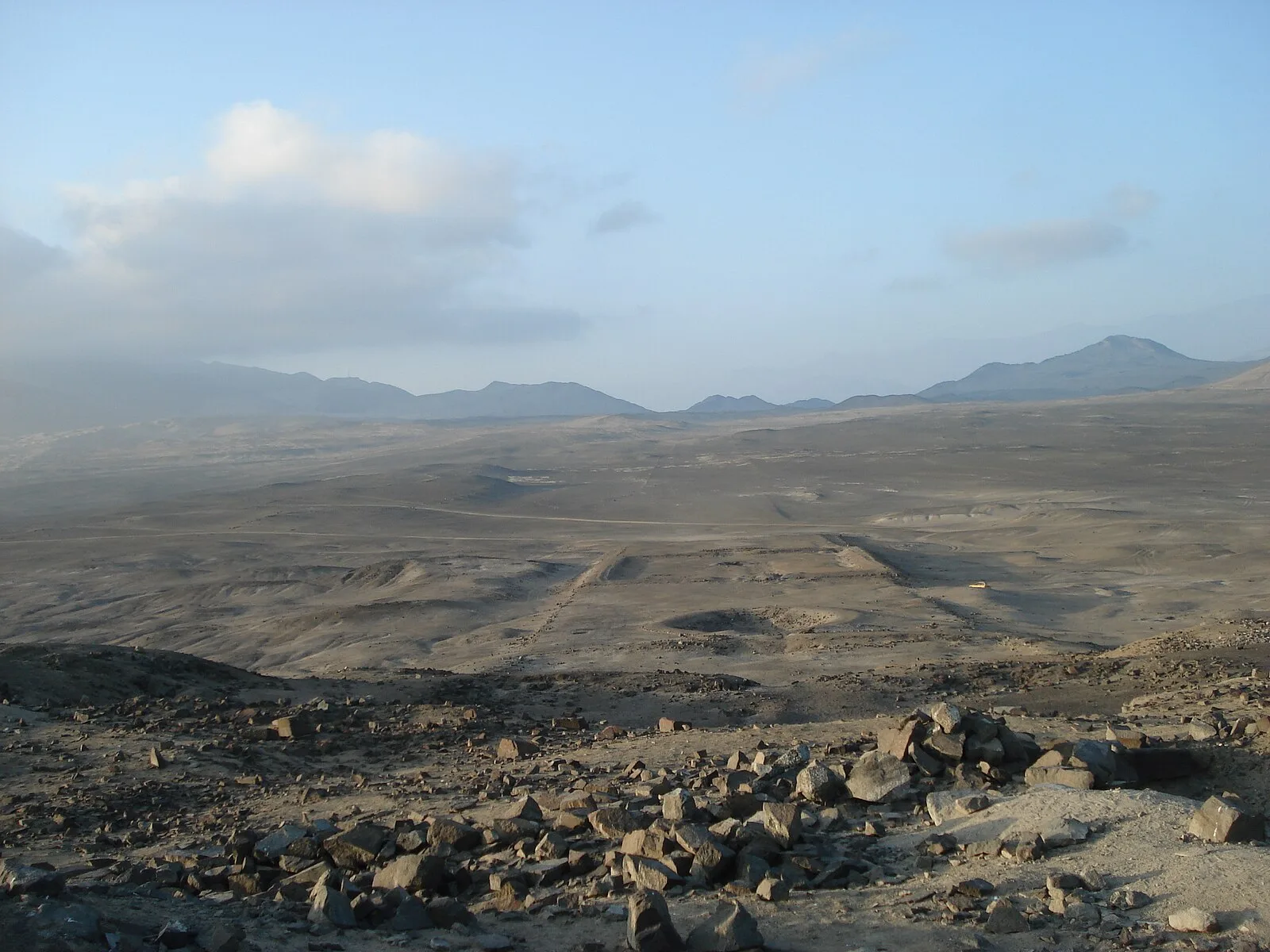
Also known as: Las Aldas, Лас-Альдас, 拉斯哈爾達斯
| Type | City/town/settlement |
|---|---|
| Period | 3000 - 1500 BC |
| Country | Peru |
| Coordinates | 9.7023° S, 78.2972° W |