
 Peru
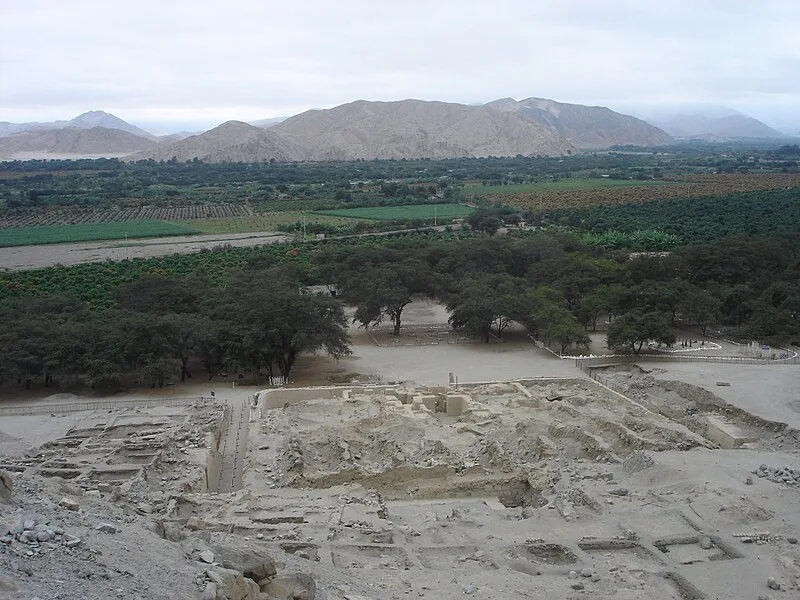
PeruSechin Bajo is located in the valley of the Sechin River, about 12 kilometres from the Pacific Ocean and about 330 kilometres northwest of Lima, Peru [1]. Sechin Bajo is one ruin among many located in close proximity to each other in the valleys of the Casma and Sechin Rivers [1]. In 2008, a German and Peruvian archaeological team, headed by Peter Fuchs, announced that a circular plaza, 10–12 meters in diameter and constructed of rocks and rectangular adobe bricks had been found at Sechin Bajo [1]. Radiocarbon dating indicated that plaza was constructed in 3500 BCE [1]. A nearby 2-meter-tall frieze was dated at 3600 BCE [1]. The ruins of Sechin Bajo cover an area of about 37 hectares [1]. The ceremonial center of the ruin consists of three monumental constructions dating from different times [1]. The "First Edifice" or "First Building" is the oldest, initially consisting of a platform 16 metres square built of rocks and adobe brick and raised 2 meters over sunken circular plazas [1].
Text: Wikipedia – 'Sechin Bajo' (revision of 2026-09-19), CC BY-SA 4.0 · sentences selected and shortened by an AI system · source →Sechin Bajo
Also known as: 세친 바호, Sechín Baxu, 謝欽巴霍
| Type | City/town/settlement |
|---|---|
| Period | 4500 - 3000 BC |
| Country | Peru |
| Coordinates | 9.4645° S, 78.2650° W |