
 Peru
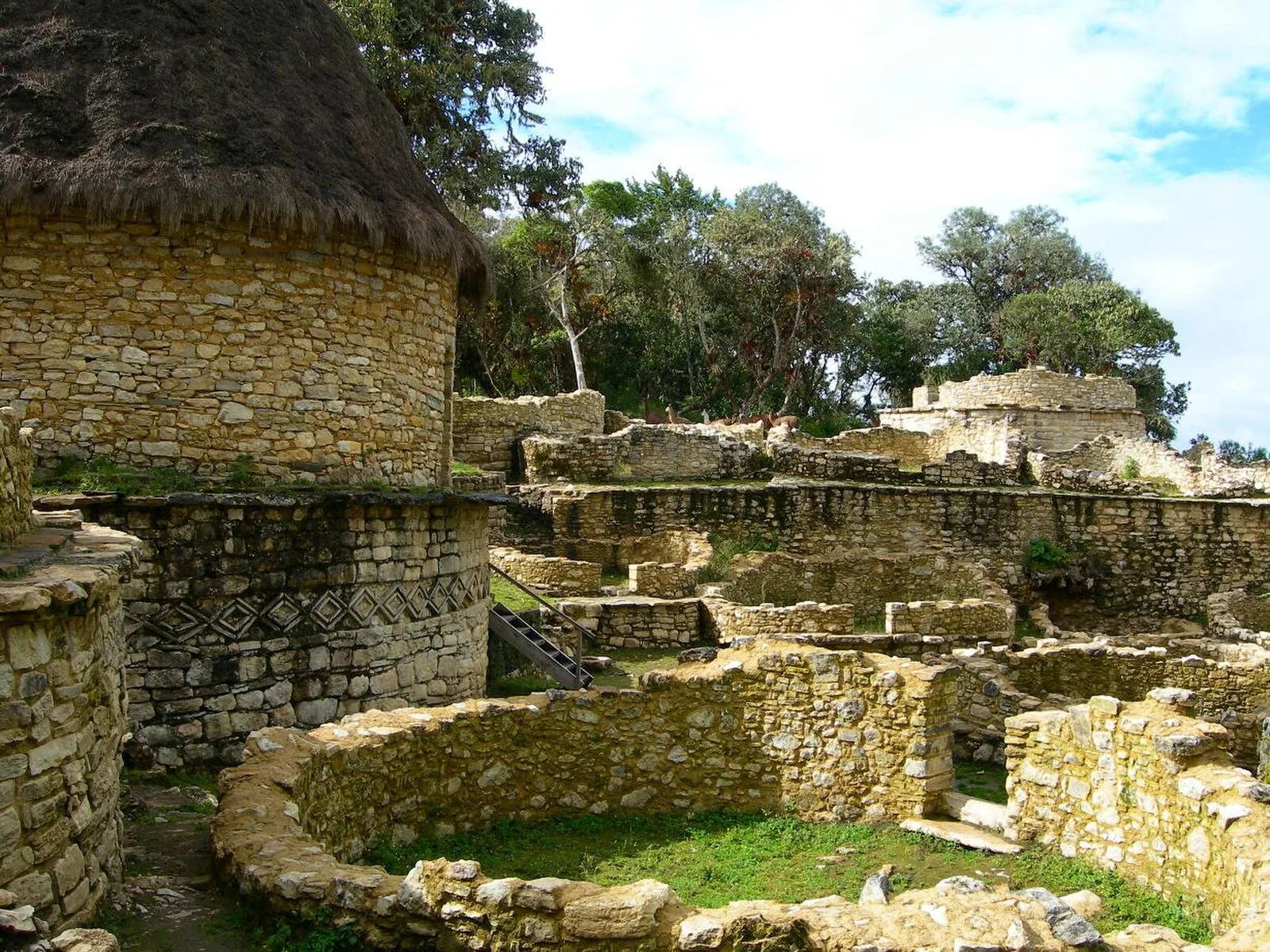
PeruKuélap or Cuélap is a walled settlement located in the mountains near the towns of María and Tingo, in the southern part of the region of Amazonas, Peru [1]. Kuélap is located on a limestone ridge on top of a mountain at an elevation of 3000 metres, on the left bank of the Utcubamba River [1]. Kuélap is a now-abandoned walled settlement that covers an area of about six hectares, 584 m from north to south and 110 m at its widest [1]. The walls are 10 to 20 m high with masonry of limestone blocks finely worked (some blocks may weigh 3 tons) [1]. All but five of the 421 structures in the site are circular; those five are quadrilateral [1]. Human occupation at the site starts in the 5th century AD, but the majority of structures were built between 900 and 1100 AD [1]. The city may have had some 3000 inhabitants, but was abandoned in 1570 due to the Spanish Conquest [1]. Kuélap was accidentally rediscovered in 1843, by Juan Crisóstomo Nieto, a judge from the city of Chachapoyas [1].
Text: Wikipedia – 'Kuélap' (revision of 2026-07-21), CC BY-SA 4.0 · sentences selected and shortened by an AI system · source →Kuélap
Also known as: Cuelap, Kuelapas, Куелап, Куэлап, კუელაპი, קואלאפ, كويلاب, কুয়েলাপ দুর্গ, 奎拉普
| Type | City/town/settlement |
|---|---|
| Period | 1 - 500 AD |
| Country | Peru |
| Coordinates | 6.4179° S, 77.9233° W |