
 Peru
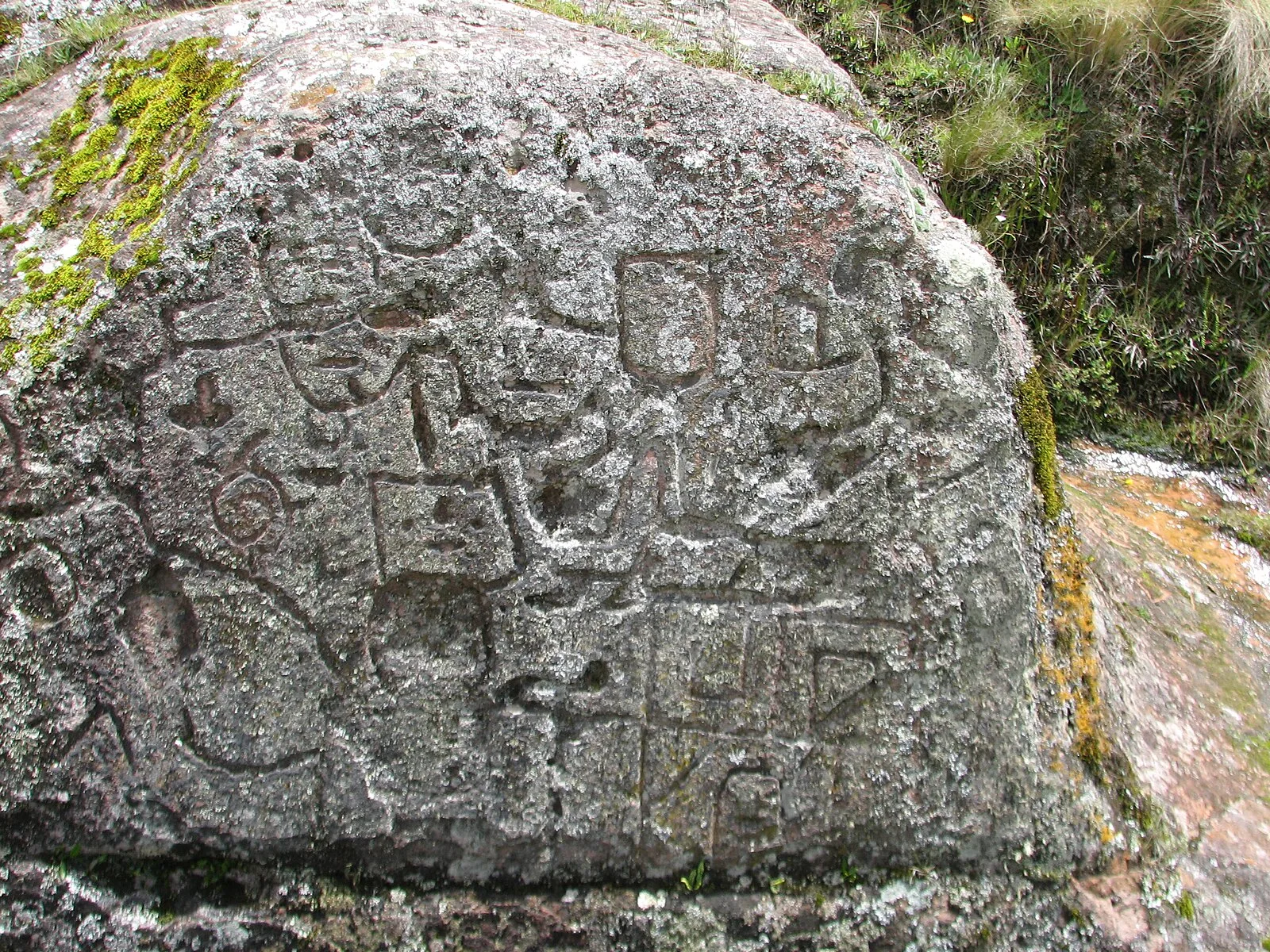
PeruCumbemayo or Cumbe Mayo is an archaeological site located 20 kilometers southwest of the city of Cajamarca in Peru at 3,500 meters of elevation [1]. The aqueduct and the petroglyphs at Cumbemayo are thought to be built circa 1500 - 1000 BC, the petroglyphs being similar to those of Chavín culture [1]. One of the main attractions of Cumbemayo, or "Narrow River" in Cajamarca Quechua, is the aqueduct [1]. Also prominent is the Sanctuary, a huge cliff resembling a man's head, whose mouth would be a grotto, where interesting but undecipherable petroglyphs have been found [1]. The caves and shelters of the area evidence other stone engravings [1].
Text: Wikipedia – 'Cumbemayo' (revision of 2026-07-18), CC BY-SA 4.0 · sentences selected and shortened by an AI system · source →Cumbemayo
Also known as: Cumbe Mayo, Humpi Maio, Kumbe Mayo, Kumpi Mayu, Кумбе-Майо, Кумпи Мају, კუმბე-მაიო, קומבה מאיו, 昆貝瑪約
| Type | Aqueduct |
|---|---|
| Period | 1500 - 500 BC |
| Country | Peru |
| Coordinates | 7.1895° S, 78.5739° W |