
 Mexico
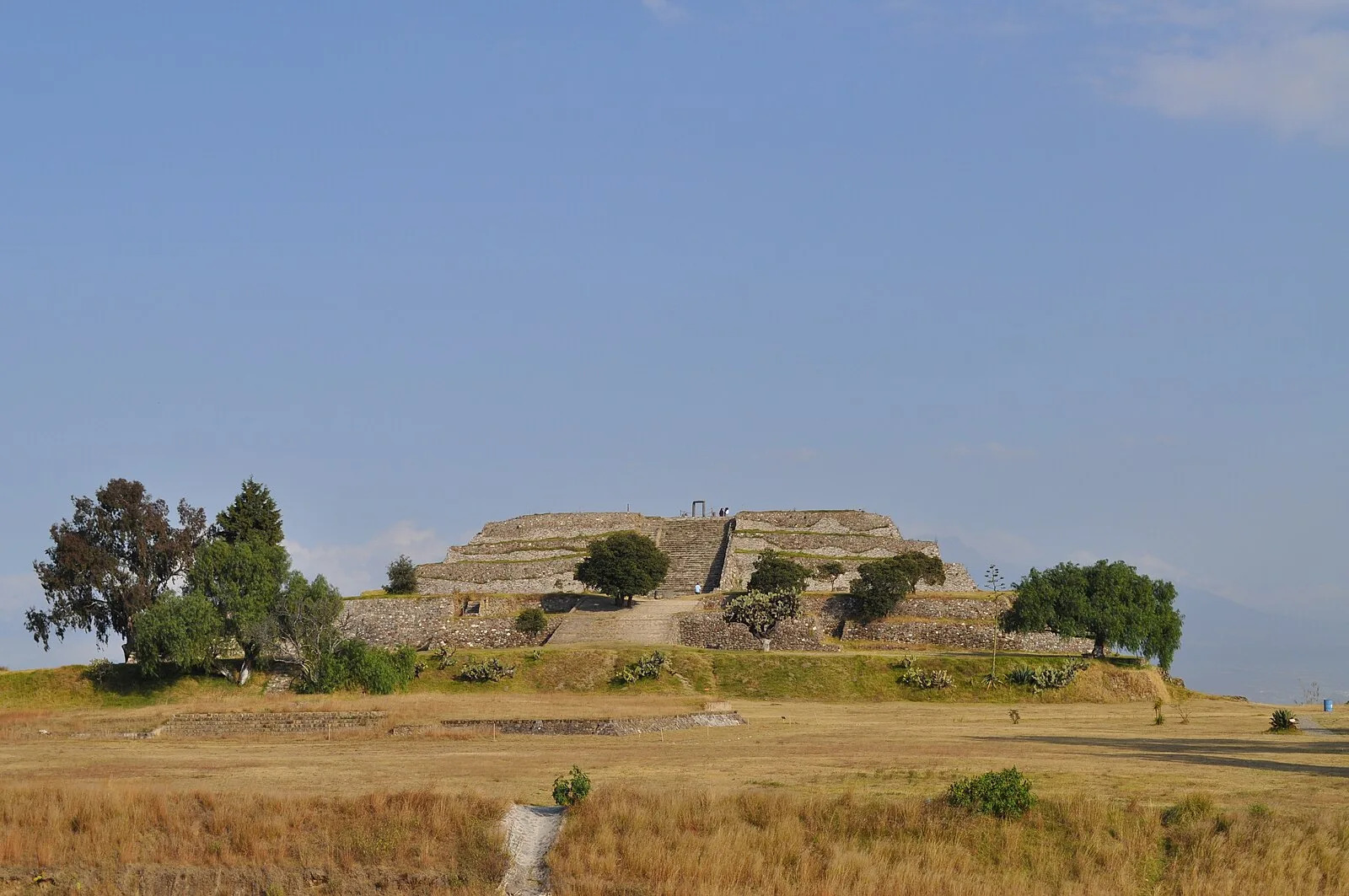
Xochitecatl [ʃot͡ʃiˈtekat͡ɬ] is a pre-Columbian archaeological site located in the Mexican State of Tlaxcala, 18 km southwest of Tlaxcala city [1]. The major architecture dates to the Middle Preclassic Period (1000–400 BC) but occupation continued, with one major interruption, until the Late Classic, when the site was abandoned [1]. The ruins cover an area of 12 hectares on top of a volcanic dome [1]. By the period spanning 350 BC to 100 AD, Xochitecatl had become the centre of a powerful chiefdom exercising control over a large portion of western Tlaxcala [1]. Between 600 AD and 950 AD Xochitecatl was reoccupied when parts of the site were reused as a secondary ceremonial centre within the extended urban area of Cacaxtla [1]. Major excavations were undertaken at the site in 1993-4 by Mari Carmen Serra Puche with the goal of exploring the principal structures around the site core [1].
Text: Wikipedia – 'Xochitecatl' (revision of 2026-03-21), CC BY-SA 4.0 · sentences selected and shortened by an AI system · source →Xochitecatl
Also known as: Шочитекатль, ショチテカトル
| Type | Pyramid complex |
|---|---|
| Period | 1500 - 500 BC |
| Country | Mexico |
| Coordinates | 19.2449° N, 98.3499° W |