
 Mexico
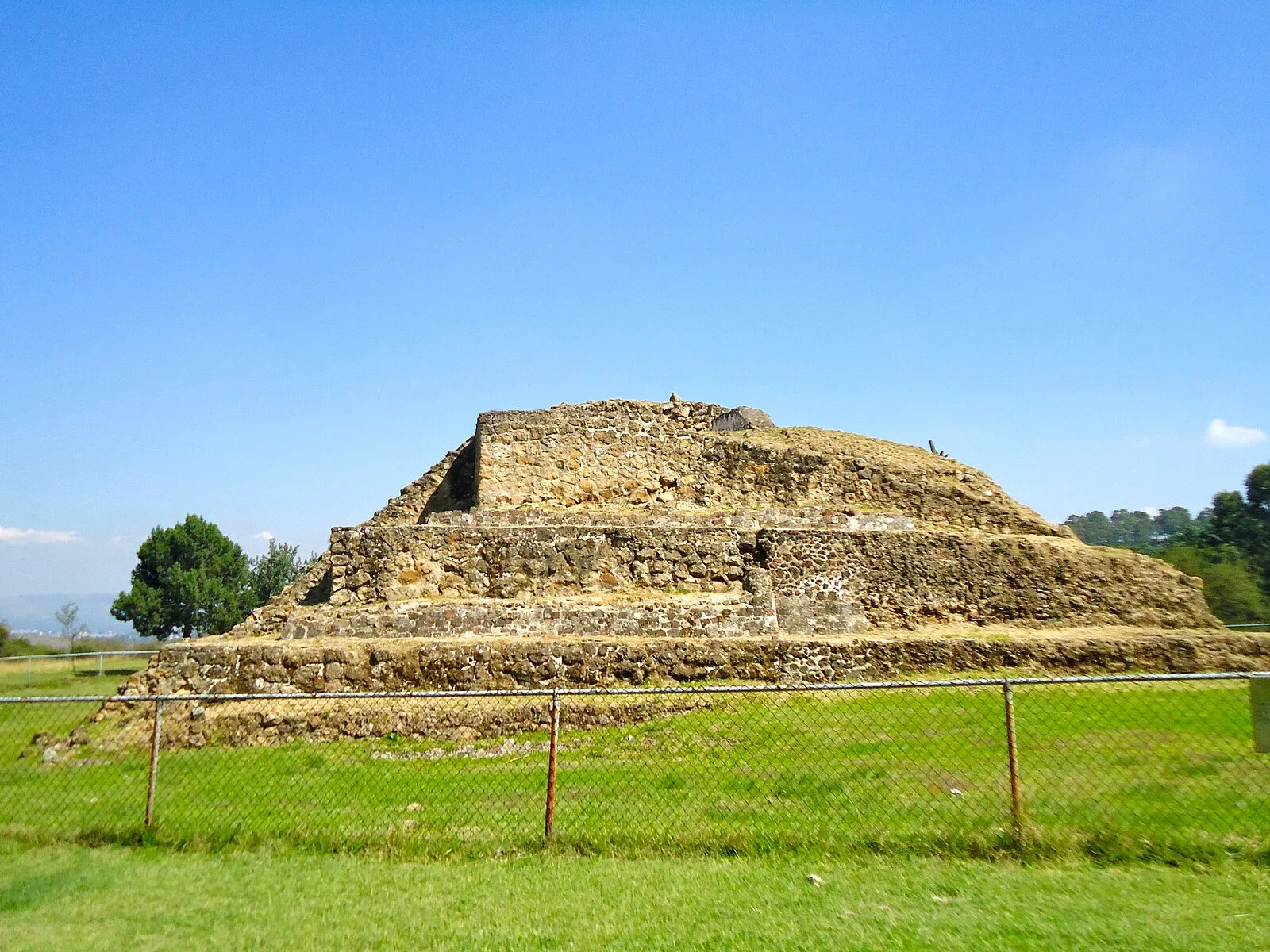
Cacaxtla is an archaeological site located near the southern border of the Mexican state of Tlaxcala [1]. It contains a sprawling palace with vibrantly colored murals painted in Maya style [1]. Cacaxtla and Xochitecatl prospered 650–900 CE, probably controlling important trade routes through the region with an enclave population of no more than 10,000 people [1]. Cacaxtla was the capital of a region inhabited by the Olmeca-Xicallanca people [1]. The site was rediscovered in September 1975 by maintenance workers, but quickly came to the attention of archaeologists [1]. The centre of the city of Cacaxtla was the 200-metre-long, 25-metre-high Gran Basamento – a natural platform offering a fine defensive position and commanding views over the surrounding terrain [1]. The city's main religious and civil buildings were located on this platform, as were the residences of the priest class [1]. The most famous of Cacaxtla's preserved paintings is the "Battle Mural", or Mural de la batalla, located in the northern plaza of the basamento [1].
Text: Wikipedia – 'Cacaxtla' (revision of 2026-09-06), CC BY-SA 4.0 · sentences selected and shortened by an AI system · source →Cacaxtla
Also known as: Caxcatla, Какаштла, Какаштля, კაკაშტლა, カカシュトラ, 卡卡斯特拉
| Type | City/town/settlement |
|---|---|
| Period | 500 - 1000 AD |
| Country | Mexico |
| Coordinates | 19.2444° N, 98.3444° W |