
 Mexico
Huapalcalco is a pre-Columbian Mesoamerican archaeological site located approximately 5 kilometres north of Tulancingo, in the state of Hidalgo, Mexico [1]. The site is situated on the western slope of a hill known as Tecolote [1]. Huapalcalco flourished during the Mesoamerican Classic period and was associated with the state of Teotihuacan [1]. The northwestern sector of the site was first explored in 1954 by archaeologists Florencia Jacobs Müller and César Lizardi Ramos [1]. After nine expeditions, concluding in 1959, they uncovered a pyramid complex with clear Teotihuacan features, along with a plaza containing a Stele of apparent Maya influence, Totonac yokes, and a round altar [1]. Excavations in the deepest layers of one of the buildings revealed Meserve-type arrowheads, associated with pre-ceramic cultures dating to around 7000 BCE [1]. The site contains a Teotihuacan-influenced three-sided pyramid, measuring 12 metres at the base and 8 metres in height, with an altar that may have been used for sacrificial offerings [1].
Text: Wikipedia – 'Huapalcalco' (revision of 2026-07-20), CC BY-SA 4.0 · sentences selected and shortened by an AI system · source →Huapalcalco Pyramid
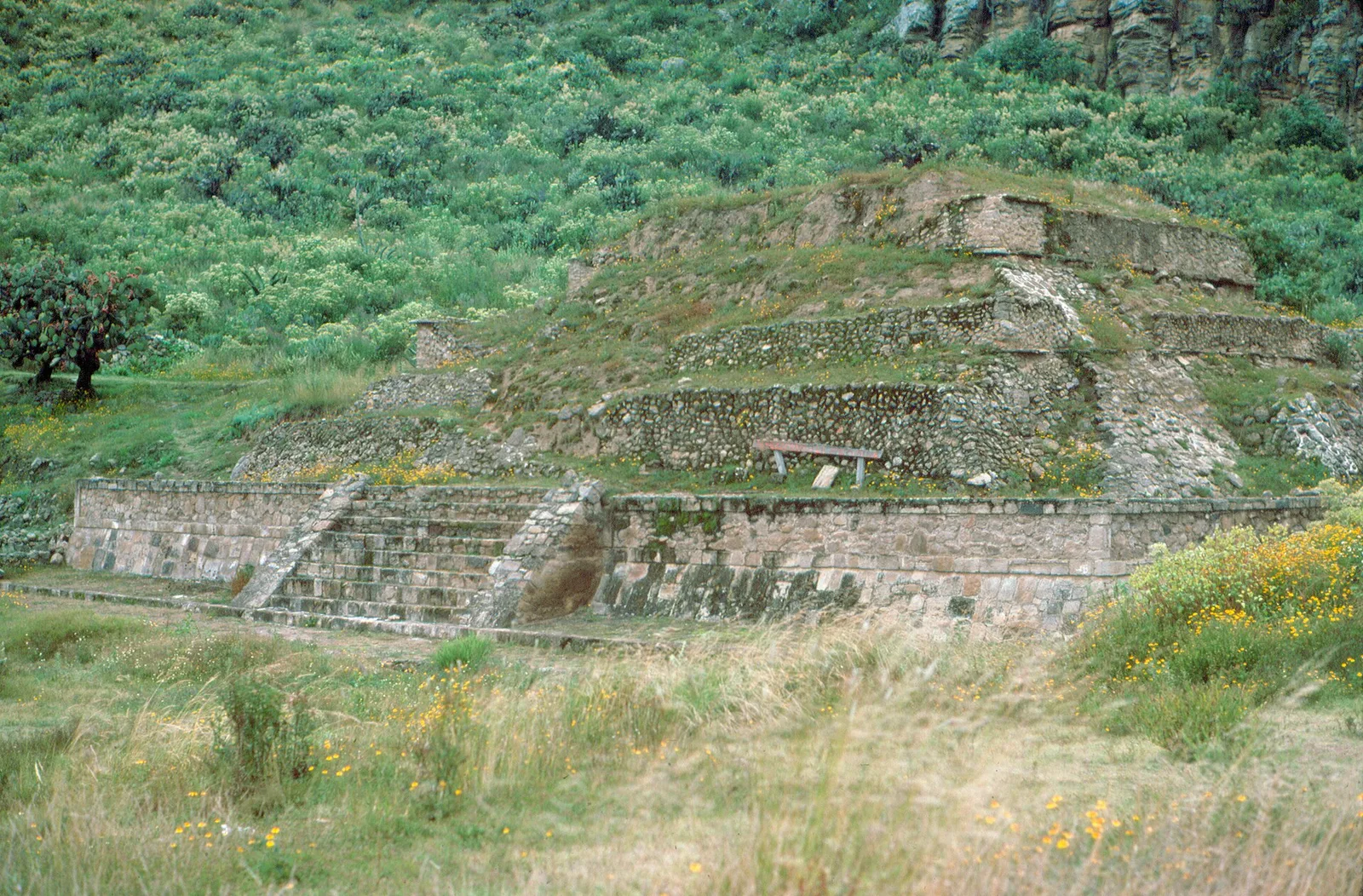
Also known as: Huapalcalco, Zona Arqueologica de Huapalcalco
| Type | Pyramid complex |
|---|---|
| Period | < 4500 BC |
| Country | Mexico |
| Coordinates | 20.1172° N, 98.3625° W |