
 Mexico
Tlatelolco is an archaeological excavation site in Mexico City, Mexico, where remains of the pre-Columbian city-state of the same name have been found [1]. It is centered on the Plaza de las Tres Culturas [1]. At the main temple of Tlatelolco, archeologists recently discovered a pyramid within the visible temple; the pyramid is more than 700 years old [1]. In the archaeological area there are temples dedicated to Mexican deities such as Quetzalcoatl, Ehecatl and Huītzilōpōchtli [1]. Archaeological excavations and research have been able to explain why there were many childhood remains inside a particular temple in Tlatelolco [1]. Due to a famine and a serious outbreak of disease, which has not been clarified so far, “in the years 1454-1457 hundreds of children were sacrificed to the God Tlaloque in Tlatelolco” [1]. On 10 February 2009, INAH archaeologists announced the discovery of a mass grave containing forty-nine human skeletons, laid out in neat lines on their backs [1]. The grave was determined to be from the period of the Spanish conquest [1].
Text: Wikipedia – 'Tlatelolco (archaeological site)' (revision of 2024-07-06), CC BY-SA 4.0 · sentences selected and shortened by an AI system · source →Tlatelolco
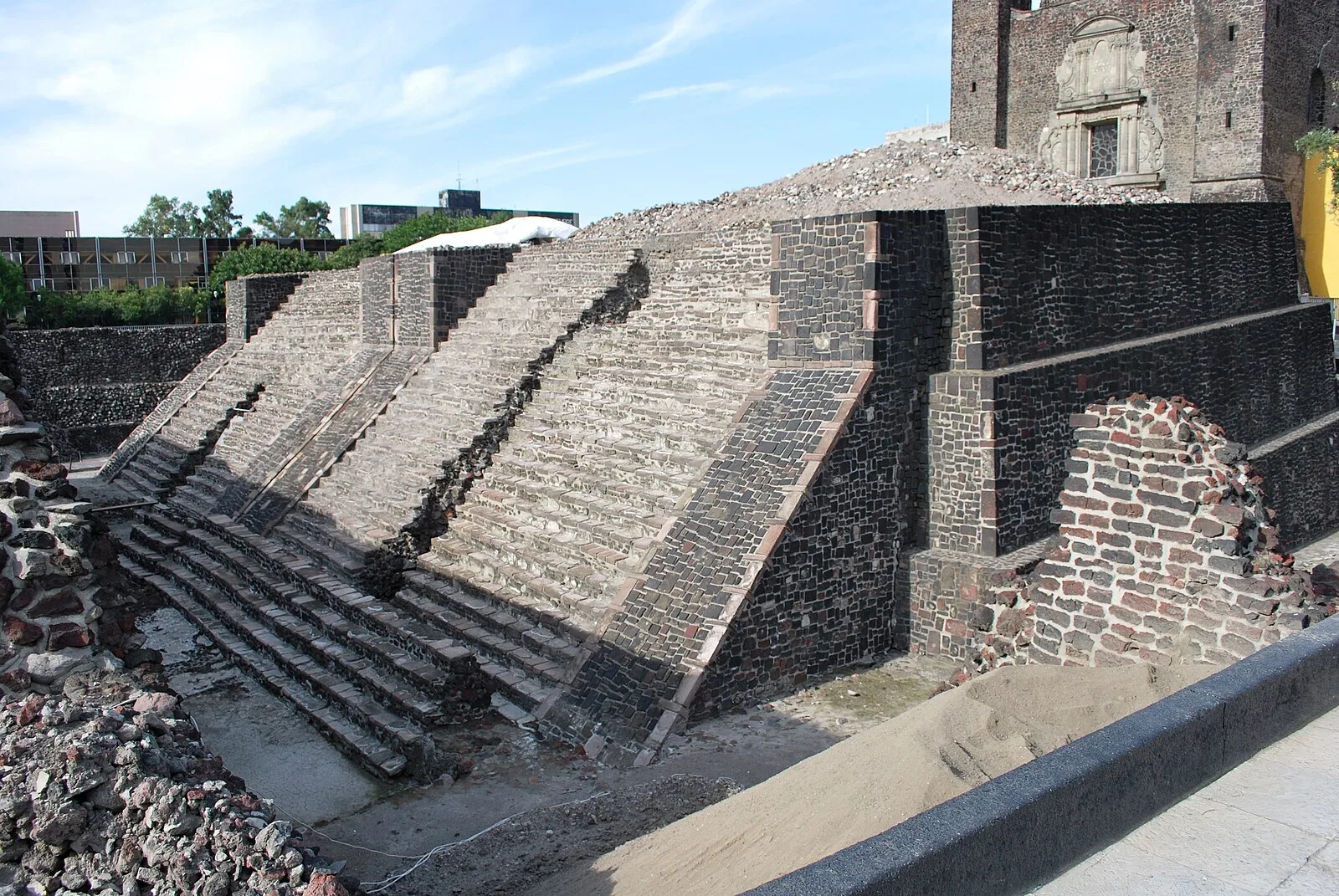
Also known as: Tlatelolco (archaeological site), Tlatelolco (sito archeologico), Zona Arqueologica de Tlatelolco, Тлателолко (археолошки локалитет), Тлателолко (археолошко наоѓалиште)
| Type | City/town/settlement |
|---|---|
| Period | 1000 - 1500 AD |
| Country | Mexico |
| Coordinates | 19.4513° N, 99.1375° W |