
 Mexico
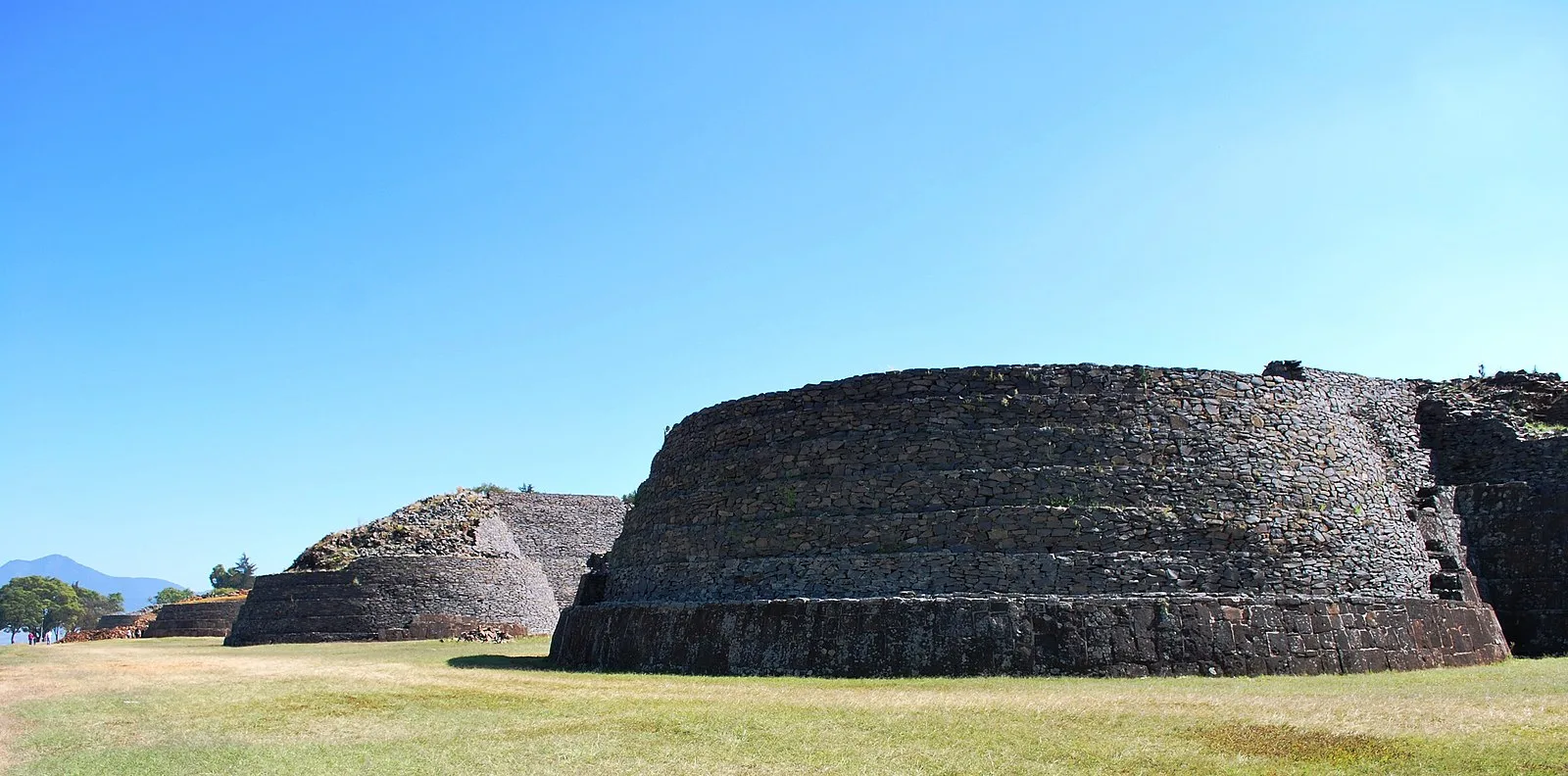
Tzintzuntzan was the ceremonial center of the pre-Columbian Purépecha capital of the same name [1]. The name comes from the Purépecha word Ts’intsuntsani, which means "place of hummingbirds." The site includes at least 1,000 archaeological features in an area that is at least 1,075 hectares [1]. After being in Pátzcuaro for the first years of the Purépecha Empire, power was consolidated in Tzintzuntzan in the mid 15th century [1]. Tzintzuntzan was the capital of the Purépecha Empire when the Spanish arrived in 1522 [1]. The Tzintzuntzan archeological site is mostly what was the ceremonial center [1]. It is situated on a large artificial platform excavated into Yahuarato hill overlooking Lake Pátzcuaro from the northeast shore [1]. The ceremonial center contains a large plaza and several buildings known to house priests and nobility but the main attraction is the five yácatas or semi-circular pyramids that face out over the lake area [1].
Text: Wikipedia – 'Tzintzuntzan (Mesoamerican site)' (revision of 2026-08-19), CC BY-SA 4.0 · sentences selected and shortened by an AI system · source →Tzintzuntzan
Also known as: Tzintzuntzango gune arkeologikoa, Tzintzuntzan (Mesoamerican site), Tzintzuntzan (Purepechastad), Tzintzuntzan (sitio arquelógico), Tzintzuntzan (stanowisko archeologiczne), Zona arqueológica de Tzintzuntzan, ツィンツンツァン, 钦春钱遗址, 钦聪灿遗址
| Type | City/town/settlement |
|---|---|
| Period | 500 - 1000 AD |
| Country | Mexico |
| Coordinates | 19.6241° N, 101.5737° W |