
 Mexico
Huamango is an early Postclassical (Toltec period) archaeological site located about 4 kilometers northwest of the modern city of Acambay in the State of Mexico [1]. The archaeological area is on the San Miguel plateau, in the vicinity of the Peña Picuda hill, at an approximate altitude of 2,850 meters above sea level [1]. Huamango was discovered by architect Edgar Serrano Pérez [1]. The site was excavated by Román Piña Chán and William Folan in the 1970s [1]. It consists of a small ceremonial zone with some temples, located on a ridge overlooking the Valle de los Espejos [1]. Archaeological investigations have shown that temples and rooms were roofed with a wooden beam structure, covered with a thick clay sealing layer [1].
Text: Wikipedia – 'Huamango' (revision of 2026-06-05), CC BY-SA 4.0 · sentences selected and shortened by an AI system · source →Huamango
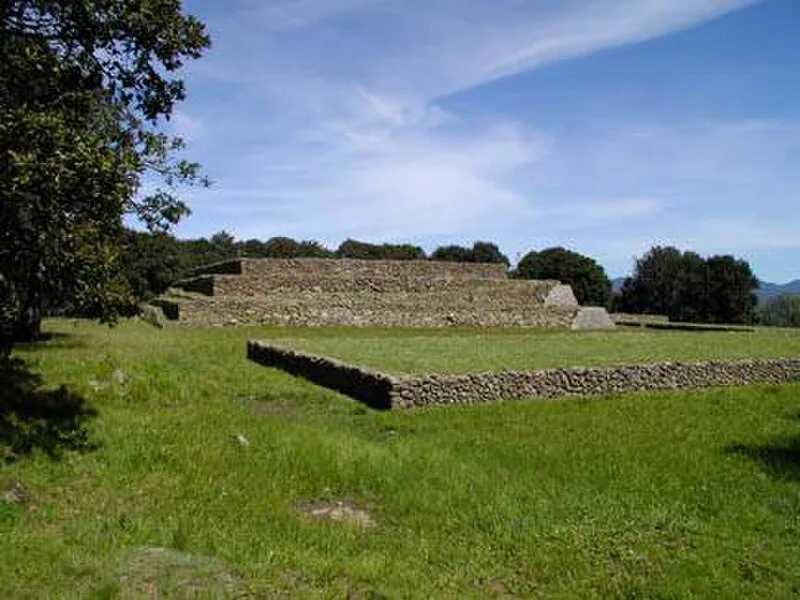
Also known as: Huamango, Acambay de Ruíz Castañeda, Уаманга, Уаманго, Уаманго, Ла Меса де Сан Мигел Уаманго, Уаманго, Ла Меса де Сан Мигел Уаманго (Акамбай), Уаманго, Ла Меса де Сан Мигел Уаманго (Акамбај), Хуаманго
| Type | City/town/settlement |
|---|---|
| Period | 500 - 1000 AD |
| Country | Mexico |
| Coordinates | 19.9776° N, 99.8653° W |