
 Mexico
The site is located in the city of Tula de Allende in the Tula Valley, in what is now the southwest of the Mexican state of Hidalgo, northwest of Mexico City [1]. The main attraction is the Pyramid of Quetzalcoatl, which is topped by four 4-metre-high basalt columns carved in the shape of Toltec warriors [1]. Tula fell around 1150, but it had significant influence in the following Aztec Empire, with its history written about heavily in myth [1]. The name Tula is derived from the Nahuatl phrase Tollan Xicocotitlan, which means 'near the cattails' [1]. The earliest well-defined settlements in the Tula area appear around 400 BCE [1].
Text: Wikipedia – 'Tula (Mesoamerican site)' (revision of 2026-09-22), CC BY-SA 4.0 · sentences selected and shortened by an AI system · source →Tula
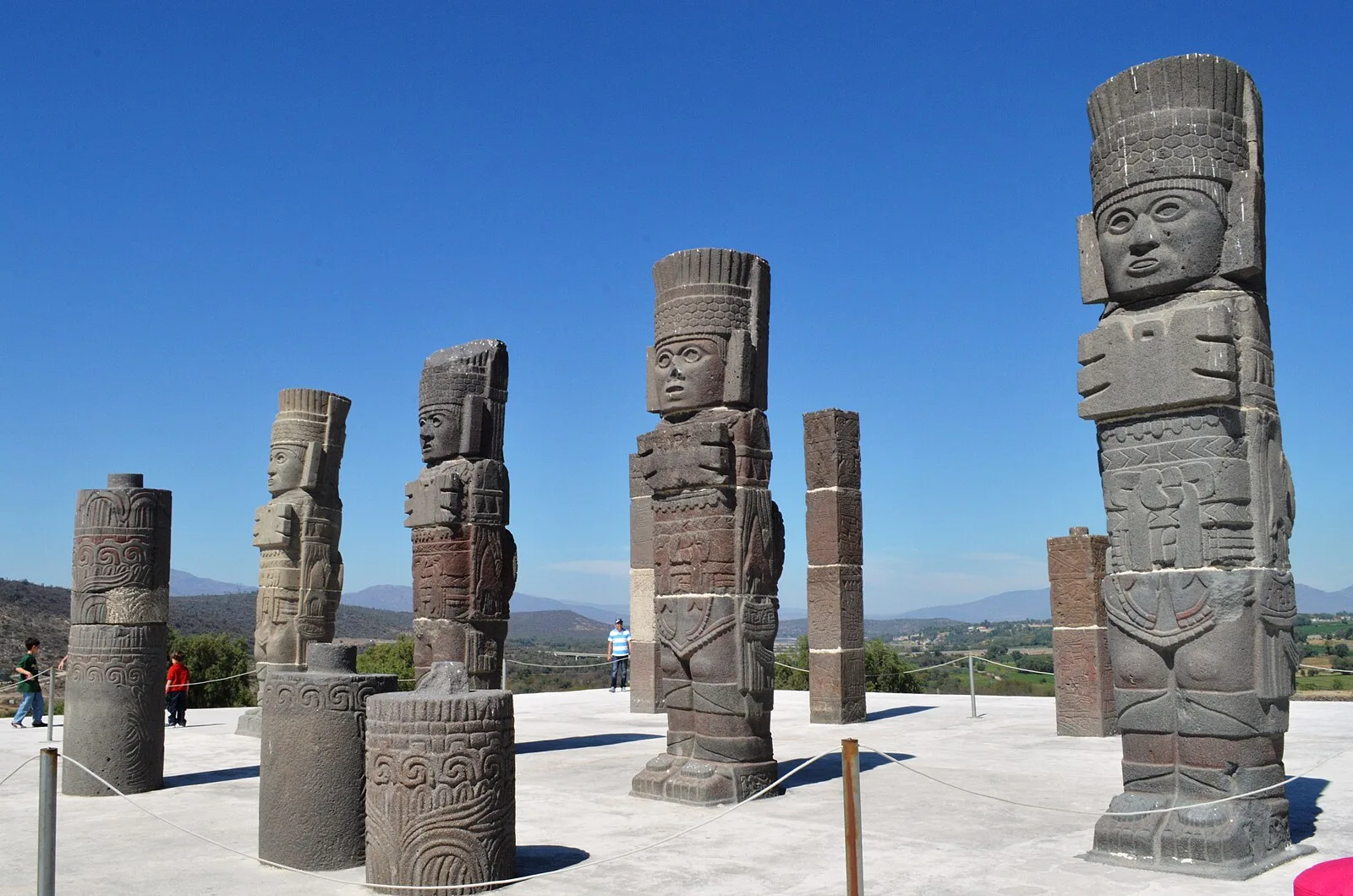
Also known as: 툴라 (메소아메리카), sitio arqueologico de Tula, Tōllān, Tollan-Xicocotitlan, Tōllān Xicocotitlān, Tula (archäologische Stätte), Tula de Allende, Tula (Mehhiko), Tula (Meksika), Tula (Meksiko), Tula (Mesoamerican site), Tula (Mesoamerika)
| Type | City/town/settlement |
|---|---|
| Period | 500 BC - 1 AD |
| Country | Mexico |
| Coordinates | 20.0673° N, 99.3371° W |