
 Mexico
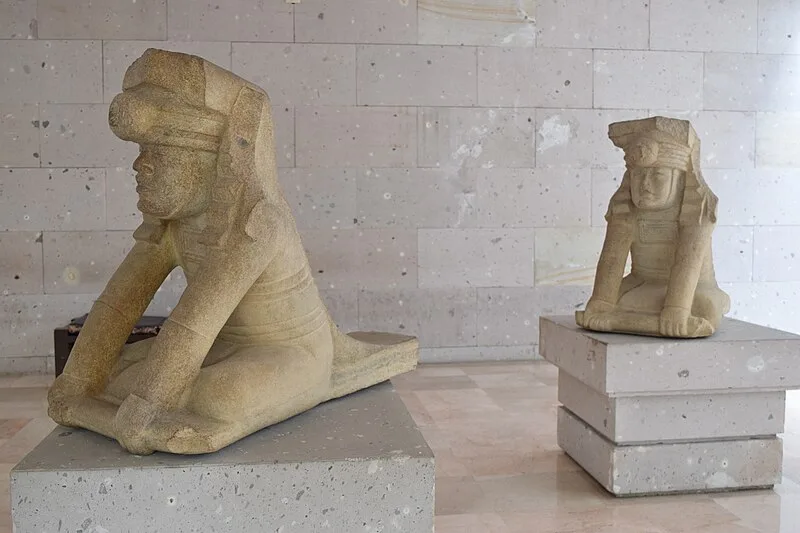
El Azuzul is an Olmec archaeological site in Veracruz, Mexico, a few kilometers south of the San Lorenzo Tenochtitlán complex and generally considered contemporary with it (perhaps 1100 to 800 BCE) [1]. Named for the ranch on which it is located, El Azuzul is part of the Loma del Zapote complex [1]. The site occupies the higher elevations north of the confluence of two ancient river courses, a part of the Coatzacoalcos River system [1]. It is upstream of the monumental earthworks at Potrero Nuevo, which is part of the San Lorenzo complex [1]. El Azuzul is best known for two pairs of monumental sculptures, now on exhibit at the Xalapa Museum of Anthropology, Xalapa [1]. These statues were found on the south side of the large pyramid/hill on the site, intact and apparently undisturbed since they were placed there in Pre-Classic times [1]. The first pair of statues, described as "some of the greatest masterpieces of Olmec art", are nearly identical seated human figures [1].
Text: Wikipedia – 'El Azuzul' (revision of 2025-02-10), CC BY-SA 4.0 · sentences selected and shortened by an AI system · source →El Azuzul
Also known as: Ель-Асусуль, Эль-Асусуль, ال اززول
| Type | Archaeological site |
|---|---|
| Period | 1500 - 500 BC |
| Country | Mexico |
| Coordinates | 17.7123° N, 94.7492° W |