
 Italy
ItalyLaüs or Laus was an ancient city on the coast of the Tyrrhenian Sea [1]. It was at the mouth of the Lao River, which formed the boundary between Lucania and Bruttium in ancient times and gave it its name [1]. The archaeological site of the city can be found at a short distance to the east of Marcellina, near Santa Maria del Cedro in Calabria [1]. Herodotus states that the inhabitants of Sybaris who had survived the destruction of their city in 510 BC took refuge in Laus and Scidrus [1]. The necropolis of Laus now lies below Marcellina and is notable for its important finds [1]. A rich tomb chamber was discovered by accident in 1961 not far from the railway station of Marcellina, in which were dozens of red-figured vases, bronze and precious metals, and a finely crafted bronze armour [1]. The excavations revealed the city was defended on at least three sides by a wall [1].
Text: Wikipedia – 'Laüs' (revision of 2026-09-14), CC BY-SA 4.0 · sentences selected and shortened by an AI system · source →Laüs
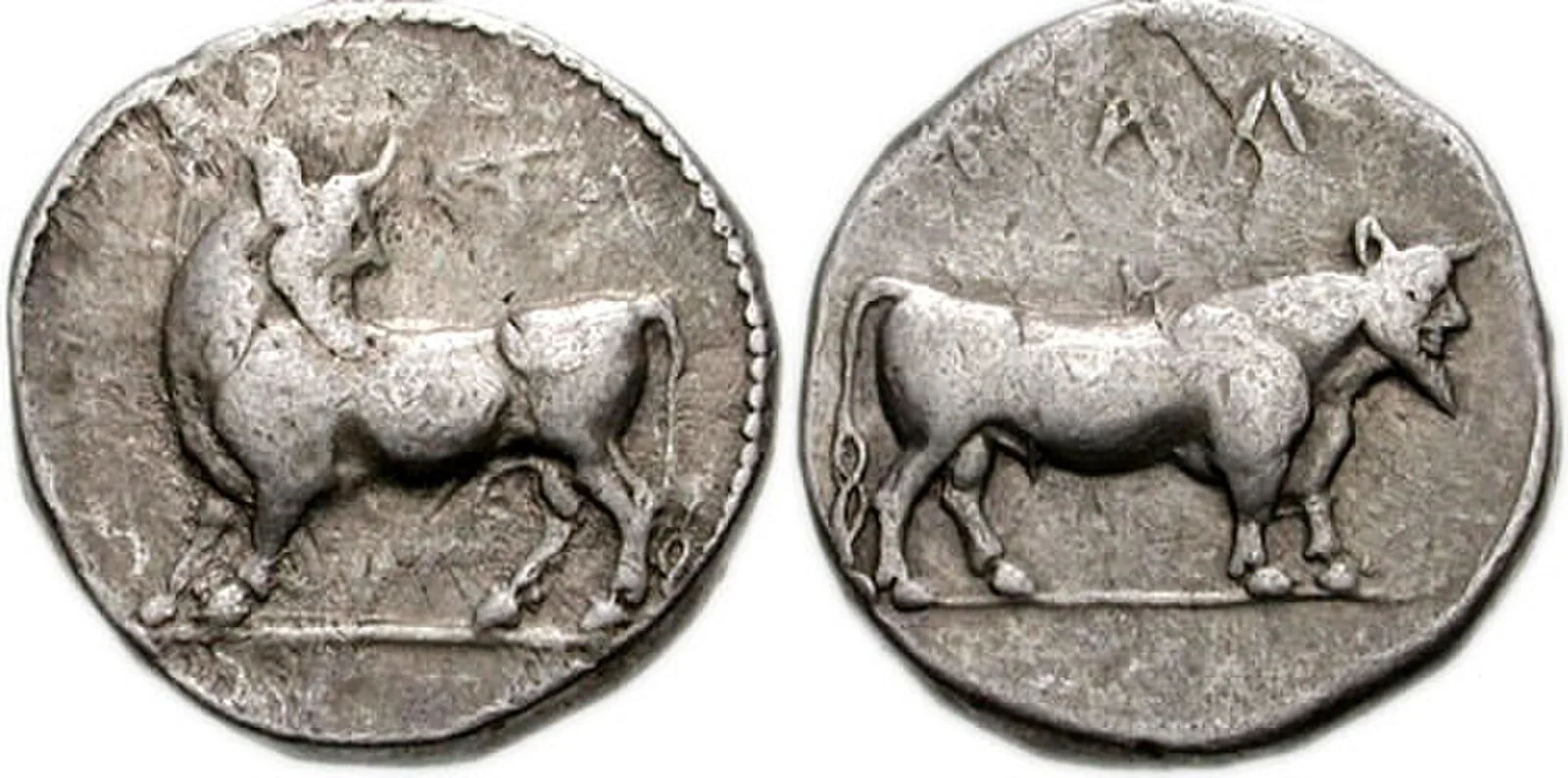
Also known as: collina di San.Bartolo, Laos, Laosa (Lielā Grieķija), Laos (antigua ciudad), Laos (kaupunki), Laos (Magna Grecia), Laos (Marcellina), Laos (miasto), Laos (Stadt), Mint of Laüs, parco archeologico di Laos, parco archeologico di Laos Santa Maria del Cedro
| Type | City/town/settlement |
|---|---|
| Period | 1500 - 500 BC |
| Country | Italy |
| Coordinates | 39.7677° N, 15.8306° E |