
 Iraq
IraqHalamata Cave is an archaeological site near Duhok in the Kurdistan Region of Iraq [1]. The caves contain the Assyrian relief carvings known as the Maltai reliefs [1]. The cave is located seven kilometres south-west of Dohuk [1]. The reliefs are approximately six metres long and two metres high [1]. The reliefs all show a procession of nine figures, and were first photographed by British explorer Gertrude Bell in 1909 [1]. According to ArtStor, the reliefs "depict the Assyrian king worshipping the main divinities in the Mesopotamian pantheon" and date from 704 BC to 681 BC [1]. As with the reliefs at Khinnis, the reliefs at Halamata Cave are "associated with the northern canal system built by the Assyrian king Sennacherib (r. 704-681 BCE) to carry water to his capital city of Nineveh" [1].
Text: Wikipedia – 'Halamata Cave' (revision of 2026-07-19), CC BY-SA 4.0 · sentences selected and shortened by an AI system · source →Halamata Cave
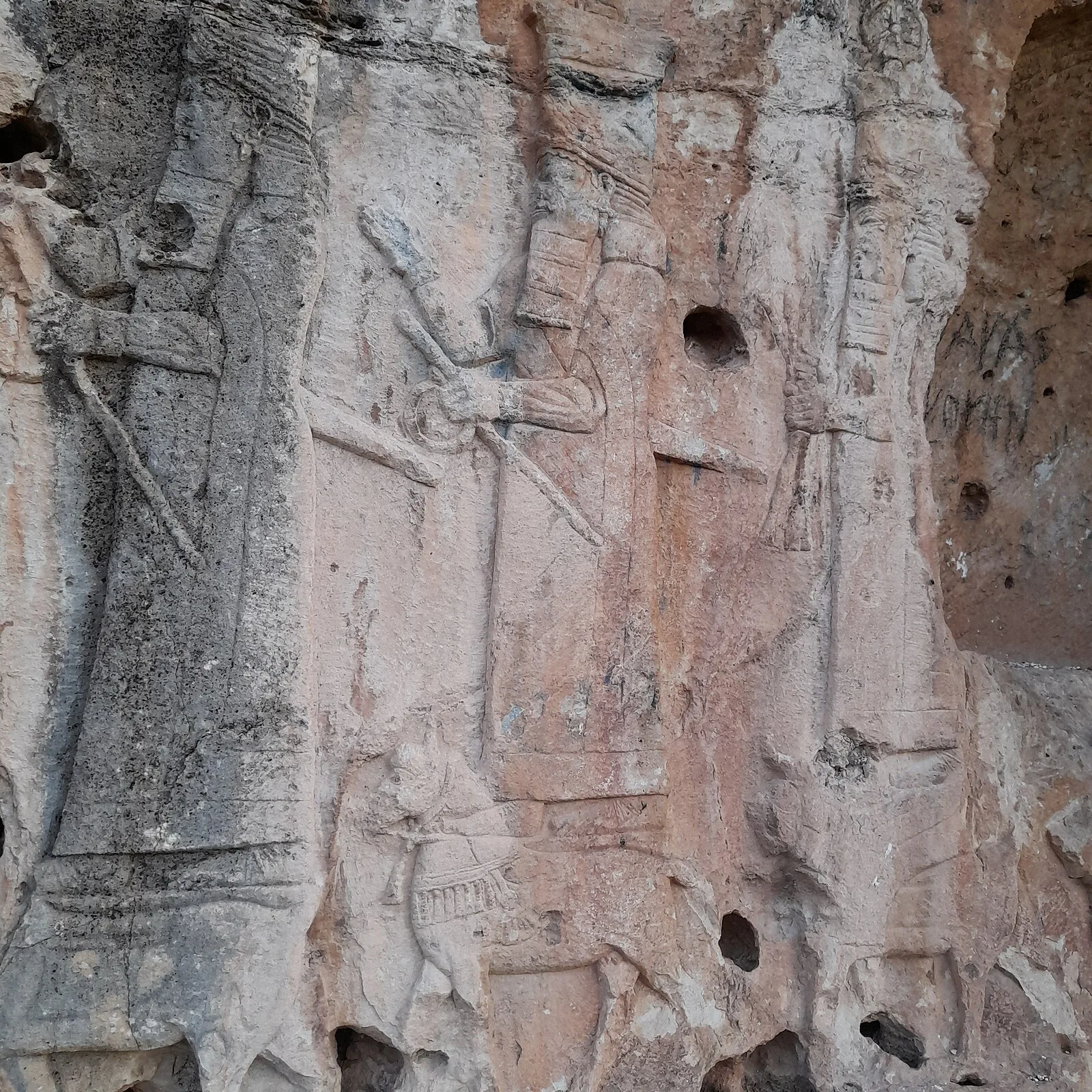
Also known as: Halamata Mağarası, מערת חלמטה, ئەشکەوتی ھەلامەتا, غار هلامتا, كهف هلامتا
| Type | Cave Structures |
|---|---|
| Period | 1500 - 500 BC |
| Country | Iraq |
| Coordinates | 36.8382° N, 42.9408° E |