
 India
IndiaThe Barabar caves greatly influenced the tradition of rock-cut architecture in the Indian subcontinent [1]. The Ashoka inscriptions in the Barabar Caves are part of Ashoka's "Minor Rock Edicts", and appear in the three caves named Sudama, Visvakarma and Karna Chopar [1]. Dasaratha Maurya, Ashoka's grandson and regnal successor, wrote dedicatory inscriptions in the three other caves, forming the Nagarjuni group of the Barabar hills [1]. The three caves were offered to the Ajivikas upon the accession to the throne of Dasaratha, confirming that these were still active around 230 BCE, and that Buddhism was not the exclusive religion of the Mauryas at that time [1].
Text: Wikipedia – 'Barabar Caves' (revision of 2026-07-18), CC BY-SA 4.0 · sentences selected and shortened by an AI system · source →Cavernas de Marabar
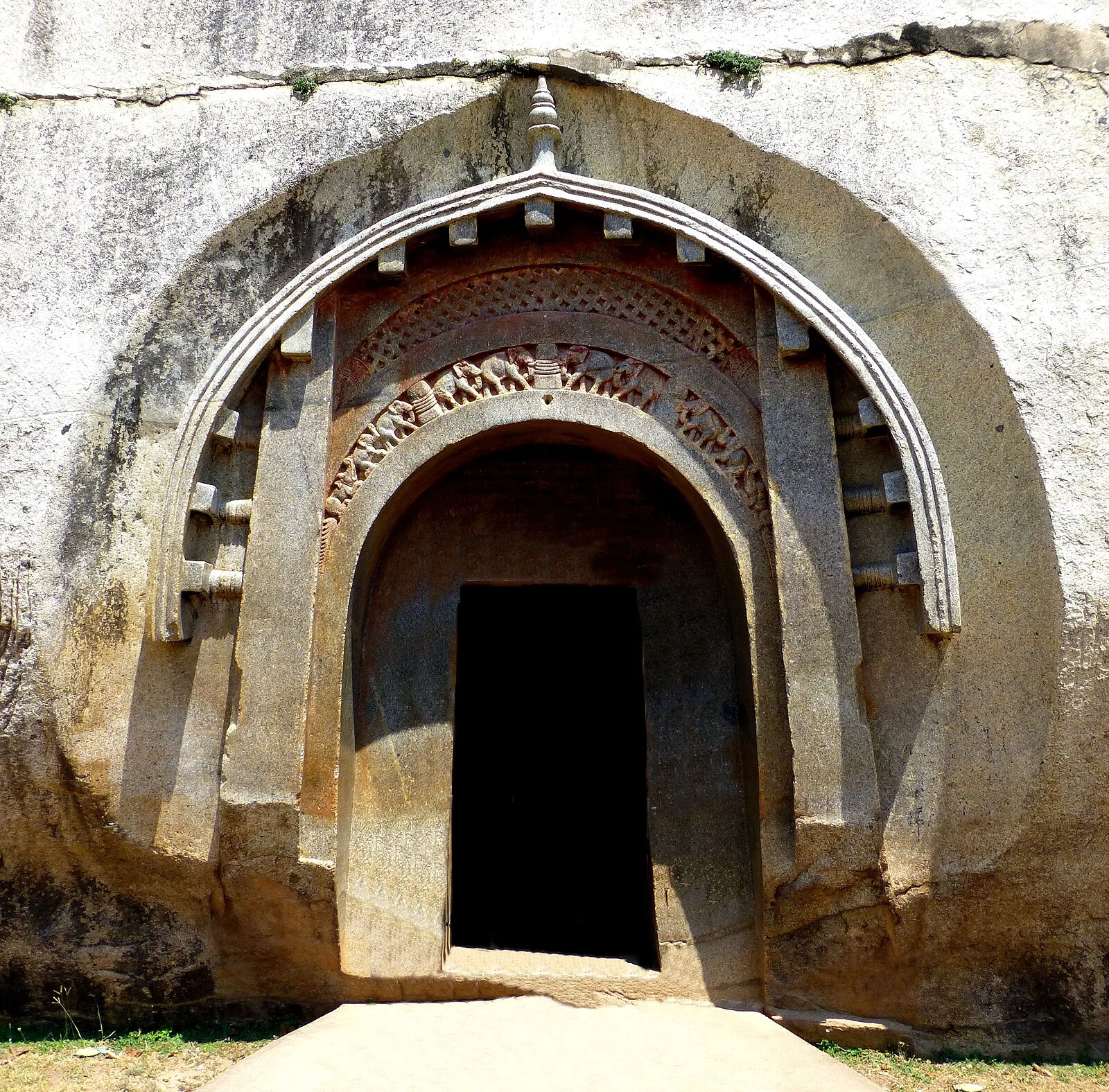
Also known as: 바라바르 동굴, Barabar, Barabar Caves, Barabar Hill, Barabar-Höhlen, Cuevas de Barabar, grottes de Barabar, Shpellat Barabar, Барабарские пещеры, Барабарські печери, מערות בראבאר, غارهای بارابار
| Type | Cave Structures |
|---|---|
| Period | 500 BC - 1 AD |
| Country | India |
| Coordinates | 25.0057° N, 85.0642° E |