
 Greece
The Altar of Athena Polias was a sacred structure on the Acropolis of Athens, situated between the Parthénon and the Érechthéion, near the altar of Zeus [1][2]. Founded in 525 BCE by the sons of the Athenian tyrant Peisistratus, it may have overlain an earlier temple dating to 599–550 BCE [3]. The altar stood within a narrow temple crowned by a marble pediment depicting the Gigantomachy—battles between gods and giants—with Athena portrayed as dominant and victorious [3]. As a center of worship for Athena Polias, goddess of the Acropolis and city patron, the altar served as a key religious focal point in Archaic Athens [1].
Altar of Athena Polias
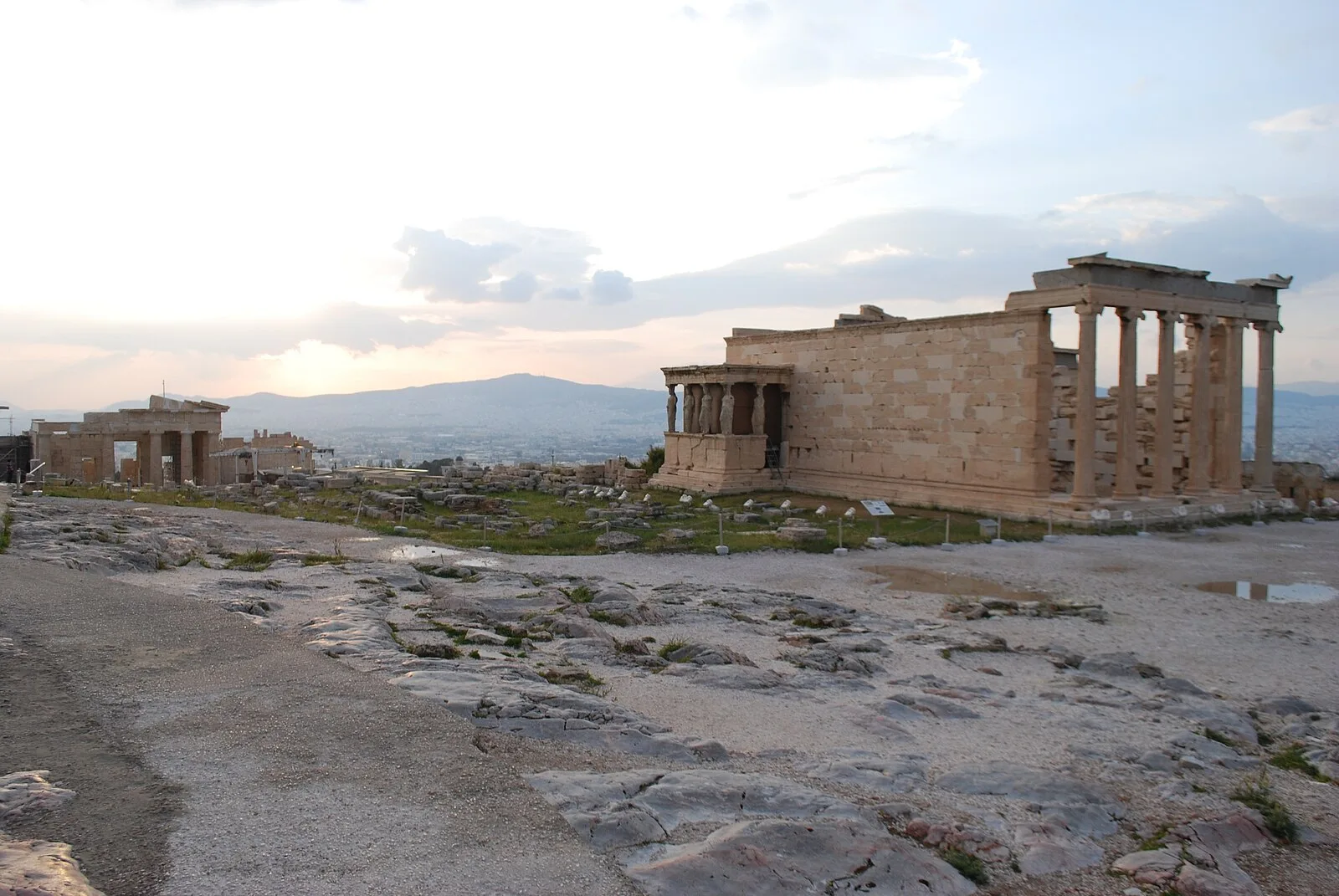
Also known as: Altaar van Athena Polias, altar d'Atena, Altar de Atenea, Altar de Atenea Polias, Altare di Atena Poliade, Altare di Atena Polias, Atena Poliasen aldarea, Athene Poliaan alttari, autel d'Athéna, Βωμός της Αθηνάς Πολιάδος
| Type | Sacred site |
|---|---|
| Period | 1500 - 500 BC |
| Country | Greece |
| Coordinates | 37.9721° N, 23.7268° E |