
 France
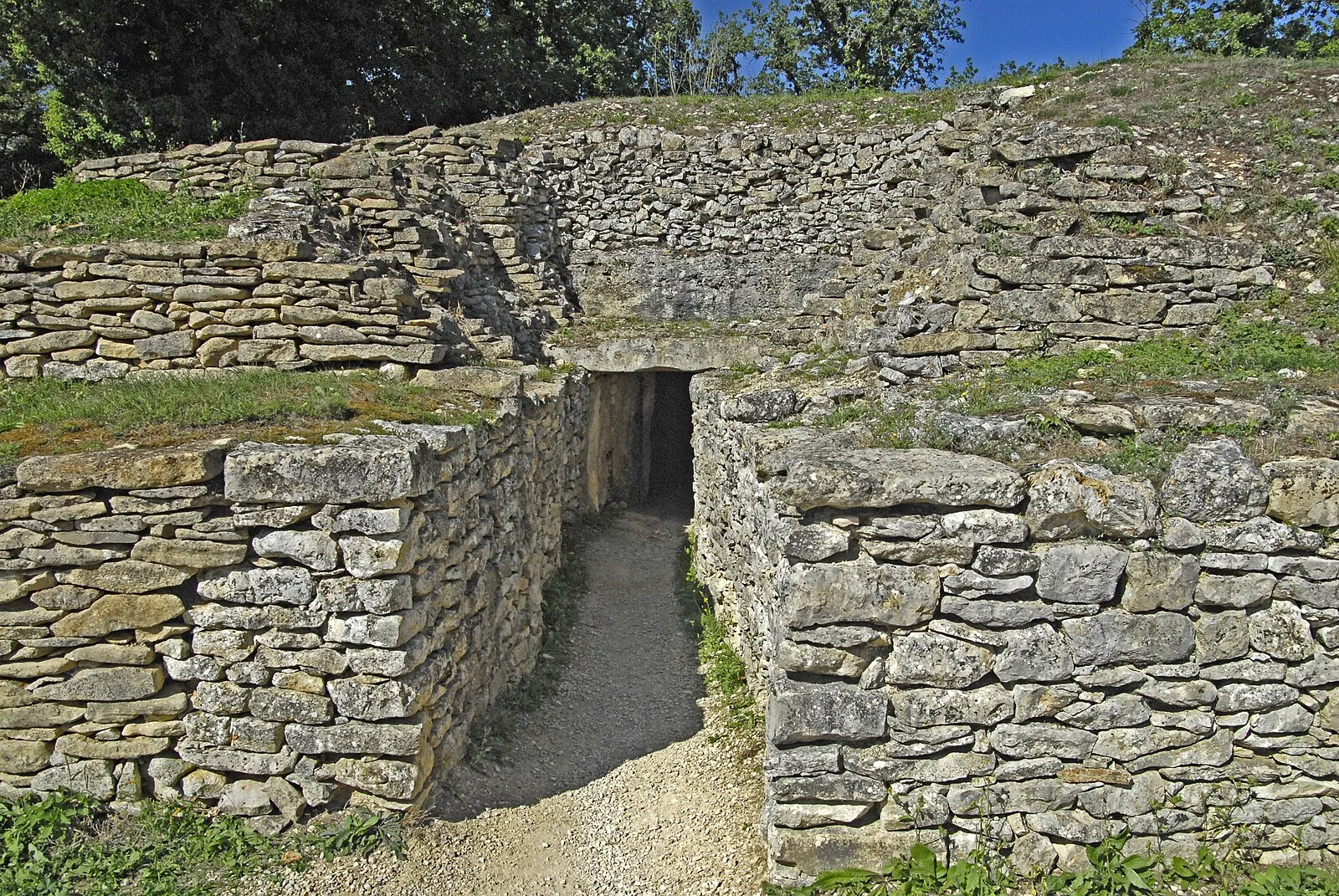
The Tumulus of Bougon or Necropolis of Bougon is a group of five Neolithic barrows located in Bougon, near La-Mothe-Saint-Héray, between Exoudun and Pamproux in Nouvelle-Aquitaine [1]. Their discovery in 1840 raised great scientific interest [1]. To protect the monuments, the site was acquired by the department of Deux-Sèvres in 1873 [1]. Excavations resumed in the late 1960s [1]. The site is located on a limestone plateau within a loop of the river Bougon [1]. Tumulus B is a long mound, 36 m long and 8 m wide [1]. A 35m long and 2 m tall drystone wall subdivides the Bougon complex in two zones, separating Tumuli E and F from the rest of the site [1]. Several finds, including a piece of wood, proved the Neolithic date of this feature, unparalleled among the megalithic monuments of France [1].
Text: Wikipedia – 'Tumulus of Bougon' (revision of 2026-07-20), CC BY-SA 4.0 · sentences selected and shortened by an AI system · source →Tumulus of Bougon
Also known as: Bougonska nekropola, Bougon Tümülüsü, Nekropole von Bougon, Nekropolia w Bougon, Tumuli di Bougon, Túmuls de Bougon, tumulus de Bougon, Бугонский некрополь
| Type | Mound/tumulus |
|---|---|
| Period | < 4500 BC |
| Country | France |
| Coordinates | 46.3741° N, 0.0674° W |