
 France
The La Marche cave is located in the Lussac-les-Châteaux area of western France [1]. It is at the bottom of a small valley bordered by the Petit Moulin river [1]. It most likely is the result of the underground tunneling of the river [1]. The La Marche cave paintings were discovered in the caves in the Lussac-les-Châteaux area of France by Léon Péricard in November 1937 [1]. Péricard, and his partner Stephane Lwoff, studied these caves for five years and found etchings on more than 1,500 slabs [1]. In 1938, they presented their discovery to the French Prehistoric Society [1].
Text: Wikipedia – 'La Marche (cave)' (revision of 2026-07-18), CC BY-SA 4.0 · sentences selected and shortened by an AI system · source →La Marche Cave
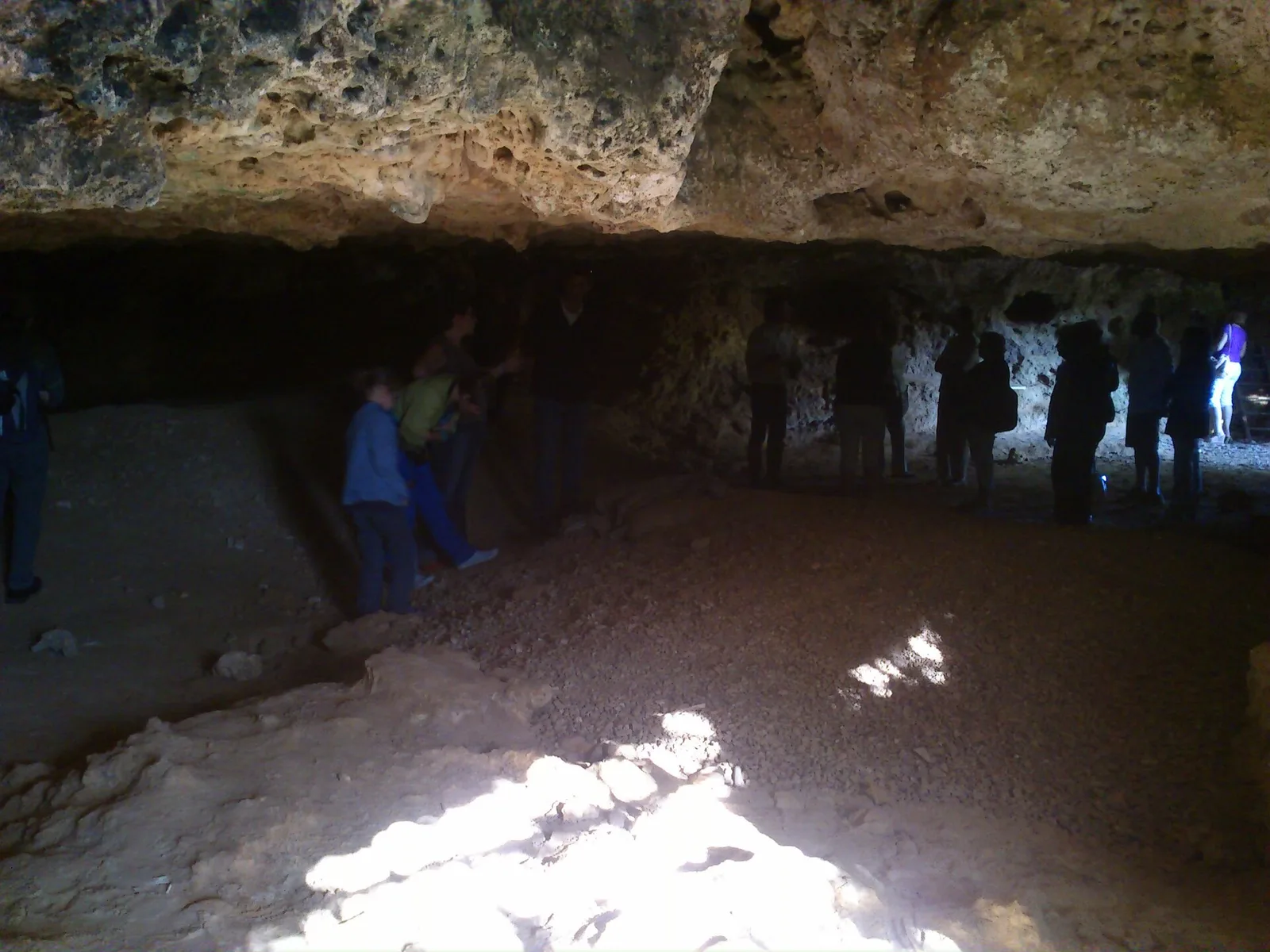
Also known as: grotte de la Marche, Gua La Marche, La Marche, La Marche (cave), La Marche (Höhle), La Marche (jaskinia), La Marche Mağarası, Marche cave, מערת לה-מארש, ラ・マルシュ洞窟
| Type | Cave Structures |
|---|---|
| Period | < 4500 BC |
| Country | France |
| Coordinates | 46.4062° N, 0.7246° E |