
 England
The Aubrey holes are a ring of 56 chalk pits at Stonehenge, named after seventeenth-century antiquarian John Aubrey [1]. They date to the earliest phases of Stonehenge in the late fourth and early third millennium BC [1]. 25 of the holes were excavated by Hawley in 1920 and seven more in 1924 [1]. In 1950 Stuart Piggott and Richard Atkinson dug two more Aubrey Holes which brought the total excavated to 35, including one that Richard Colt Hoare may have encountered whilst digging beneath the fallen Slaughter Stone in the early nineteenth century [1]. It was found that the pits were an average of 0.76m deep and 1.06m in diameter [1]. 25 of the pits contained later cremation burials inserted into their upper fills along with long bone pins which may have secured leather or cloth bags used to hold the remains [1]. Their presence makes Stonehenge Britain's oldest cremation cemetery [1].
Text: Wikipedia – 'Aubrey holes' (revision of 2026-04-25), CC BY-SA 4.0 · sentences selected and shortened by an AI system · source →Aubrey Holes - Stonehenge
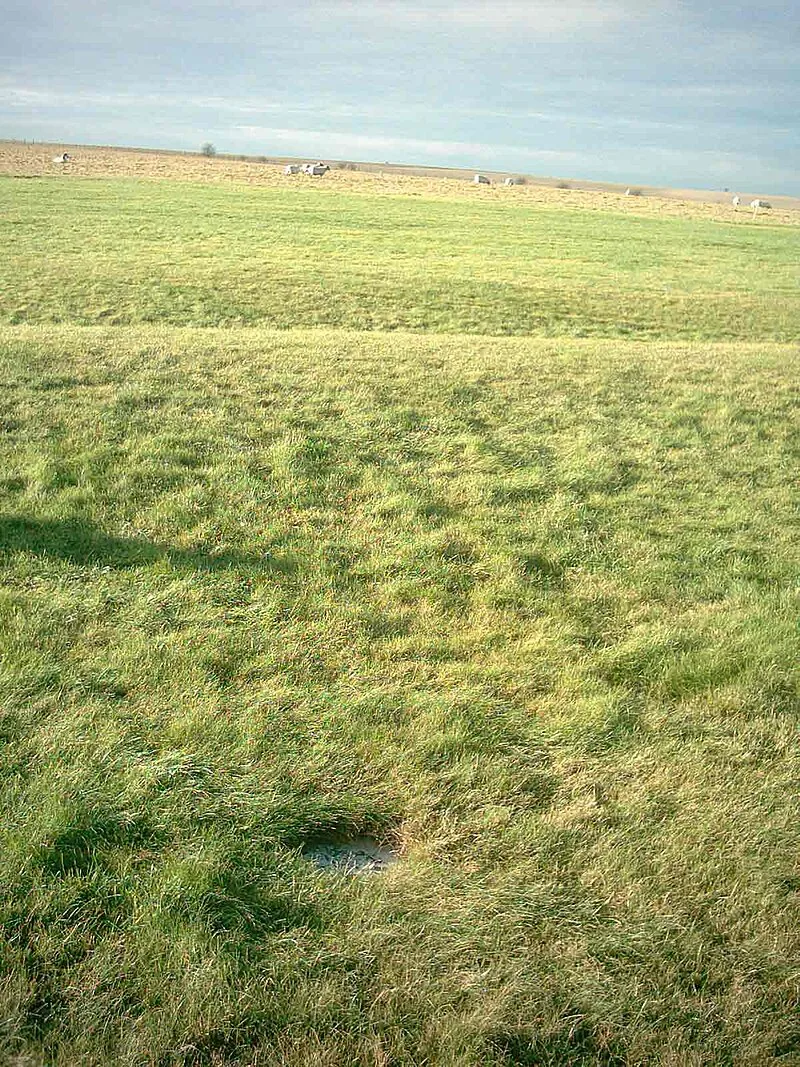
Also known as: Aubrey holes, בורות אוברי, گودالهای اوبری
| Type | Cemetery |
|---|---|
| Period | 3000 - 1500 BC |
| Country | England |
| Coordinates | 51.1792° N, 1.8255° W |