
 Egypt
EgyptThe Great Pyramid of Giza is the largest of the Egyptian pyramids and the most famous landmark of the Giza pyramid complex in Giza, Egypt [1]. It is the oldest of the Seven Wonders of the Ancient World, and the only wonder that has remained largely intact [1]. The Great Pyramid served as the tomb of Egyptian Pharaoh Khufu, who ruled during the Fourth Dynasty of the Old Kingdom [1]. It was built c. 2600 BC over a period of about 26 years [1]. The Great Pyramid was built by quarrying an estimated 2.3 million large blocks, weighing 6 million tonnes in total [1]. The funerary complex around the pyramid consisted of two mortuary temples connected by a causeway; tombs for the immediate family and court of Khufu, including three smaller pyramids for Khufu's wives; an even smaller "satellite pyramid"; and five buried solar barques [1].
Text: Wikipedia – 'Great Pyramid of Giza' (revision of 2026-09-21), CC BY-SA 4.0 · sentences selected and shortened by an AI system · source →The Great Pyramid of Giza
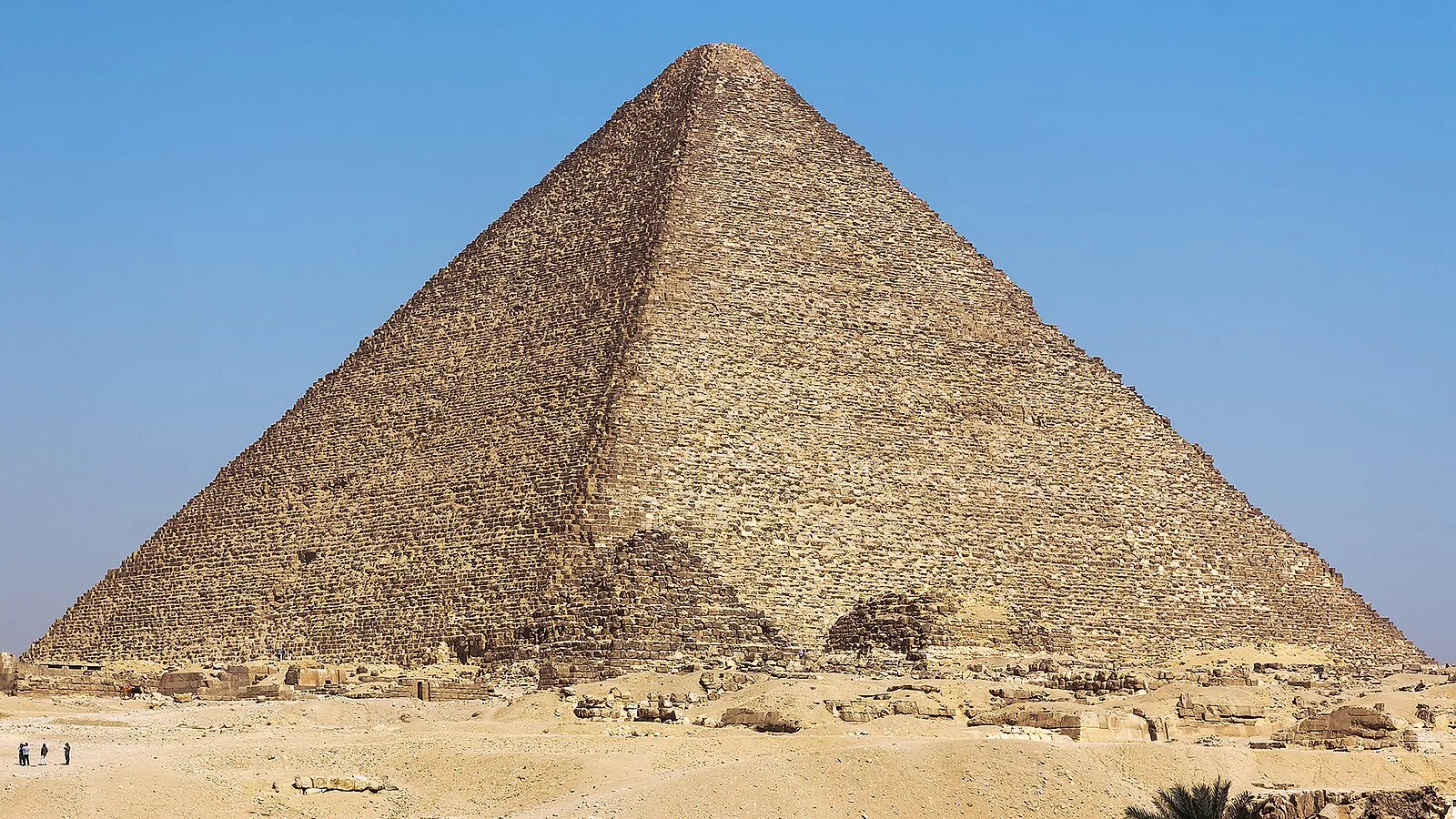
Also known as: 대피라미드, 기자의 대피라미드, 쿠푸의 대피라미드, a gízai Nagy-piramis, Cheopsi püramiid, Cheopso piramidė, Cheopsova pyramida, Cheops Pyramid, Cheopspyramide, Cheops-Pyramide, Cheopspyramiden, Chufevova pyramida
| Type | Pyramid complex |
|---|---|
| Period | 3000 - 1500 BC |
| Country | Egypt |
| Coordinates | 29.9798° N, 31.1343° E |