

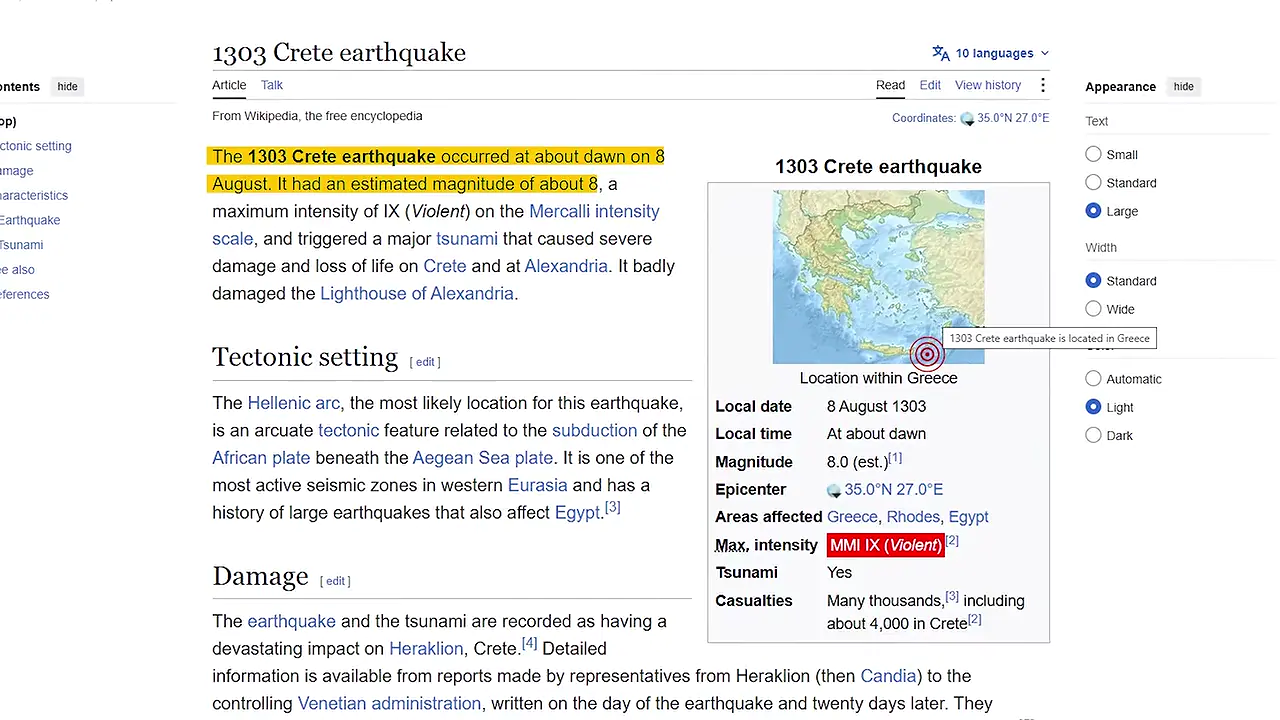
A 1303 earthquake loosened the Great Pyramid's polished white casing, which was later stripped and reused for mosques and bridges. Italian engineer Alberto Danini developed the Ratio Erosion Method (REM), comparing erosion depth on exposed pavement versus pavement shielded under casing for roughly 675 years. He measured 12 locations around the monument, averaging around 25,000 years before present — placing construction near 23,000 BC. One outlier measurement hit 54,000 years. A genuinely creative approach, but the dates are extraordinary and demand serious scrutiny.
Danini's REM erosion method proposes Great Pyramid dates to ~23,000 BC
 EgyptTheory
Key facts
- A 1303 earthquake loosened the pyramid's polished white limestone outer casing
- The casing was stripped over following decades and reused for mosques, bridges, and other buildings
- Alberto Danini, an Italian engineer, developed the REM (Ratio Erosion Method)
- REM compares erosion depth on long-exposed pavement versus pavement protected under casing for ~675 years
- Danini took measurements at 12 locations around the monument
- The average result was approximately 25,000 years before present (~23,000 BC)
- One of the 12 measurements returned ~54,000 years
Sources
1303 Crete earthquake - Wikipediaen.wikipedia.org
NCEI Hazard Earthquake Information - NOAAngdc.noaa.gov
Was this story useful?
Keep exploring
Every site on this page sits on the globe, and the people who research them are on the Discord.
3D Globe · Sites by country · Story Archive · Research Library · Weekly Journal · Search
AI-generated text · images from the original sources · always verify with the sources.