
 Egypt
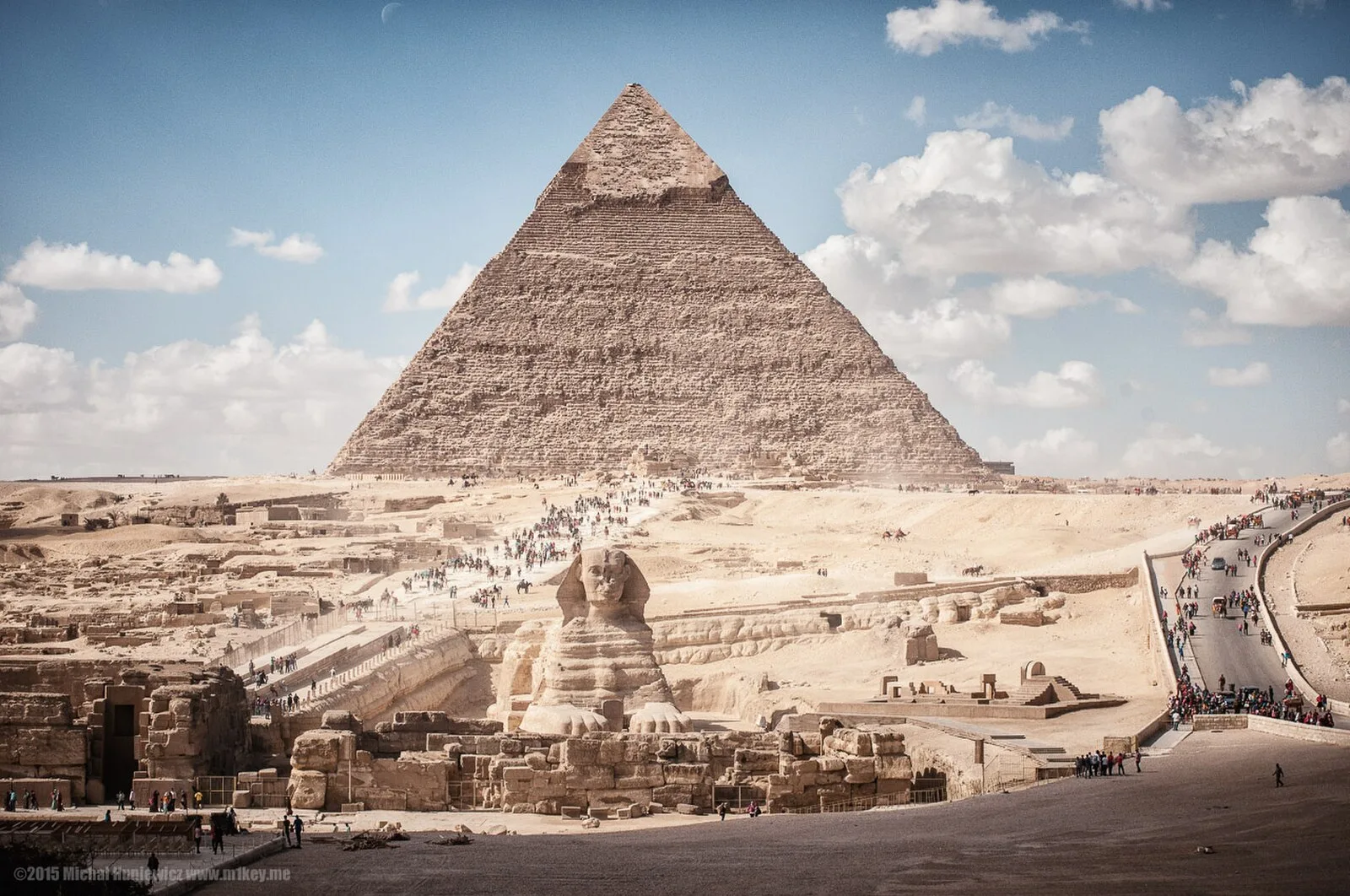
EgyptThe pyramid of Khafre or of Chephren is the middle of the three Ancient Egyptian Pyramids of Giza, the second tallest and second largest of the group [1]. It is the only pyramid out of the three that still has cladding at the top [1]. It is the tomb of the Fourth-Dynasty Pharaoh Khafre, who ruled c. 2558−2532 BC [1]. The pyramid has a base length of 215.5 m or 411 cubits and rises up to a height of 136.4 metres or 274 cubits [1]. It is made of limestone blocks weighing more than 2 tons each [1]. Casing stones cover the top third of the pyramid, but the pyramidion and part of the apex are missing [1]. Arab historian Ibn Abd al-Salam recorded that the pyramid was opened in 1372 [1]. The pyramid was first explored in modern times by Giovanni Belzoni on March 2, 1818, when the original entrance was found on the north side [1].
Text: Wikipedia – 'Pyramid of Khafre' (revision of 2026-06-28), CC BY-SA 4.0 · sentences selected and shortened by an AI system · source →Pyramid of Khafre
Also known as: 카프레의 피라미드, 제2피라미드, Chefreno piramidė, Chefrenova pyramida, Chefren Pyramid, Chefrenpyramiden, Chefren (pyramid i Egypten), Chefrens pyramid, Chephren-Pyramide, Chephrenpyramiden, Druhá pyramída v Gíze, Hafré-piramis
| Type | Pyramid complex |
|---|---|
| Period | 3000 - 1500 BC |
| Country | Egypt |
| Coordinates | 29.9764° N, 31.1310° E |