
 Belize
Lubaantun is a pre-Columbian ruined city of the Maya civilization in southern Belize, Central America [1]. Lubaantun is in Belize's Toledo District, about 42 kilometres northwest of Punta Gorda, and approximately 3.2 kilometres from the village of San Pedro Columbia [1]. One of the most distinguishing features of Lubaantun is the large collection of miniature ceramic objects found on site; these detailed constructs are thought to have been charmstones or ritual-accompanying accoutrements [1]. The city dates from the Maya Classic era, flourishing from the AD 730s to the 890s, and seems to have been completely abandoned soon after [1]. Lubaantun's structures are mostly built of large stone blocks laid with no mortar, primarily black slate rather than the limestone typical of the region [1]. The ancient name of the site is currently unknown; "Lubaantun" is a modern Maya name meaning "place of fallen stones" [1]. Dr. Thomas Gann came to investigate the site in 1903, and published two reports about the ruins in 1905 [1].
Text: Wikipedia – 'Lubaantun' (revision of 2026-07-20), CC BY-SA 4.0 · sentences selected and shortened by an AI system · source →Lubaantun Archaeological Reserve
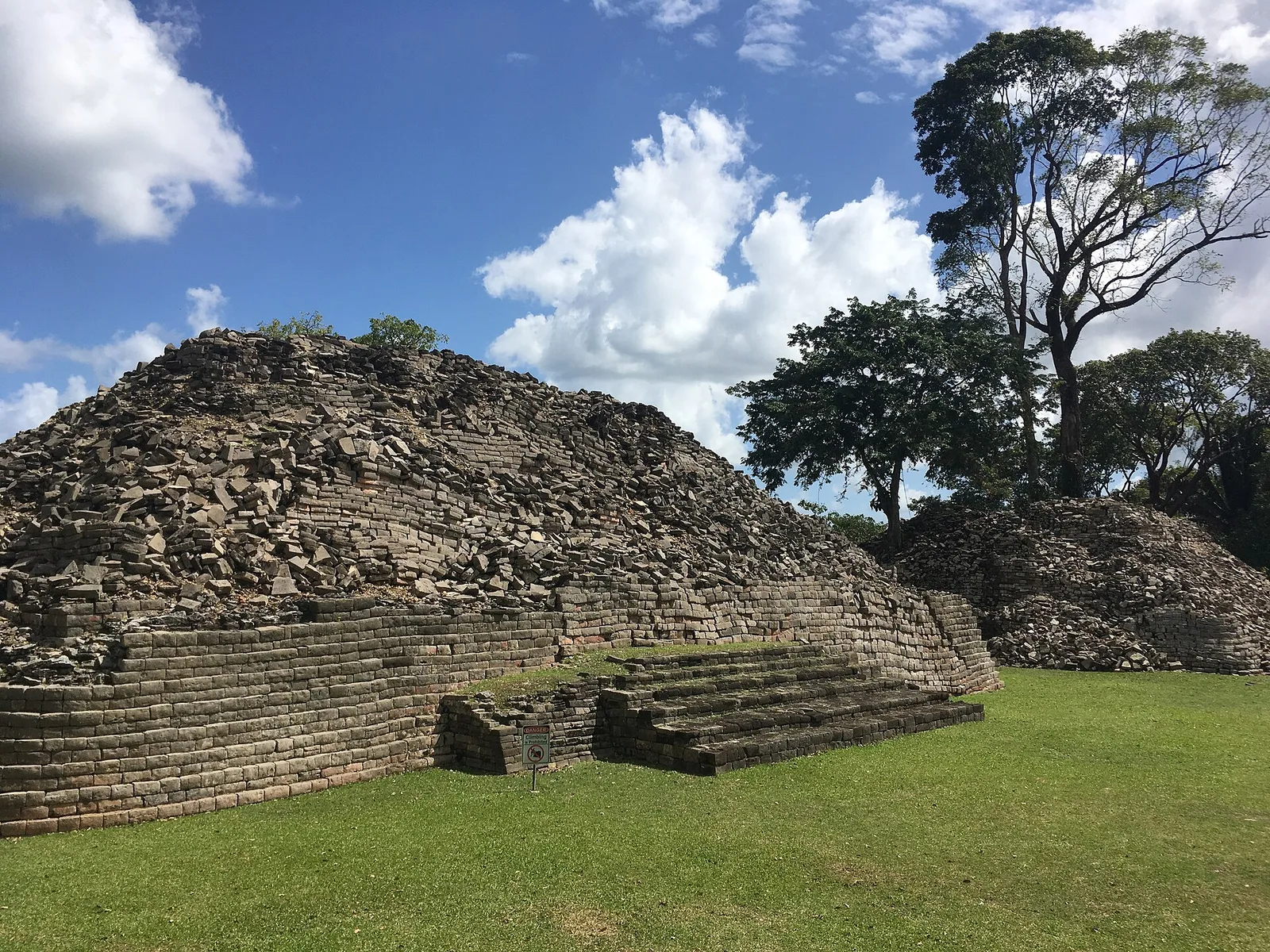
Also known as: Lubaantun, Lubantunas, Maya Ruins of Lubaantun, Лубаантун, לובאאנתון, ルバーントゥン
| Type | Pyramid complex |
|---|---|
| Period | 500 - 1000 AD |
| Country | Belize |
| Coordinates | 16.2823° N, 88.9640° W |